


Deaf Community Finds Resilience Amid Challenges in Minnesota
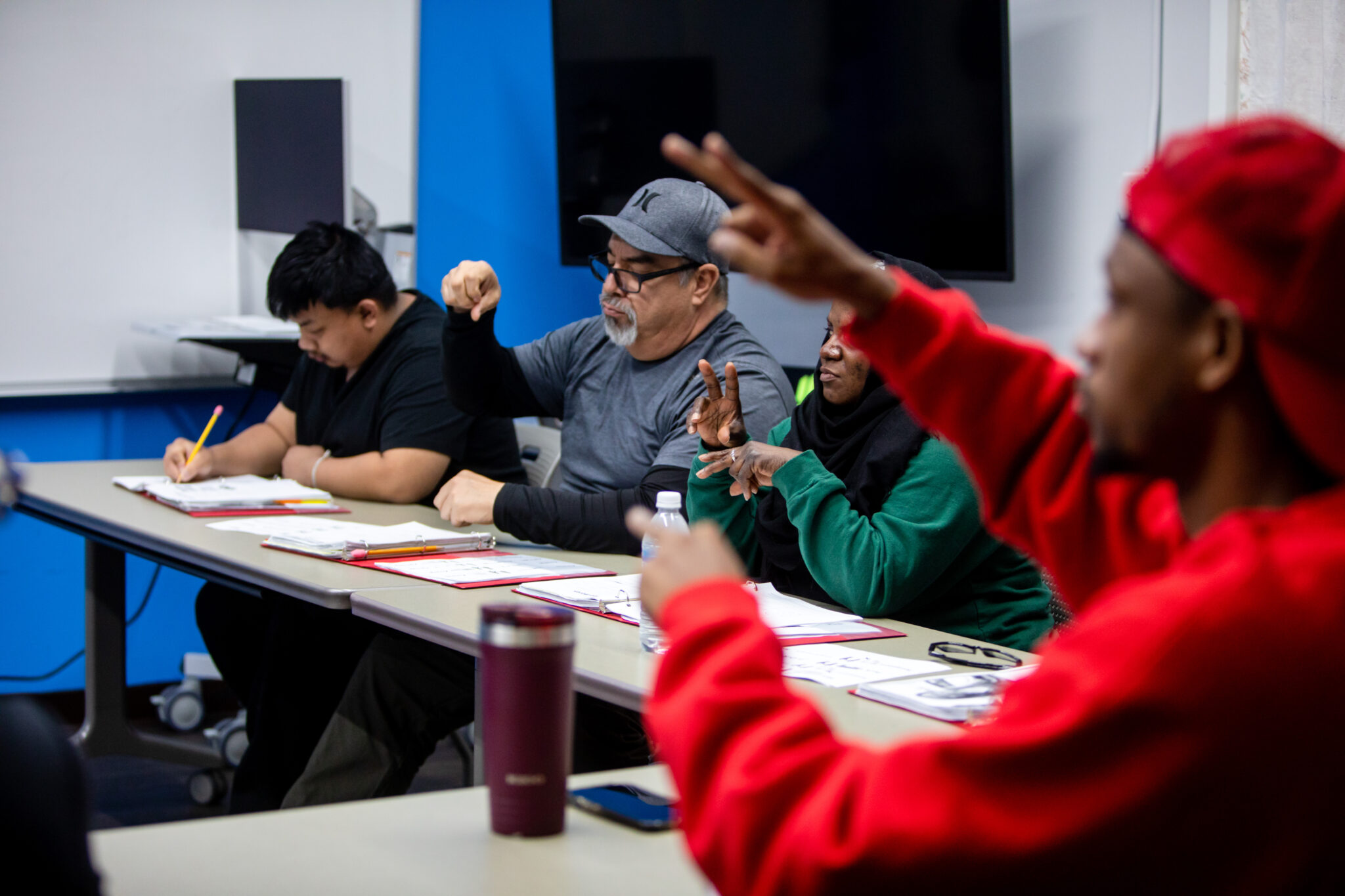
In a vibrant classroom in St. Paul last month, 17 adults came together to learn American Sign Language (ASL). Gathering around a long table, they engaged with illustrations projected overhead while practicing their signing skills. The instructor demonstrated the sign for “cousin,” shaping his hands into a “C” and moving his wrist with precision.
Many participants were born in the U.S. but lacked exposure to ASL during their childhood. Over half of the group were immigrants, some recently arrived, while others had lived in the U.S. for years. Among them was Betty, who preferred her nickname for safety. She had been taking ASL classes for over a year after fleeing violence in Juarez, Mexico, where she grew up with her grandmother. She explained her decision to leave, revealing a harrowing experience of witnessing masked gunmen near her workplace and home.
“There were masked figures—I didn’t know who they were. As the only deaf person in my community, I feared they might target me,” she recounted through an interpreter. The violence escalated, culminating in nearby gunfire that solidified her decision to escape.
Laying Down Roots in Minnesota
Once in St. Paul, Betty initially felt safe, but that changed with the federal immigration crackdown initiated in January. “It was as if I had returned to Mexico, experiencing the same fears,” she noted. Betty’s story reflects the challenges faced by many deaf immigrants, particularly in Minnesota, where an estimated 2,300 to 4,500 deaf adults reside. Local organizations strive to foster community and support for individuals navigating the complexities of life in a new country.
Organizations like the Metro School for the Deaf serve children from immigrant families, while the Minnesota Deaf Muslim Community provides vital interpretation services during medical appointments and legal meetings. Additionally, ThinkSelf offers comprehensive support, including crime victim services and regular ASL and English instruction.
Overcoming Barriers to Communication
Some immigrants arrive in the U.S. fluent in various sign languages, such as Chinese or Arabic Sign Language. However, others, like Betty, had no access to formal sign language education and relied on home signs—personal gestural systems developed informally for communication. Betty learned to count money using these home signs, but her social interactions were limited, with her grandmother as her primary confidant.
Difficult memories linger for Betty regarding her neighborhood’s violence, compounded by her concerns about safety. She remembered recognizing a suspicious car and feeling apprehensive when told to keep her distance from the strangers emerging from it. “Many of us are hesitant to seek help after fleeing war zones and traumatic experiences. Many prefer isolation to avoid re-experiencing that trauma,” she said.
Legal Challenges for Deaf Immigrants
Kelsey Allen, an immigration attorney in Minnesota, recounted her experience representing a deaf immigrant detained in Texas. “It was a shocking realization that ICE would detain individuals who pose no risk to the community,” she explained. Allen emphasized the communication hurdles that arise when law enforcement members lack knowledge of ASL, which can strip deaf individuals of their ability to communicate effectively during such encounters.
Advocate Selena Ponce, based in Oregon, highlighted the challenges deaf immigrants face while in detention, including months of isolation without necessary access to interpreter services. As conditions worsen, the reality for many deaf immigrants is one of profound isolation, making it even more challenging to seek assistance from support networks.
Community Support and Resources
Jessalyn Ackerman Frank from the Minnesota Commission for the Deaf remarked on the pervasive fear among deaf immigrants, especially those still developing their English or ASL skills. During her efforts to connect with two immigrants, their initial response was one of fear, preventing them from reaching out for aid. “Many deaf immigrants choose silence and invisibility as a means of self-protection,” she noted.
Despite the ongoing challenges, community advocates like Aaron Gatzke have stepped up. They have implemented initiatives to deliver essential supplies to displaced migrants and provide guidance on how to navigate encounters with ICE agents. Resources like the IceOut app help individuals stay informed about ICE activities, enabling them to avoid unnecessary confrontations.
As for Betty, she continues to rely on resources like IceOut. “It’s not something I check daily, but I do look it up before I go out to ensure I’m okay,” she stated. Grateful for her ASL classes, she appreciates the friendships she’s formed and the sense of belonging she has found within her community.
