


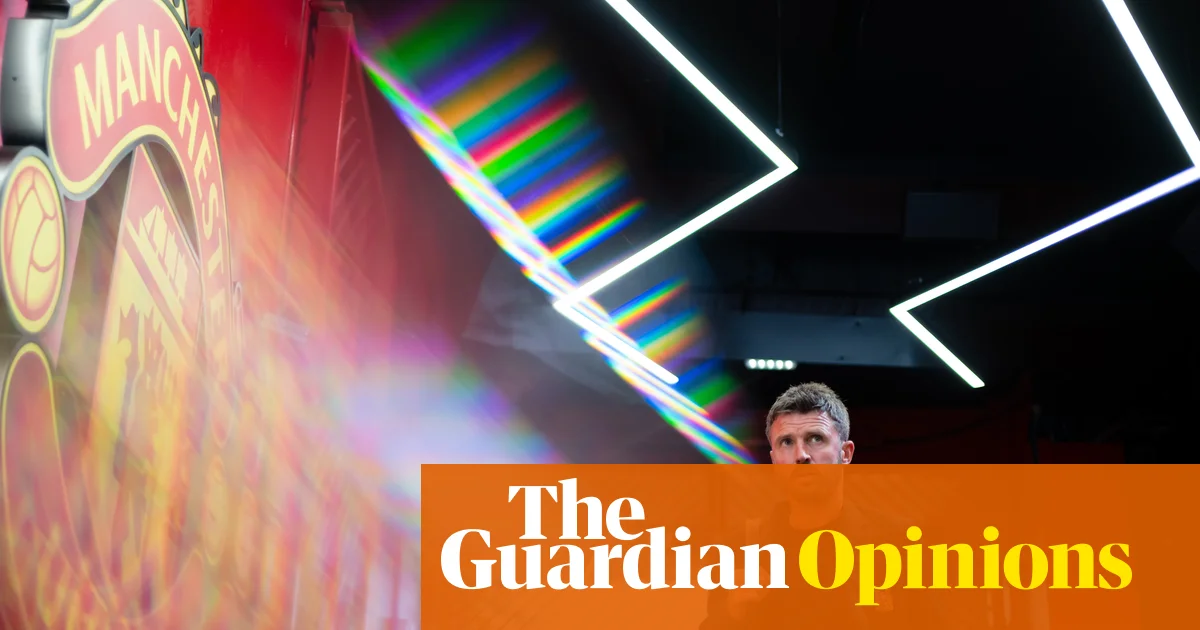
Manchester United Faces Key Decision on Head Coach Appointment
The discourse surrounding soccer has taken on an overly complicated tone, especially regarding critical managerial decisions. Despite this complexity, the essence of the game remains straightforward. Michael Carrick, Manchester United’s current interim manager, embodies this simplicity and is the clear candidate for the club’s permanent head coach position.
Under Carrick’s leadership, Manchester United has excelled, amassing 33 points from 15 matches. The team has firmly positioned itself for Champions League qualification and shows promise of finishing third. If another manager, such as Ruben Amorim or Luis Enrique, had achieved these results, there would be widespread acclaim. Yet, uncertainties linger over Carrick’s future.
Some critics point to Ole Gunnar Solskjær’s earlier tenure as a cautionary tale. Solskjær began strongly as a caretaker but faltered during his full-time role. These concerns are understandable, given United’s tumultuous managerial history since Sir Alex Ferguson’s retirement. However, worrying about past events related to different teams and contexts may stem more from anxiety than from sound reasoning.
The dynamics surrounding Carrick are refreshing compared to Solskjær’s appointment. Carrick has not only maintained the squad’s competitive edge but has also introduced innovative strategies promptly. While Julian Nagelsmann is a likely contender for the head coach position, his track record suggests that he may not have the immediate impact needed to further a team already building momentum under Carrick.
After a period marked by upheaval and ineffective managerial changes, United now seems to be on a path towards stability. Carrick understands that it is essential to find a balance while harnessing the brilliance of the players at his disposal—something that could be jeopardized with any new and untested leadership approach.
Currently, there are discussions about potential candidates, including notable individuals like Cesc Fabregas and Xabi Alonso. However, their recruitment might present challenges rooted in external factors, making them less viable alternatives compared to Carrick, who has proven his capacity to lead. He has effectively leveraged players’ strengths while allowing them the freedom to express their talent, a quality crucial for success in high-stakes matches.
Carrick’s coaching style emphasizes adaptability and creativity, which have enabled Manchester United to achieve victories in various forms—be it through high-scoring games, resilient comebacks, or tactical discipline. This variability keeps opponents guessing while still adhering to the fundamental principles of United’s legacy. The team is focused on offense, pushing forward with pace, and showcasing attacking prowess reminiscent of Ferguson’s era.
Despite challenges, such as limited squad depth and recent performance fluctuations, Carrick remains optimistic about the team’s trajectory. He acknowledges the need for improvement while maintaining a commitment to developing players’ skills and game awareness. As the squad grows in cohesion, its potential for greater possession control becomes increasingly viable. In light of this progress, it seems imprudent to overlook a head coach who is achieving results while fostering an engaging playing style.
