


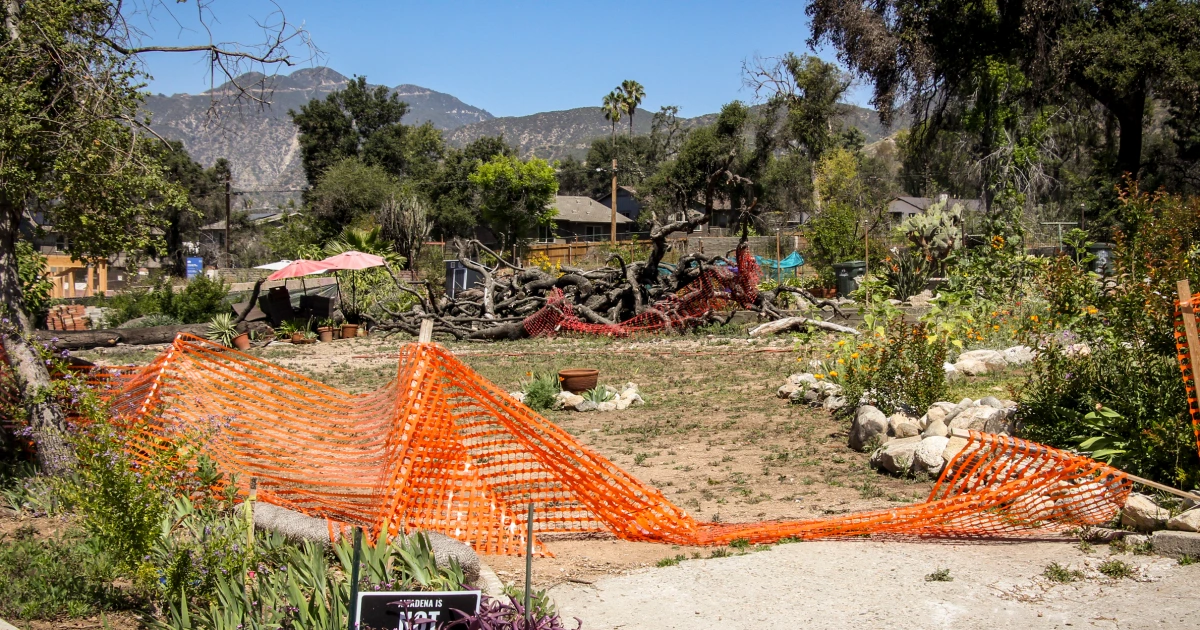
ALTADENA, Calif. — An Altadena mother initiated chelation therapy to eliminate lead from her son’s bloodstream, reflecting the severe health risks posed by heavy metals in the area. Geochemists now require respirators and full-body suits to safely enter homes affected by contamination. Meanwhile, a filmmaker has invested significant sums in testing and remediation efforts on his property, undertaking a task not covered by any government cleanup initiative.
Sixteen months after the Eaton Fire, residents of Altadena are resorting to extreme measures to address various toxic compounds, including arsenic and asbestos, that threaten their families and homes. This pollution stems from an unprecedented urban firestorm that incinerated thousands of homes and vehicles while releasing heavy metals into the atmosphere.
Despite the removal of charred debris and the repair of homes, testing has revealed alarming levels of lead, posing serious health risks to children. Jennifer Rochlin, a potter and single mother of two, took to Amazon for a lead testing kit after her insurance company delayed its approval. She uncovered lead contamination in multiple areas of her home, including the HVAC system.
Rochlin has been forced to relocate twice and replace absorbent items like mattresses, significantly impacting her family’s life. Many residents, regardless of whether their homes were directly damaged, find themselves in similar predicaments. Nearly two-thirds of those affected by the Eaton fire remain evacuated, facing the severe financial burden of temporary housing, as their insurance coverage begins to lapse, according to recent findings.
The uncertainty surrounding their return has prompted a collection of academics, independent scientists, and grassroots groups to conduct their own investigative research into the contamination. This article distills findings from interviews with over a dozen Altadena residents, multiple scientists engaged in pollution assessment, debris removal personnel, local politicians, and insurance experts.
The collective experiences reveal a systemic failure in response efforts. The infrastructure intended to handle fire disasters—including insurance providers, restoration companies, local municipalities, and environmental agencies—has proven inadequate for the complexities introduced by this incident. “This was an urban fire, and the contamination we encountered was unlike any we had dealt with before,” noted Dawn Fanning, managing director of the nonprofit advocacy group Eaton Fire Residents United.
California currently lacks safety standards for indoor residential contamination regarding many hazardous substances found in Altadena, aside from lead and asbestos. This regulatory gap complicates the process for homeowners and insurers alike, hindering risk assessment and relocation efforts. Furthermore, companies tasked with testing for contaminants employ inconsistent methodologies, adding to the confusion. In homes that experienced fire damage, FEMA and the U.S. Army Corps of Engineers did not mandate soil testing, leaving residents blind to the potential dangers lurking underground.
Two whistleblowers from the Corps raise concerns about long-term soil contamination, fearing that communities will bear the consequences for years to come. Both individuals, opting to remain anonymous to avoid retaliation, describe rushed and inconsistent cleanup practices. One stated, “More debris was left behind than from past wildfire incidents.”
A spokesperson for the Corps clarified that the cleanup scope, which focused on removing structural ash and debris, was predetermined by FEMA in conjunction with California state and Los Angeles County authorities. “Soil testing was not included in the mission mandate from FEMA,” the spokesperson remarked.
Environmental Hazards Lurking Below Ground
Altadena epitomizes the intersection of nature and urban life, framed by the San Gabriel Mountains and painted in warm terracotta hues during sunset. The Eaton Fire, which ravaged the area in January 2025, resulted in the destruction of 9,400 homes and structures, emitting smoke laced with lithium from electric car batteries, arsenic from old timber, and asbestos from attic insulation.
During the blaze, Alireza Namayande, a postdoctoral researcher with the National Science Foundation at Stanford University, collected smoke samples, discovering a troubling phenomenon. The particles he analyzed were primarily nanoparticles, much smaller than human hair and capable of infiltrating the lungs, bloodstream, and even the brain, raising significant health concerns.
