


Promoting Literacy Through Radio in Nigeria
Every Saturday at 7 PM, silent ceremonies take place across Lagos as listeners tune into Benji’s Book on Review. This award-winning radio program is built on the unwavering belief that a nation lacking in literacy cannot achieve sustainable development.
Marking a Decade of Advocacy
For over a decade, Benjamin “Benji” Okoh has engaged with some of Nigeria’s most prominent authors, fostering a love for literature while tackling what experts describe as a “learning emergency.” The show’s recent 10th-anniversary gala at Eko Hotel, attended by dignitaries including Bayelsa State Governor Senator Duoye Diri, celebrated its impact. However, the occasion was shadowed by the grim reality of Nigeria’s declining reading culture.
Addressing a Reading Crisis
Currently, 45 million children aged 7 to 14 in Nigeria are unable to read basic texts. In the Northeast, conflict has aggravated the situation, with 72% of primary school dropouts leaving school functionally illiterate. Alarmingly, the average Nigerian reads less than one book per year. Amidst this widespread crisis, radio is emerging as an unexpected force in promoting literacy.
The Power of Radio in Education
Radio’s accessibility enables it to reach rural farmers, internally displaced persons, and low-income households who may lack smartphones or reliable electricity. In Ogun State, participants in the Radio Literacy Project reported heightened engagement and improved literacy skills. Recently, Jigawa State allocated £32 million to provide education for 2,700 learners using solar-powered radios, demonstrating radio’s viability even in conflict-ridden areas like the Northeast, where it serves as a vital resource for displaced children.
Exploring Broader Media Solutions
While radio plays a crucial role, it cannot tackle the reading crisis alone. Chidorum B. Nwakanma’s insights reveal a fragmented media landscape, each segment offering distinct benefits and limitations. Television, through programs like Channels’ Book Club, raises visibility but has a limited reach. Print media outlets such as the Guardian and Business Day do feature literary sections, yet their readership remains small. Social media, despite its distractions, has been effectively harnessed by initiatives like the #WhenWeRead campaign which distributed 5,000 books and encouraged reading with “one chapter a day,” led by popular figures such as celebrity chefs Hilda Bati and Enioluwa Adeoluwa.
Community Initiatives and Digital Solutions
The Network of Book Clubs and Book Culture Promoters (NBRP) inaugurated the “774 Book Club” initiative in February 2023, aiming to inspire communities across the country. In Uyo, Dr. Nana Udeme has successfully operated the Uyo Book Club for 11 years, while the northern initiative Book O’Clock promotes African literature. The National Library’s 2024 Readers Campaign is also making strides, establishing 99 literacy centers and 148 book clubs in 34 state branches. However, many of these centers rely heavily on volunteers, raising questions about long-term sustainability.
Leveraging Technology for Literacy
The AIFA Book Association advocates a digital-first approach, arguing that neglecting technology in literacy promotion would be a significant oversight. A 2025 study from Offa, Kwara State found that residents accessing educational content via radio, television, and social media reported notable improvements in literacy skills. Recommendations include the development of mobile apps, podcasts, or community media centers dedicated to literacy.
Concrete Steps for Improvement
As highlighted in a recent presentation, eight actionable strategies were outlined to enhance literacy in Nigeria. These include establishing a National Reading Promotion Council to unify stakeholder efforts, forging influencer partnerships with measurable outcomes, and integrating reading advocacy into media houses’ core missions. Additionally, addressing infrastructure gaps by completing the National Library and establishing community libraries in all 774 local governments is critical.
A listener of *Books on Review with Benji* reflected on the program’s value, stating that it helped him realize that reading extends beyond academic obligations—it’s a lifelong pursuit. In a nation where the average individual reads less than one book annually, this message is perhaps the most vital of all.
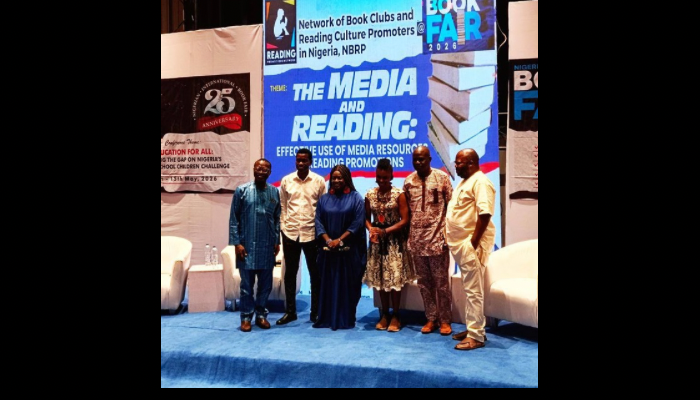
This article draws from insights shared during the recent Nigeria International Book Fair, organized by the Nigeria Network of Book Clubs and Promoters of Reading Culture (NBRP) at the Wole Soyinka Center (National Theatre) in Iganmu.
