


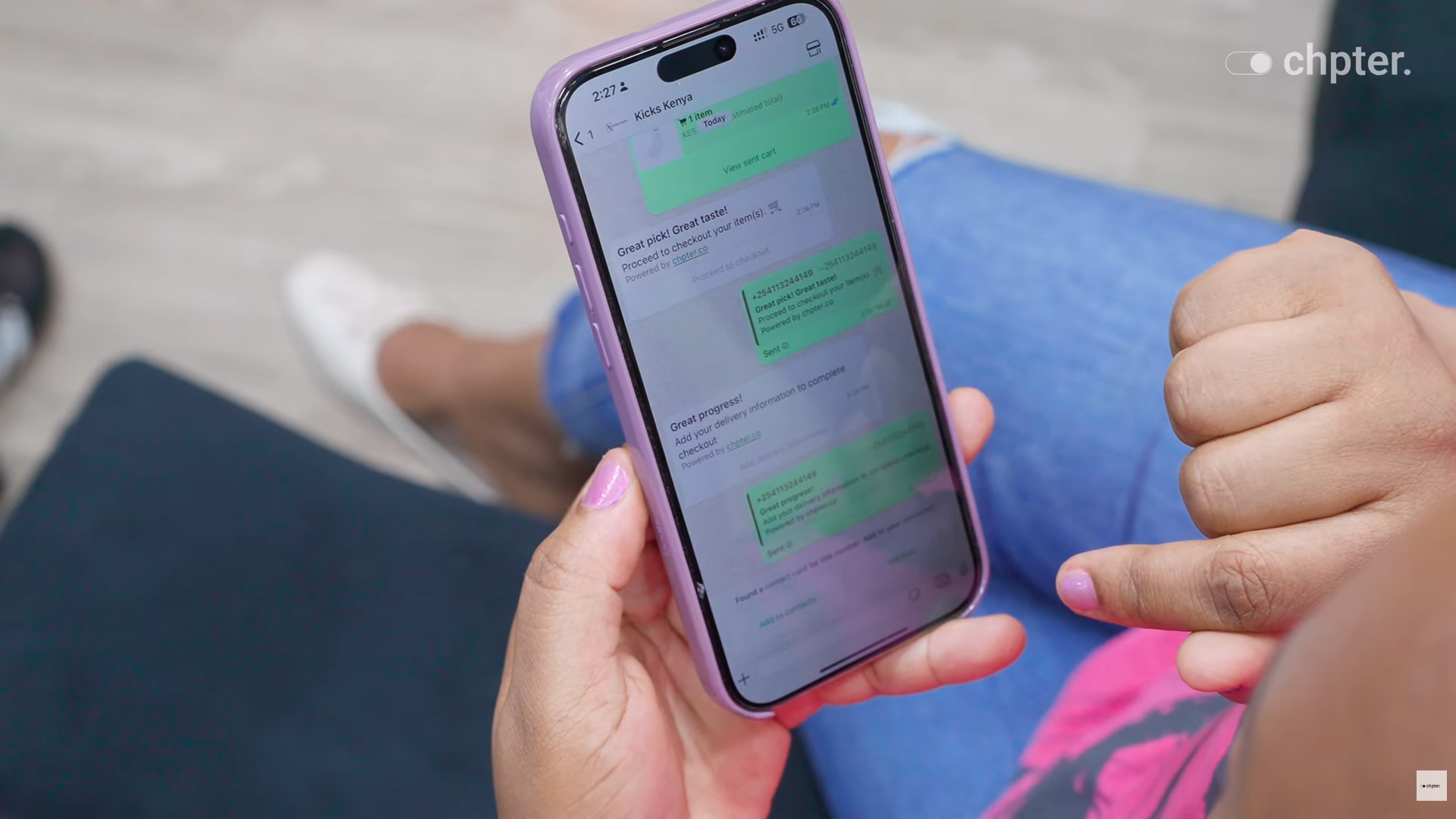
In Kenya and Nigeria, the traditional pathways for small and medium-sized businesses to establish themselves are evolving. No longer do entrepreneurs primarily rely on websites, physical stores, or online marketplaces. Instead, many begin their ventures through phone calls, WhatsApp status updates, and the established networks formed by family and community connections, as well as repeat customers.
A recent study examining the livelihoods of women in Kenya, Nigeria, India, and Pakistan reveals that nearly 90 million women utilize WhatsApp to bolster income-generating activities. In the African markets assessed, messaging apps are increasingly serving as essential operational tools for informal commerce, transcending their original purpose as mere communication platforms.
The findings highlight a significant reality within Africa’s digital economy. Here, commercial activities are integrated into a conversational environment where communication, customer service, marketing, and coordination occur simultaneously. Conducted in 2025 and based on a nationally representative survey and follow-up interviews, the report found that 94% of smartphone users in the surveyed countries have WhatsApp installed. For many African entrepreneurs, particularly women engaged in the informal sector, the app effectively negates the necessity for a dedicated digital storefront.
Transitioning to Chat-Based Commerce
Women in Kenya and Nigeria, as cited in the study, utilize WhatsApp for various business functions including product marketing, order coordination, customer follow-up, and communication with suppliers, among others. Notably, the most impactful commercial activity surfaced in Nigeria, where 58% of self-employed women and 65% of self-employed men reported using WhatsApp to support their livelihoods.
While Kenya exhibited lower smartphone ownership rates among self-employed women than in India and Nigeria, it still demonstrated considerable engagement with platforms for income generation.
WhatsApp Status as an Informal Retail Space
A key takeaway from the study is the commercial significance of WhatsApp status updates. Women reported using these updates to share information about availability, pricing, completed work, promotions, and services instead of relying on formal commerce tools.
This trend effectively transforms WhatsApp into a lightweight retail environment, rooted in social proximity and frequent interactions. Discovery of products and services on the platform is less reliant on search algorithms and more on existing social networks, referrals, and community trust.
The report emphasizes that trust plays a crucial role in social commerce participation, especially for women managing customer relationships in informal markets. Offline reputations remain influential in shaping online transactions, demonstrating the importance of familiarity in the payment and purchasing processes.
Connectivity is Not Enough for Economic Participation
Central to the study’s findings is the assertion that connectivity alone does not ensure economic benefits. Researchers differentiate between “access” and “effective use.” Users who occasionally respond to messages are treated differently from those who utilize status updates for sales or create broadcast lists for promotions. This latter group exhibits meaningful economic integration rather than merely passive use of the platform.
This distinction is particularly relevant in African markets, where digital inclusion policies often emphasize connectivity goals while underestimating other critical factors such as digital trust, literacy, device quality, affordability, safety concerns, and time constraints. The study revealed that smartphone ownership continues to pose a significant hurdle for low-income women aiming to engage in WhatsApp-based commerce.
Impact of Shared Devices and Connectivity Challenges
The study also reveals how entrepreneurs in Africa are modifying their commercial practices in response to infrastructure limitations. Approximately 30% of participants in Kenya and Nigeria said they relied on shared phones for business.
This finding challenges common assumptions about the workings of digital businesses in emerging markets, where many models are designed around stable connectivity, uninterrupted device access, and private ownership. Women in the study frequently navigated intermittent internet connectivity, limited data packages, and shared family devices.
Despite these challenges, WhatsApp remains deeply integrated into their commercial activities because it aligns well with existing communication habits and low-cost mobile usage patterns. The report notes that women often incorporate their business activities into their daily routines rather than separating them from their personal lives.
WhatsApp Groups as a System of Economic Partnership
Another significant finding illustrates that WhatsApp groups have evolved beyond mere communication channels. Participants reported using these groups for a variety of purposes, including peer learning, sourcing information, introductions, mentoring, customer acquisition, and skill exchange.
In many instances, these groups function similarly to informal trade associations or microbusiness communities, reflecting traditional African commercial structures built around market networks, savings groups, and community associations. While the technology layer may be new, the underlying dynamics of trust remain familiar.
The research also indicated that women are adapting their participation in these groups to mitigate risks associated with harassment, fraud, and unwanted attention. Rather than abandoning the platform, users often turn to moderated groups and female-centric networks for greater security.
Emerging Role of AI in Informal Commerce
The study identified early instances of AI-related features being embraced by certain users, focusing on communication support and business messaging.
However, researchers caution that the distribution of these features is inconsistent. Women with access to better smartphones, higher literacy levels, and greater digital savvy are more inclined to experiment with these advanced capabilities. Consequently, the integration of AI into messaging systems has the potential to widen the productivity gap among users with varying levels of digital proficiency.
Evolution of Africa’s Digital Market Landscape
Ultimately, the report documents transformative changes in how small-scale commerce operates across Africa. For many users, the experience of the commercial Internet is increasingly defined by conversational interactions rather than formal websites and marketplaces.
Customer support, marketing efforts, trust building, payment reconciliation, and repeat business are increasingly consolidated within a single messaging environment, seamlessly embedded into everyday social interactions.
