


Texas Set to Intensify Role in Immigration Enforcement
Texas is poised to play a more significant role in federal immigration enforcement efforts this year. The largest county in the state faces a December deadline to begin collaboration with federal authorities on deportation initiatives, following recent legislative changes.
New Legislation Mandates Local Cooperation
A law enacted in 2025 stipulates that sheriffs in counties with populations exceeding 100,000 must establish agreements with federal authorities to train local law enforcement under the 287(g) program. This initiative equips officers with the skills necessary to issue immigration warrants and identify individuals subject to deportation while performing their duties, contingent upon the operational model adopted by each sheriff’s department.
Senate Bill 8 Marks Significant Shift in Policy
The legislation, known as Senate Bill 8 and spearheaded by state Senators Joanne Huffman (R-Houston) and Charles Sheltner (R-Georgetown), represents one of the most impactful immigration enforcement measures enacted by Texas lawmakers in recent years.
Supporters and Critics Weigh In on the Bill
Proponents argue that the bill is a pragmatic solution aimed at assisting federal agencies in identifying immigrants who have been convicted of crimes. Conversely, opponents contend that it empowers local officials to carry out immigration enforcement without sufficient training, potentially depleting resources from underfunded police departments and exacerbating issues of racial profiling.
County Responses to Collaboration with Federal Authorities
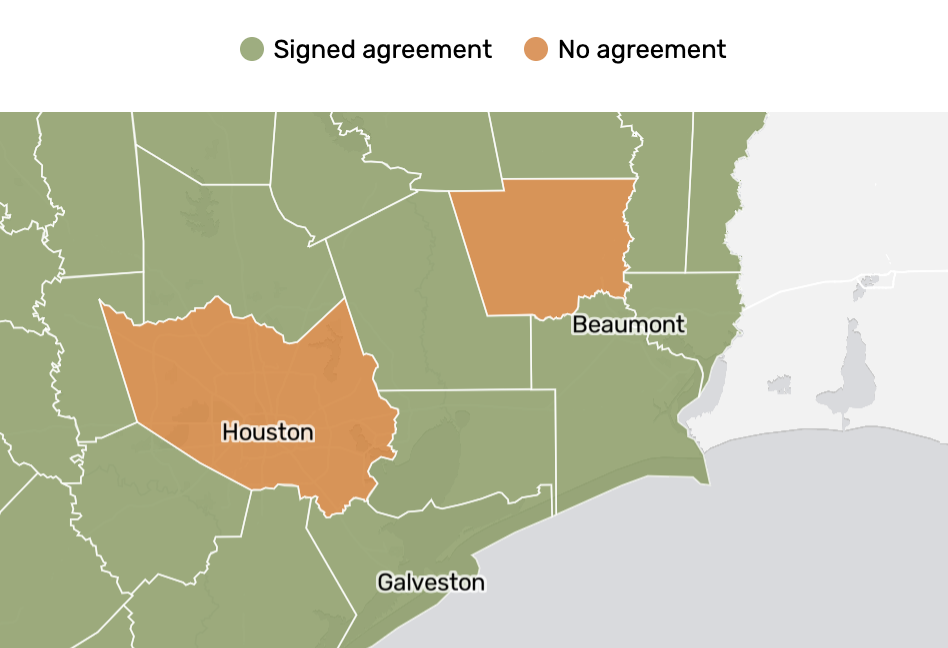
Several large Texas counties have already signed on to one or more 287(g) agreements ahead of the December 1 deadline mandated by SB8. However, officials in counties with Democratic leanings, such as Harris County, are still evaluating their options amidst uncertainties related to taxpayer costs.
Concerns About Public Trust and Community Safety
Critics fear that such partnerships could erode public trust in local law enforcement, particularly when officers undertake roles traditionally held by federal immigration agents during routine patrols. Huyen Pham, a Texas A&M immigration law professor, emphasized the risks associated with blurring the lines between local policing and federal immigration enforcement, raising concerns about whether crime victims will feel secure in reporting incidents to law enforcement.
Details of the 287(g) Agreement Models
The new 287(g) legislation compels county sheriffs to adopt one of three operational frameworks: a jail enforcement model, a special unit model, or a warrant service model. Each model aims to enhance local enforcement’s capacity to identify and process immigrants involved in criminal activities. Notably, local law enforcement agencies like the Houston Police Department are not obligated to participate, as the law primarily impacts sheriffs.
Potential Financial Implications for Local Governments
This legislation also introduces a grant program managed by the state auditor’s office to help counties recuperate some incurred expenses. The grants will vary based on population size, with smaller counties eligible for $80,000 and larger ones for up to $140,000. Still, local officials anticipate significant financial impacts on their budgets, particularly within populous counties.
Pressure from State Officials
Texas Attorney General Ken Paxton recently urged Dallas County Sheriff Marian Brown to expedite compliance with the 287(g) program ahead of the set December deadline. Brown, however, reminded Paxton of the existing timeline and the county’s ongoing cooperation with ICE, stating that no legal violations exist at present.
Community Priorities Amidst Legislative Changes
Sheriff Hernandez’s office in Travis County emphasizes the importance of ensuring that residents can approach law enforcement without fear of detention. The ongoing discussions reflect a balancing act between desired public safety outcomes and community cohesion. Advocacy groups remain concerned, particularly regarding the potential implications of adopting the task force model, which has previously been criticized for prompting local law enforcement to engage in profiling during routine stops.
