


U.S. Ebola Response Criticized Following USAID Restructuring
Last year, a significant shift in the U.S. Agency for International Development (USAID) eroded an established framework for combating Ebola. Former federal officials shared with NBC News that the U.S. government’s response to a recent outbreak has been sluggish and fragmented, adversely impacting efforts to contain the virus.
Consequences of Cuts at USAID
The Trump administration’s restructuring of USAID led to the cancellation of numerous programs and extensive staff reductions. Nearly 1,000 initiatives were dissolved, with many functions transferred to the State Department. Former leaders from USAID, along with the Centers for Disease Control and Prevention (CDC), the National Institutes of Health (NIH), and the White House, suggest that the retained resources of USAID could have played a pivotal role in either controlling the virus or saving lives amidst the resurgence of Ebola in the Democratic Republic of Congo.
Current Challenges in Ebola Outbreak Management
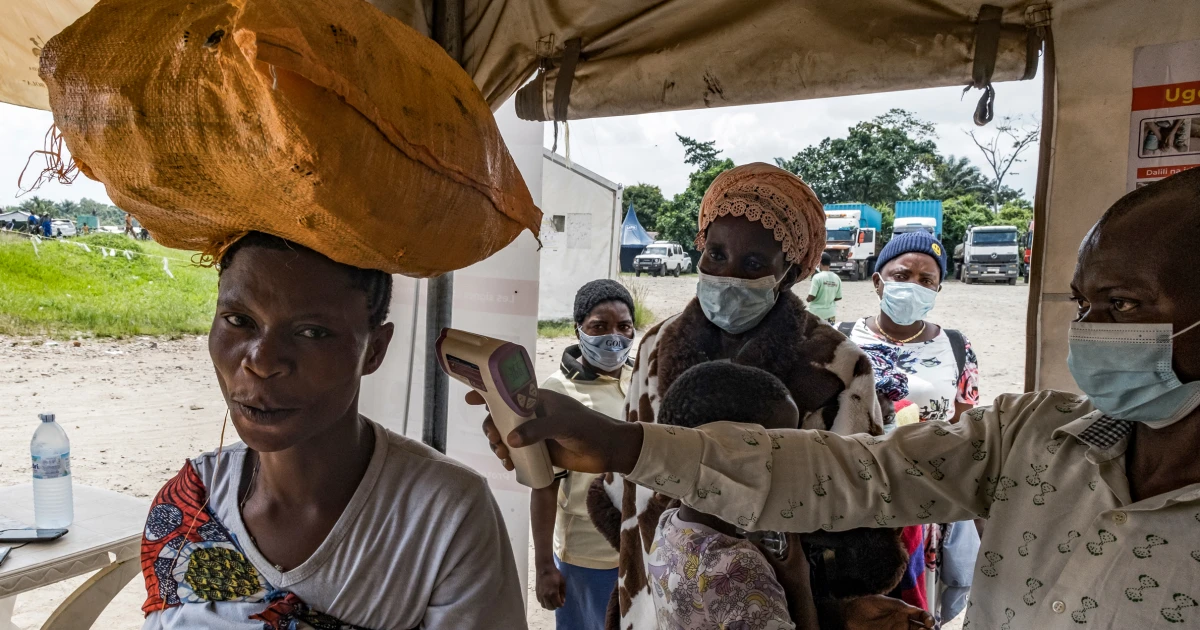
The World Health Organization confirmed the latest outbreak last week, with many fearing that the virus may have been circulating undetected prior to that announcement. As of midweek, there were 139 suspected fatalities and 600 confirmed cases, though these numbers might be significantly underestimated.
Loss of Speed in Responding to Outbreaks
According to Nicholas Enrich, the acting deputy administrator for global health at USAID, the primary deficit in the current response is the loss of speed, which is crucial in outbreak scenarios. He emphasized how USAID’s prior capabilities could have expedited virus detection, improved the distribution of personal protective equipment (PPE), and mobilized local health workers for symptom screening and contact tracing.
Reintegration of Health Workers and Resource Constraints
Community health workers with pertinent expertise have been compelled to seek alternative employment, as noted by Dr. Daniel Bausch, a visiting professor at the Geneva Graduate School and a former CDC medical officer. Many of these skilled professionals have left the field, working in unrelated jobs instead, which has led to a vacuum in qualified personnel to address the outbreak effectively.
International Rescue Committee Faces Funding Cuts
The International Rescue Committee (IRC), a key contractor for USAID in Congo, has had to drastically reduce its operations in the Ituri province, the outbreak’s epicenter, due to funding cuts. This has resulted in diminished surveillance capabilities and a reduction in essential hygiene measures. Heather Leoch Carr, IRC’s Congo Country Director, points out that many facilities lack critical protective equipment as available funding dwindles.
Government Response and Ongoing Issues
Despite these setbacks, the State Department maintains that the modifications to USAID have not impeded efforts to detect and respond to Ebola. A spokesperson denied claims about adverse effects while announcing that $23 million in foreign aid would be mobilized to enhance health responses, including surveillance, testing, and clinical management capabilities. Meanwhile, the CDC has stepped up its role in outbreak responses, supporting surveillance and providing expertise, although concerns persist regarding its effectiveness in replacing the capabilities once offered by USAID.
Concerns for Future Outbreaks
Experts stress that CDC’s role traditionally focused on technical knowledge rather than the coordination of comprehensive outbreak responses. As domestic security challenges complicate deployment to affected regions, the collaboration with USAID previously facilitated smoother operations against Ebola. Current health officials express apprehension, emphasizing that timely, coordinated responses are critical to controlling the virus’s spread, particularly as the affected regions grapple with ongoing security concerns.
