


Investigation Uncovers Alleged Coup Plot Against Nigeria’s Government
Written by Lizzy Chakupi
New details have emerged in the investigation of an alleged coup plot targeting President Bola Ahmed Tinubu’s government, centering around a handwritten document outlining a proposed alternative government structure in the event of a successful overthrow.
This document, reportedly retrieved from a collection of notes examined by Pointblanknews.com, describes strategic appointments and key positions intended to serve as the framework for a new government. The memo suggests a radical restructuring should the plot come to fruition.
The positions listed in the handwritten document include titles such as “New Leader of Nigeria and Commander-in-Chief,” “Prime Minister as Vice-President or Deputy Commander-in-Chief,” Chief of Army Staff (COAS), Secretary to the Government of the Federation (SGF), Attorney General of the Federation (AGF), and National Security Adviser (NSA), among others. It also mentions critical roles connected to anti-corruption and security agencies like the Economic and Financial Crimes Commission (EFCC) and the Department of State Services (DSS).
Among the initiatives proposed by the alleged conspirators is the establishment of a National Patriotic Governance Council (NPRC), modeled after the now-defunct Armed Forces Ruling Council, which historically served as the highest decision-making body during Nigeria’s military regime.
The memo outlines plans for the creation of various institutions, including the National Religious Regulatory Authority (NRRA), the National Infrastructure Development and Maintenance Authority (NIDMA), and the Nigeria Internal Security Commission (NISC). Additionally, it proposes the establishment of commissions to address the potential removal of oil subsidies as well as to evaluate the compensation and benefits for military and security personnel.
Further, the alleged co-conspirators suggested a comprehensive reorganization of the military into six command zones, with three General Officers Commanding (GOCs) assigned to each zone. The plan also seeks to merge the EFCC and the Independent Corrupt Practices and Other Related Crimes Commission (ICPC).
The proposed executive branch’s appointments were reportedly designed to adhere to the federal character principle, distributing key offices across Nigeria’s regions. The Vice-President position was earmarked for the southeast, while the positions of Secretary to the Government of the Federation and Minister of Defence would go to representatives from the southwest. The Attorney General and Chief of Defense Staff would be sourced from the south-south, with the National Security Adviser and EFCC chairman designated for the northwest and northeast, respectively. The heads of the DSS and the Inspector General of Police were intended to come from North Central.
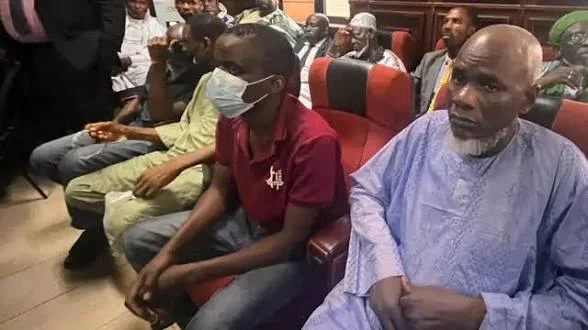
Despite some sections of the documents proving challenging to interpret, security officials believe the memo represents a vital part of the alleged conspirators’ operational strategy. This revelation adds a new layer to the ongoing treason and terrorism trial currently under way at the Federal High Court in Abuja.
In January 2026, the federal government disclosed that security agencies had discovered the alleged plot orchestrated by a network of active and retired military personnel and civilians aimed at toppling President Tinubu’s administration. Following this investigation, several suspects were arrested, while others remain at large.
Among those indicted are retired Major General Mohamed Ibrahim Gana, retired Navy Captain Erasmus Ochegovia Victor, Inspector Ahmed Ibrahim, and several others. Prosecutors have stated that former Bayelsa State Governor Timipre Sylva, mentioned in court documents, remains elusive.
Court filings indicate that the defendants are charged with conspiring to “wage war against the state” and attempting to undermine the democratically elected government through unconstitutional means. The charges encompass treason, terrorism, conspiracy, and financing of terrorist activities.
This incident is considered the most serious coup attempt Nigeria has faced since its return to democratic governance in 1999. Recent court proceedings have mandated an expedited hearing of the case, though journalists were barred from reporting due to security concerns. Witnesses, including those from the military and intelligence services, have started to provide testimonies detailing the investigation’s discovery of the alleged plot.
One key witness for the prosecution revealed that intelligence alerts had informed military authorities about suspicious activities and secret communications involving some of the accused. Investigators revealed that encrypted messaging platforms were utilized for coordination during the planning phase.
Despite the gravity of the charges, the defendants have pleaded not guilty and remain in DSS custody as they await a bail decision and the continuation of their trial.
