


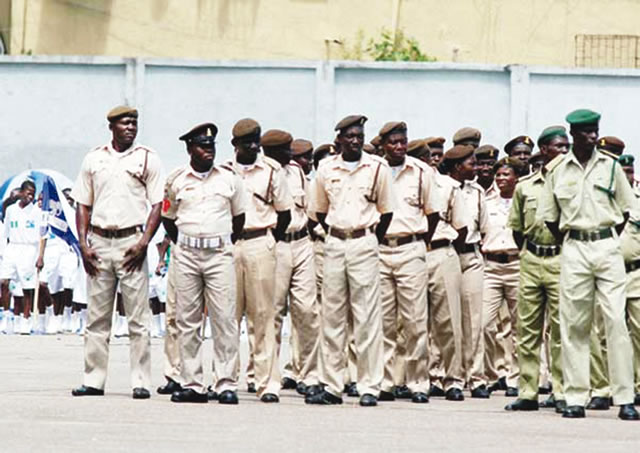
Nigeria’s Immigration Department Addresses Ebola Concerns at Borders
Nigeria’s Immigration Department has reassured the public that its borders are secure against the potential entry of the Ebola virus, which is currently ravaging parts of the Democratic Republic of the Congo and Uganda. The agency emphasized that all border crossing points are staffed and equipped with digital surveillance technology to monitor less accessible routes effectively.
In light of rising concerns over the country’s susceptibility to the Ebola outbreak, Nigeria Immigration Service (NIS) spokesperson Akinsola Akinlabi made these statements in an interview with Sunday Punch. He asserted that the country’s borders are not porous, insisting that every individual entering Nigeria is accounted for and required to present necessary documentation, including international health certificates.
Akinlabi stated, “Our objective is to secure our borders and ensure that unauthorized individuals do not enter Nigeria.” The nation’s extensive border, which spans over 4,000 kilometers and shares boundaries with Benin, Niger, Chad, and Cameroon, has seen reports of unofficial crossings. However, Akinlabi refuted claims of porous borders, noting that personnel and technology work together to monitor even the most difficult-to-access areas.
According to Akinlabi, “For us, a porous border is one that lacks human presence. All borders are actively manned. Our focus is less about their porosity and more about the breadth of these borders and the measures we have instituted to manage challenges effectively.”
On the technology front, Akinlabi revealed that the government is making significant investments in advanced systems designed to bolster border surveillance capabilities. He highlighted that the introduction of an integrated border management system and a migration information and data analysis system is part of these enhancements. “In addition to putting boots on the ground, we are leveraging technology to monitor our borders more effectively,” he added. “Given the vastness of our borders, technology is crucial for ensuring their safety.”
The spokesperson reflected on Nigeria’s response during past health crises, recalling that officials from the Ministry of Health were deployed to airports during emergency outbreaks. “During the last pandemic outbreak, Ministry of Health officials were present at the airport, and similar protocols will be activated as needed,” Akinlabi stated.
Regarding specific actions being taken in response to the current Ebola situation, Akinlabi noted that the NIS relies on recommendations from the Nigeria Center for Disease Control (NCDC) and the Ministry of Health. “We await guidance from these health authorities to determine the threat level we face,” he explained. “As immigration officials, we stand ready to play our part in securing our borders.”
On May 17, 2026, the World Health Organization (WHO) declared a public health emergency after the Bundibugyo strain of Ebola resulted in nearly 90 fatalities in the Democratic Republic of the Congo and spilled over into Uganda. The outbreak, first reported on May 5, 2026, began in the Mombwaru health district and has led to alarming statistics, including 536 suspected cases, 105 probable cases, and 34 confirmed cases, along with 134 deaths as of May 19. The case fatality rates during previous Bundibugyo outbreaks have varied between 30% and 50%. Efforts are underway to contain the outbreak, which has now reached the capital Kinshasa and confirmed cases in Kampala, Uganda.
The Nigeria Center for Disease Control and Prevention has confirmed that there have been no recorded cases of Ebola related to this outbreak. Meanwhile, the Federal Airports Authority of Nigeria announced on Wednesday that health and safety protocols at all international airports have been reinforced in collaboration with relevant health agencies. Passengers arriving from high-risk regions are being screened for Ebola symptoms, with suspected cases to be promptly isolated for further examination.
