


Challenges for South American Teams in the FIFA World Cup
The recent FIFA World Cup raised significant concerns for South American teams, marking the first instance in which a CONMEBOL representative failed to secure a title in a tournament hosted in North America. Beyond sporadic brilliance from Lionel Messi’s Argentina, South American sides often relied on a warrior spirit rather than tactical finesse to navigate the challenges posed by their opponents.
Room for Rebuilding Ahead of 2030
With the exception of Ecuador, there are growing apprehensions regarding the aging rosters of several South American national teams. Nevertheless, it is evident that these teams still possess a wealth of young talent to nurture as they prepare for the 2030 World Cup. The continent continues to produce exceptional players, and several emerged during the 2026 tournament, significantly raising their stock in the global football arena.
A Rising Star: Orlando Gil
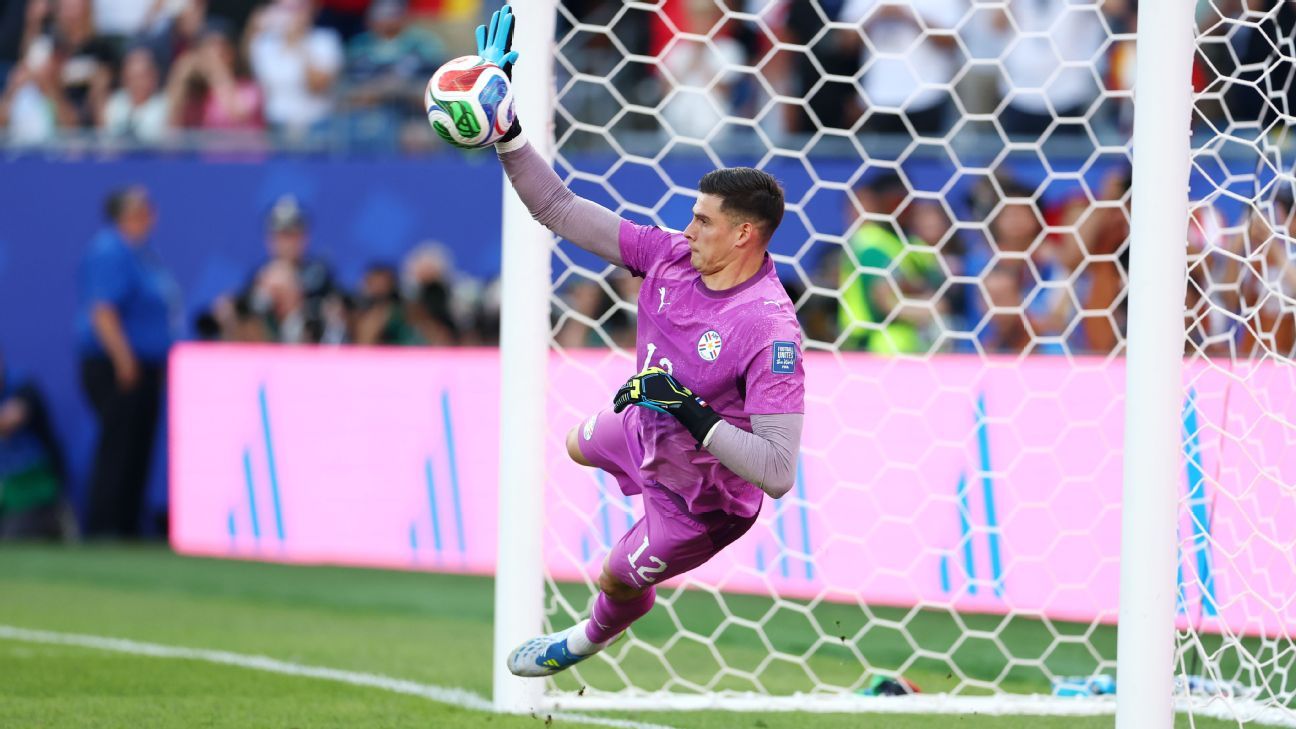
One of the standout performers for South America was Orlando Gil, the goalkeeper for Paraguay. His place in the starting lineup remained uncertain until just before the tournament, following a challenging qualifying campaign. Despite conceding four goals in Paraguay’s initial group stage match against the United States, Gil quickly proved his mettle. In subsequent games, he was beaten only twice, once from the penalty spot, showcasing his defensive prowess as he confronted opponents fearlessly.
Impressive Performances and Future Prospects
At 26, Gil is considered a late bloomer. He began his career at San Lorenzo in Paraguay before moving to a larger club of the same name in Argentina, where exceptional performances resulted in his national team selection. As he contemplates a move to Europe, potential clubs have noted his mixed ability off the line and his limitations with ball control, making him perhaps better suited to a more reactive playing style rather than one that employs a high defensive line.
Transfer Buzz Surrounds Galarza
Dylan Galarza, a 24-year-old left-footed midfielder, also captured attention during the World Cup. His journey through various clubs—rising at local powerhouse Olimpia before playing in Brazil, Argentina, and MLS—has been marked by instability. Yet, Galarza demonstrated considerable talent, scoring the winning goal against Turkey and assisting Julio Enciso during the match against Germany. His capability to transition defensively further highlights his versatility.
Emerging Talent: Midfielder Puerta
Another notable player is 23-year-old midfielder Puerta, who impressed throughout the tournament. Initially a late addition to the squad, he quickly endeared himself to coach Nestor Lorenzo with his tactical awareness and ability to solidify the midfield. Puerta thrived alongside veteran playmaker James Rodríguez, contributing significantly to the team as they advanced past the last 16.
Vite’s Potential on the Global Stage
Pedro Vite, a 24-year-old midfielder from Ecuador, emerged as a prominent figure during the World Cup. A product of the prestigious Independiente del Valle academy, he has made a name for himself after stints at the Vancouver Whitecaps and Pumas UNAM in Mexico. While not known for his scoring, Vite’s strength in midfield duels and ability to maintain possession set him apart. His understated approach may have delayed interest from European clubs, but the World Cup showcased his potential to contribute offensively.
His performances in Brazil have attracted attention from notable Brazilian clubs, including Palmeiras and Flamengo, and even European teams like Zenit St Petersburg. Vite’s aspiration to compete in the English Premier League, particularly in the UEFA Champions League, underscores his ambitions as he seeks a new challenge following a serious ankle injury.
