


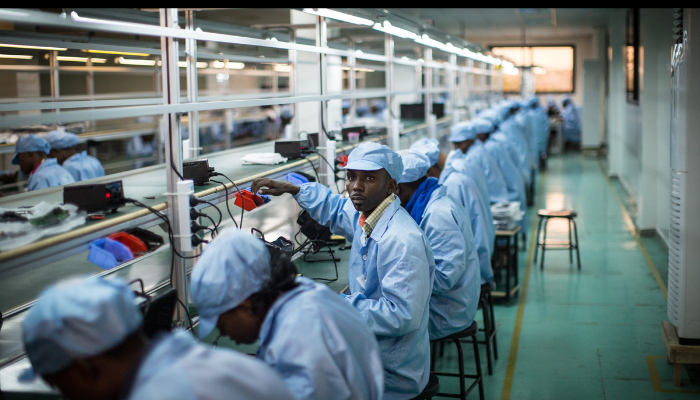
Global Productivity Rankings Highlight Economic Efficiency
Productivity serves as a crucial indicator of how effectively an economy converts labor into economic output. Recent OECD data, which evaluates countries based on their gross domestic product (GDP) per hour worked, sheds light on which nations derive the most value from each working hour.
European economies take center stage in these rankings, bolstered by robust industrial foundations, advanced technological sectors, plentiful energy resources, and highly skilled workforces. Interestingly, smaller, affluent nations often surpass larger economies, emphasizing the significance of industrial structure alongside labor input.
According to the OECD, the following are the world’s ten most productive countries projected for 2026:
Ireland Leads with $151 per Hour Worked
Ireland stands out as the most productive country by a considerable margin. Its remarkable productivity growth can be largely attributed to the presence of multinational corporations within sectors such as pharmaceuticals, software, and digital services.
Major global firms, particularly from the United States, continue to achieve substantial profits in Ireland, largely due to its favorable corporate tax framework. Consequently, the country’s GDP figures are often disproportionately inflated compared to the actual size of its economy.
Economists frequently suggest that Ireland’s adjusted gross national income provides a more accurate representation of regional economic activity. Nonetheless, it remains one of the most prolific economies globally.
Norway’s Oil Industry Drives Productivity at $132 per Hour
Norway’s high productivity ranking is largely a reflection of the enduring prosperity of its oil and gas sector. Energy exports contribute immense economic value, even with relatively limited labor participation.
Scandinavian countries benefit from advanced infrastructure, resilient institutions, and high rates of skilled workforce participation, further enhancing their productivity levels.
Luxembourg’s Financial Sector Supports $125 per Hour Performance
Luxembourg’s productivity is greatly underpinned by its internationally integrated financial services sector. Densely packed with investment funds, banks, and multinational companies, the country stands as a financial hub.
However, similar to Ireland, Luxembourg’s productivity statistics are often inflated by cross-border financial transactions and multinational corporate accounting structures, leading to significantly lower measures when using alternative income indicators.
Belgium Achieves $100 per Hour Through Diversified Economy
Belgium recently surpassed the symbolic $100 threshold in productivity, thanks to its diversified economic landscape, advanced manufacturing capabilities, and strategic geographical position within the European trade network.
The nation’s well-developed logistics infrastructure and high-value-added industrial production substantially enhance overall worker productivity.
Switzerland and Denmark Close the Gap with $99 per Working Hour
Switzerland maintains its reputation as one of the world’s most efficient economies, supported by high-value industries that include banking, pharmaceuticals, biotechnology, and precision engineering.
Its strong innovation ecosystem and a highly educated workforce contribute to consistently high productivity levels. Similarly, Denmark ranks alongside Switzerland, owing its efficiency to the integration of advanced technologies, a flexible labor market, and effective public services.
This focus on digitalization, renewable energy, and innovation helps ensure ongoing productivity growth, even with a smaller population base.
United States Remains Strong with $97 per Hour Worked
The United States continues to assert its position as the largest high-productivity economy in the world. While it may lag behind some smaller European nations, it still stands above the OECD average.
The U.S. economy derives strength from its leading technology firms, deep capital markets, and advanced research capabilities, alongside highly productive sectors such as finance, software, and artificial intelligence.
Austria, Iceland, and the Netherlands Show Competitive Edge
A Austria ranks with $95 per working hour, supported by its resilient industrial base and export-oriented manufacturing sector. The country enjoys the benefits of stable educational institutions and a robust vocational training system, closely integrated with Europe’s extensive supply chains.
Similarly, Iceland, also with a productivity of $95 per hour, leverages high income levels within a relatively compact yet efficient economy focused on renewable energy, tourism, and technology-driven services.
Lastly, the Netherlands rounds out the top ten with productivity at $94 per hour, bolstered by its highly globalized economy that thrives on logistics, trade, agriculture, and financial services. The Dutch economy benefits from advanced infrastructure and high productivity within knowledge-driven sectors, particularly via major transport hubs like Rotterdam.
