


Nairobi – The recent Africa Forward Summit in Nairobi, co-hosted by Kenya and France, provided a platform for women in technology to engage in discussions about the future of artificial intelligence in Africa. RFI spoke with Shikoh Gitau, CEO of the tech lab Qhala, who shared insights about collaborating with Mistral AI in France and the evolving role of female leaders in the tech landscape.
Publication date: 24/05/2026 – 08:58Modification date: 24/05/2026 – 09:00
3 minutes
reading time
Gitau’s Nairobi-based lab, Qhala, focuses on computing and artificial intelligence while investing in the vast potential of digitalization to reshape Africa. “Our work engages the entire African continent, but our mission transcends local boundaries to make a global impact,” Gitau said.
Highlighting the significance of international collaboration, she emphasized, “We are forging a unique partnership with France. This goes beyond mere dialogue; it’s about tangible actions. Europe faces criticism for its tendency to discuss Africa without delivering results, but our partnership illustrates what Europe can achieve.”
A key initiative under this collaboration is Qhala’s new alliance with French firm Mistral AI. This partnership aims to develop AI solutions specifically tailored for the African market.
Signed during the summit in Nairobi, this collaboration includes the launch of the Mistral AI accelerator bootcamp and incubator, designed to foster the development of AI solutions across Kenya and the East African region.
Mistral AI also commits to supporting East African startups through technical onboarding, mentorship, and venture development, as confirmed by Mohamed Zouari, the company’s Head of Revenue for the Middle East and Africa, at the Africa Forward event. “Hosting the French summit here gives us the leverage to influence France’s strategic approach to AI in Africa,” he noted.
©Melissa Chemum
Empowering Future Innovators
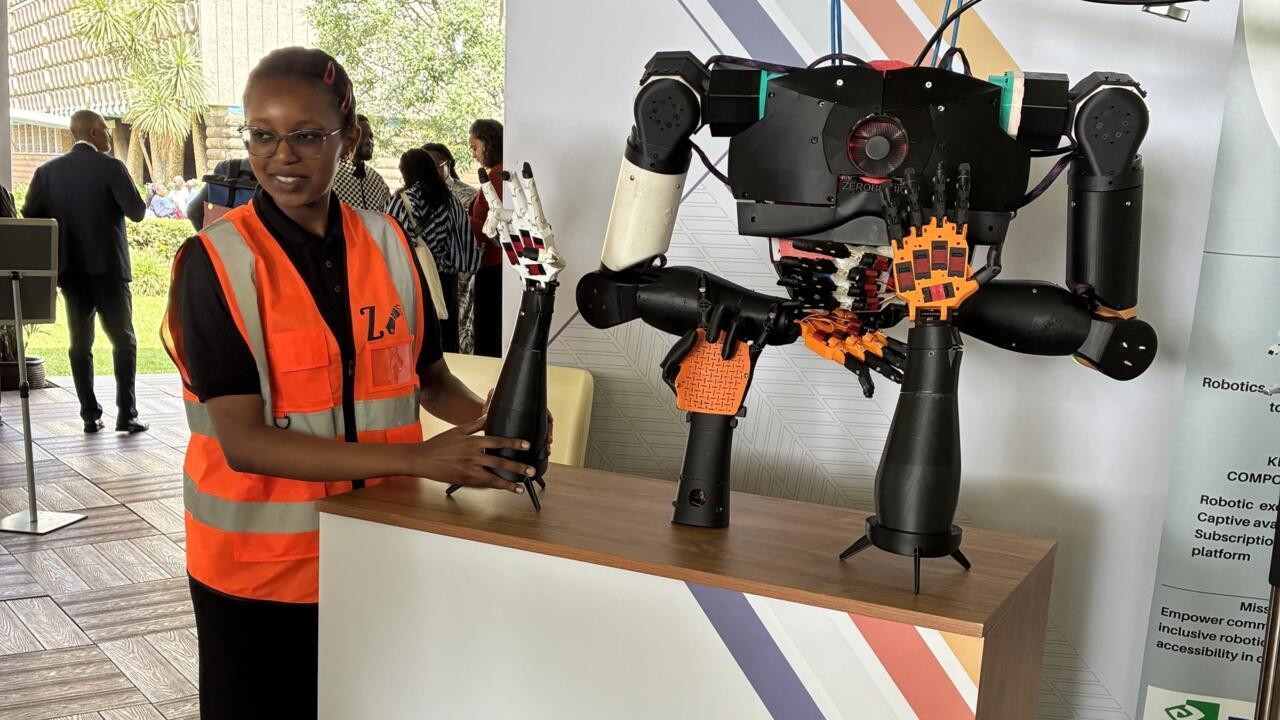
The summit also spotlighted a dynamic new generation of female entrepreneurs, engineers, and innovators who are making significant strides in Africa’s technology sector. Nora Kimachi, co-founder of Zero Bionic, is at the forefront, working on a humanoid robot that utilizes recycled plastic to communicate in sign language for the hearing impaired.
Kimachi stated, “As we engage in conversation, everything you say is translated into sign language, and vice versa. We are pioneering this technology in Africa, focusing on humanoid robots tailored for sign language.” Echoing Gitau’s sentiments, she emphasized the critical role of collaboration and investment in driving local innovation.
Discussing her experiences at Africa Forward, Kimachi remarked, “We had a diverse group from sectors like health, education, and aviation, allowing us to connect with individuals capable of making a profound impact. This network will enable us to collaborate effectively across nations in both the West and Africa to improve lives.”
Aged just 22 and already an award-winning entrepreneur, Kimachi aims to extend her efforts beyond Zero Bionic, tackling global challenges such as climate resilience and inclusive education, and is currently partnering with the African Union to address social and environmental inequalities.
Driven by Personal Journey
For many women in Africa’s burgeoning tech scene, their personal backgrounds fuel their determination to effect change within the sector. Born in Nairobi and raised in a village, Gitau found an early affinity for mathematics and science, stating, “I was captivated by subjects like physics, biology, chemistry, and, of course, math.”
However, upon joining Africa Nazarene University in Nairobi, she encountered an unexpected challenge—the lack of her favored subjects. “The university offered majors in theology, commerce, and computer science, so I opted for computer science due to its math content.”
Gitau later pursued her master’s degree at the University of Cape Town (UCT) in South Africa, ultimately receiving a scholarship to Germany for her PhD, which she completed between UCT and the University of Potsdam. “My diverse educational journey has allowed me to refine our operations in Africa, and I am deeply passionate about leveraging technology to enhance the continent’s potential.”
