


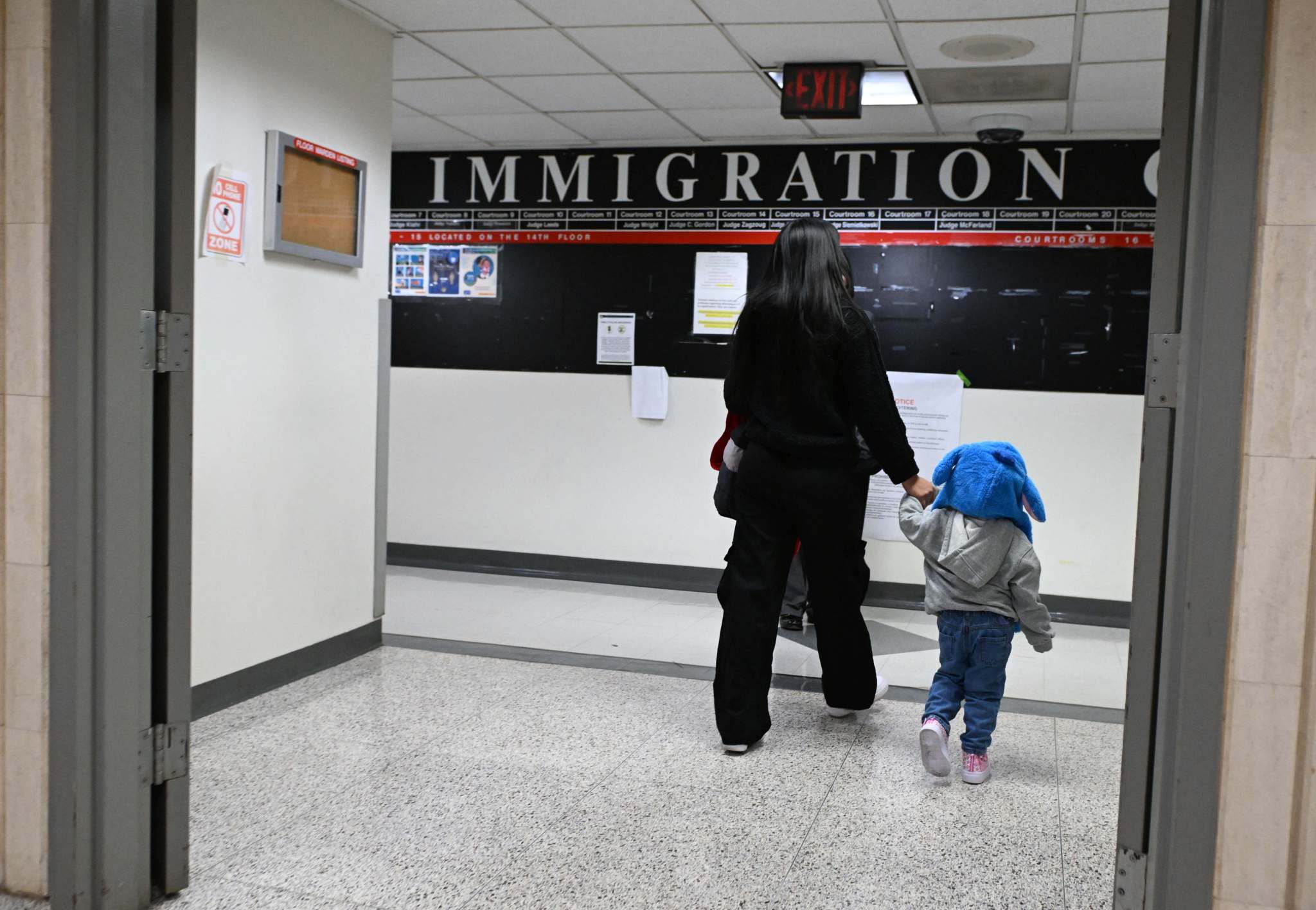
Brookings Estimates High Number of U.S. Children Separated from Parents Amid Immigration Actions
The Trump administration has not maintained precise records on the number of children separated from their parents during immigration detention, prompting a Brookings report to reference findings from ProPublica in its analysis.
A recent Brookings report suggests that the scale of family separations among American children during immigration enforcement actions is much greater than previously understood. This analysis estimates that more than 100,000 U.S. children have had parents detained since the onset of President Donald Trump’s mass deportation initiative last year, drawing on ProPublica’s reporting regarding parental detentions, which frequently result in family separations.
While family separation policies at the U.S.-Mexico border were officially rescinded following widespread public outrage, recent practices indicate that families continue to be divided during nationwide immigration sweeps. Brookings highlights that approximately 400,000 individuals have been detained by immigration authorities since Trump was reinstated, yet the lack of government tracking makes it nearly impossible to ascertain the actual number of family separations stemming from these actions.
In constructing its estimates, Brookings utilized census data to approximate the number of children per detainee. It concludes that around 200,000 children have a parent in custody, including an estimated 145,000 American children. The report acknowledges that the actual figures could be slightly higher or lower than these estimates.
Meanwhile, ProPublica employed a more conservative approach, relying on government records obtained through a public information lawsuit led by the University of Washington. In the initial seven months of President Trump’s second term, it identified at least 11,000 American children whose parents had been detained. ProPublica’s findings also reveal that the Trump administration deported American mothers with children at a rate approximately four times greater than the Biden administration.
However, there are reasons to believe that these estimates may still underreport the reality. The current government data relies heavily on detainees self-reporting their parental status. In numerous instances, immigration agents fail to inquire, or parents opt not to divulge family information due to fears for their children’s safety.
Tara Watson, a co-author of the Brookings report, emphasized the importance of transparency regarding the well-being of affected children. She questioned how many might be leaving the country, staying with relatives, or remain unaware of their circumstances. ProPublica’s ongoing investigations reveal various outcomes faced by families who have driven separation experiences.
In one notable case, Doris Flores, a mother from Honduras, was separated from her nursing infant when Immigration and Customs Enforcement (ICE) agents arrested her and her fiancé simultaneously. In desperate need of a caregiver for her baby and her eight-year-old daughter, she sought assistance from a local pastor.
In response to the Brookings report, the Department of Homeland Security, which oversees ICE, reiterated its stance that the agency does not engage in family separations. It stated that parents are typically asked whether they want to be removed with their children or if they would prefer to designate someone else for their care. This approach, they assert, aligns with practices from previous administrations.
However, changes have emerged in how ICE interacts with parents. The guidelines known as the “Parental Interests Directive” have been rebranded under the Trump administration to the “Parental Restraint Directive,” leading to the removal of language that previously advocated for a “humane” approach toward immigrant families.
Data reporting for this analysis was contributed by Jeff Ernsthausen.
