


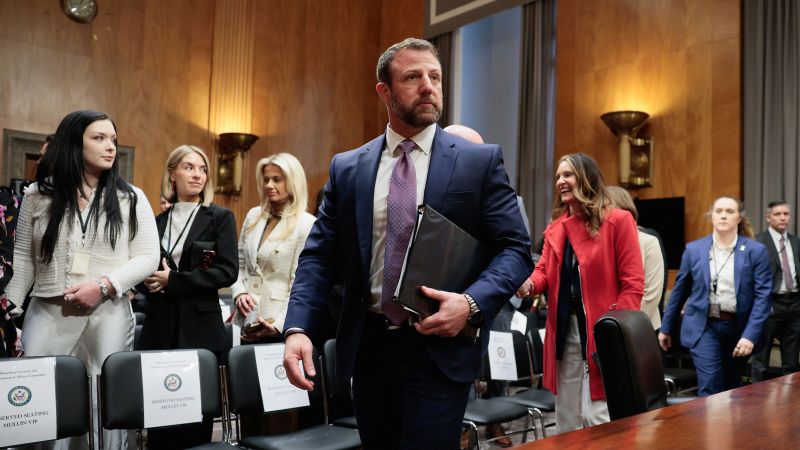
Homeland Security Secretary Navigates Immigration Enforcement Challenges
Two months into his role, Homeland Security Secretary Mark Wayne Mullin faces a complex challenge: implementing expected deportation orders from President Donald Trump while steering clear of the missteps that plagued his predecessor. The balancing act entails stringent enforcement of immigration policies while managing the political ramifications associated with such measures.
Adjustments to Immigration Patrols and Criticism of Progressive Policies
While controversial immigration patrols aimed at states with progressive policies have been reduced, Mullin continues to voice criticism against local leaders advocating for such stances. The White House’s border czar has recently committed to reinforcing these areas with additional immigration personnel, underscoring the administration’s focus on immigration control.
Funding Cuts and Staffing Implications at Airports
Mullin has threatened to send Immigration and Customs Enforcement (ICE) officers to airports facing understaffing amidst a Department of Homeland Security (DHS) shutdown. Moreover, he is considering funding reductions for airports that refuse to cooperate with federal immigration initiatives, signaling a tough stance on compliance from local jurisdictions.
Security Preparations Amid Potential Boycotts
In light of upcoming World Cup matches, Mullin highlights the agency’s efforts in securing these events. However, he acknowledges that the presence of law enforcement could deter fans from attending, raising concerns about the impact on participation due to immigration-related arrests during the tournament.
Plans for Immigrant Detention Facilities Under Review
After initially pausing extensive plans for immigrant detention centers, reports indicate that such initiatives may be resuming due to ongoing litigation. Mullin’s actions illustrate a push to re-establish a stringent immigrant detention policy amidst mounting pressure from various factions within the administration.
Mullin’s Balancing Act Between Enforcement and Cooperation
Mullin’s approach during his first two months reflects an attempt to reconcile a more conciliatory approach to immigration enforcement, promised during his confirmation hearings, with the imperatives put forth by hardline supporters of the Trump administration. This duality emphasizes the ongoing political tensions surrounding immigration policy in the United States.
Administrative Push for Mass Deportations
As part of their commitment to robust immigration enforcement, administration officials are underscoring ongoing plans for mass deportations, particularly to appease conservative audiences critical of perceived inaction. White House Border Security Director Tom Homan reaffirmed this commitment, emphasizing the centrality of immigration enforcement in Trump’s agenda.
Image Rehabilitation of ICE and Internal Disputes
Mullin is actively working to improve the public perception of immigration enforcement officials, who previously faced widespread criticism for assertive operations in urban centers. However, this effort is met with internal disputes, including critiques from Transportation Secretary Sean Duffy regarding the potential staffing disruptions at airports in non-compliant jurisdictions.
Continuing Social Media Outreach and Event-Specific Strategies
In promoting preparations for the World Cup on social media, Mullin highlights the work of Homeland Security Investigations, which tackles issues like human trafficking and counterfeiting. While he stipulates there will be no large-scale immigration operations at the event, he leaves the door open for ICE involvement in targeted arrests, reflecting the ongoing complexity and challenges surrounding immigration enforcement.
