


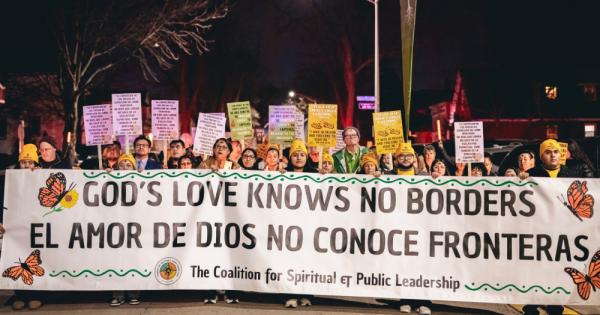
Religious Leaders Granted Access to Immigrant Detainees in Chicago
A recent court-ordered agreement allows a group of religious leaders from Chicago to provide pastoral care at an Immigration and Customs Enforcement (ICE) processing center in suburban Chicago. This agreement facilitates daily access, enabling clergy to offer spiritual support to immigrant detainees.
Effective May 14, this arrangement permits one coordinated visit per day by up to five clergy members or volunteers during designated hours. The agreement outlines specific procedures for religious observances, safety protocols, and guidelines for accessing detainees. The initiative will remain in place throughout the ongoing federal lawsuit.
This access allows the religious team to perform approved sacramental services, including prayers and rituals linked to significant religious observances. Additionally, ICE is required to inform detainees about the availability of pastoral services. While approved religious materials can be brought into the facility following safety screenings, visits must adhere to the center’s established guidelines. These daily pastoral visits commenced on May 15, culminating a nearly ten-month campaign for access led by faith leaders advocating for the rights of Broadview Center detainees to receive religious care.
Clergy Mobilizes to Support Detainees
Father Daniel Hartnett, a Jesuit priest engaged in the ministry for detainees, expressed his elation over the successful efforts. Hartnett, who has visited the Broadview facility several times since the agreement took effect, noted that a rapid response team was formed to ensure a consistent daily presence through rotating clergy and volunteers.
Michael N. Okinchik-Cruz, CEO of the Spiritual and Public Leadership Coalition, emphasized the pivotal role immigrant community members played in this movement. He acknowledged their leadership in organizing religious processions and facilitating public mass and demonstrations. “We are witnessing their faith, courage, and tenacity,” he remarked, highlighting their resilience amid adversity.
Okinchik-Cruz also paid tribute to Sisters of Mercy Joan Pursh and Pat Murphy, whose decade-long commitment to regular outreach at the facility laid the groundwork for ongoing advocacy. Although they passed away last year, their foundational work continues to inspire the current campaign for expanded access to religious care. Since the new protocols were implemented, chaplains report encountering detainees dealing with various emotional challenges.
Detainee Experiences at the Facility
Father Leandro Fossa, a Scalabrinian priest, has also made frequent visits to the center. He shared that many of the detainees he encounters include individuals transferred from other facilities. “I’ve seen people who had the chance to contact their families before being moved again,” he stated.
Fossa noted that some detainees displayed confusion regarding the reasons for their detention, often revealing their uncertainty about the legal process. “They’re not sure why they were arrested, but they respect what the court has demanded of them,” he explained. “The situation is marked by shock and confusion,” he added, emphasizing that these individuals often defy the stereotypical narrative surrounding immigration detention.
Many detainees contribute positively to society, strengthening families and communities through hard work. “These are people who make this country great,” Fossa asserted, expressing frustration over the oversimplification of their experiences.
Pastoral Care and Emotional Support
The newly established agreement permits a range of sacramental services, allowing chaplains to conduct prayers, communions, confessions, and anointings. Father Keller recounted a recent service for a group of 11 men, which included communal prayer and reflection followed by individual blessings and confession opportunities. A particularly poignant moment arose when a young Guatemalan man became emotionally overwhelmed during the service. “Prayer brought him back to life,” Keller said, underlining the healing power of spiritual care.
Hartnett observed notable changes since the agreement’s implementation; previously, detainees often faced physical constraints, such as hand and ankle shackles. Following clergy input during pastoral meetings, these practices have become less common. He shared that during a recent gathering, participants could comfortably sit together and introduce themselves, fostering a more supportive environment. “I see some of the nervousness dissipating,” he said, noting that many individuals transitioning from anxiety to smiles during the sessions.
Listening to Detainee Concerns
For Father Fossa, the critical aspect of these visits extends beyond religious rituals. He described the challenging encounter with a distressed detainee who had unexpectedly found himself in the facility. “It took us two hours to calm him down,” he recounted, emphasizing the emotional toll of detainment on individuals grappling with uncertainties about their families and future. “They don’t necessarily need answers; they need someone to listen,” he said.
The agreement remains in effect while the federal case continues, with hopes of renewal anticipated in early July. Felician Sr. Jeremy Midura, director of the coalition and active participant in visiting ICE detainees, heralded the agreement as a positive recognition of immigrants’ rights to spiritual care. “We are simply human beings engaging with those who deserve to be treated with dignity,” she affirmed.
