


U.S. Men’s National Team Roster Choices Spark Debate Ahead of World Cup
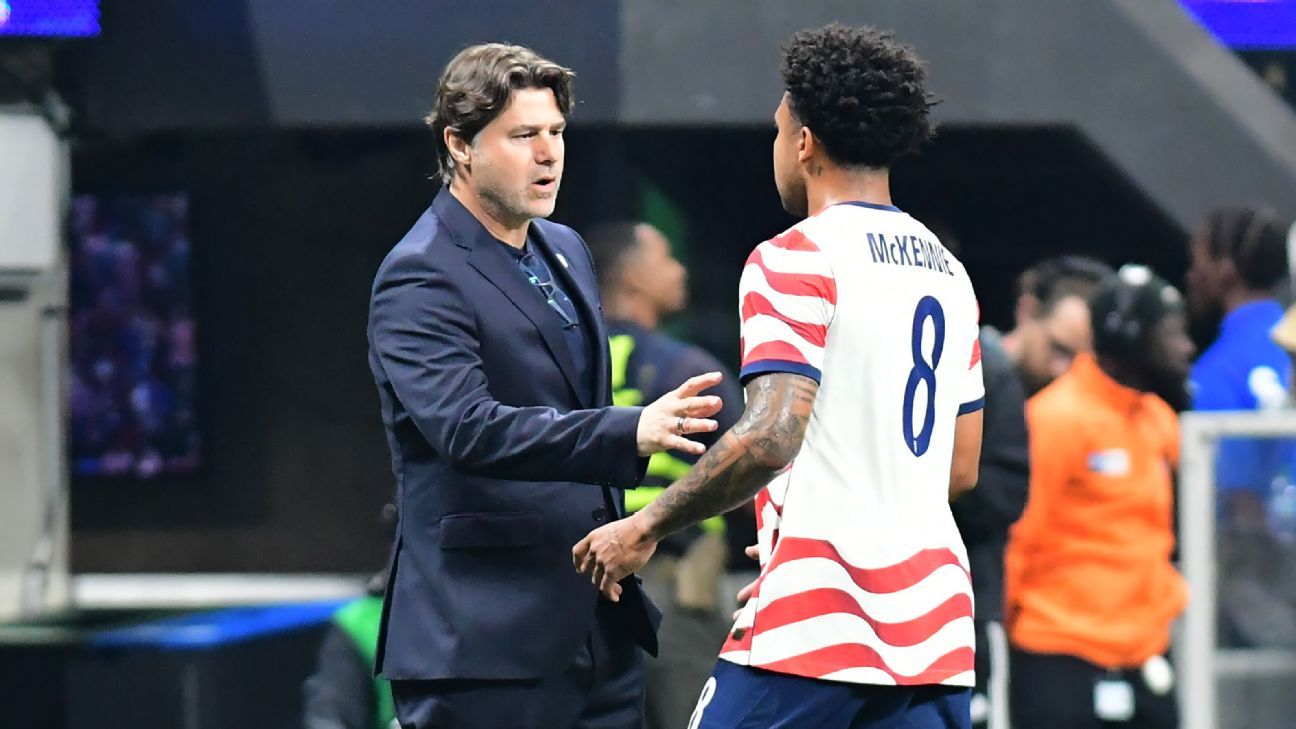
NEW YORK — World Cup squad announcements often come with a fair share of drama, yet U.S. Men’s National Team coach Mauricio Pochettino has opted for a familiar strategy. Among the 26 players named to the roster, 13 had participated in the last World Cup, featuring prominent figures such as Christian Pulisic, Weston McKennie, and Tyler Adams. The remainder of the team, revealed on Tuesday, remained largely predictable.
However, some roster decisions might raise eyebrows and could pose challenges for Pochettino down the line.
The controversy begins with the exclusion of Tanner Tessmann, a midfielder for Olympique Lyonnais. Tessmann had been sidelined for almost the entire month of May due to what Lyon manager Paulo Fonseca described as a “muscle strain.” While recovery seemed plausible, Pochettino decided it was too risky to include Tessmann in the squad.
Sources disclosed to ESPN that this decision came as a “big surprise” to Tessmann. This is consistent with Pochettino’s approach; throughout his tenure as U.S. coach, he has often removed players from consideration if they didn’t appear to be in peak condition.
Strategic Lineup Decisions Raise Questions
There are significant differences between international friendlies and the World Cup, and this reality has seemingly influenced Pochettino’s cautious strategy regarding player fitness. What stands out, however, is his choice to add another outside back, Joe Scally from Borussia Mönchengladbach, instead of bringing in another midfielder like Aidan Morris from Middlesbrough.
Morris has emerged as a compelling option in midfield, boasting an impressive 92% pass success rate this season. Although he has certain shortcomings, his bullishness and ability to maintain ball possession could greatly benefit the American squad. Given Tessmann’s absence, Morris presented a stronger midfield link.
Conversely, the inclusion of Scally appears somewhat redundant. Although he showcases versatility by performing as a right-back, center-back, or right wing-back, there are already sufficient players on the roster capable of filling those roles. The team features Timothy Weah and Sergiño Dest as wing-back options, along with Dest and Alex Freeman for right-back duties, while already having five center backs without Scally.
This has left the U.S. squad feeling thin in the middle. Adams is a guaranteed starter but has struggled with injuries in the past, while McKennie seems better suited for an attacking mid role. Cristian Roldan’s presence might allow McKennie to push further up the pitch.
Midfield Depth Concerns Amplified by Injury Risks
The accumulation of yellow cards in midfield is a pressing concern. If one or two key players are sidelined, the American defense may face significant vulnerabilities. Morris’s inclusion could have provided much-needed resilience against such challenges.
While it’s possible that the U.S. team may not pay the price for Pochettino’s midfield decisions, the World Cup’s intense competition often lays bare a team’s weaknesses. This was evident in 2022 when the choice to use Jesus Ferreira over Ricardo Pepi proved detrimental, particularly when Sargent’s injury exposed a crucial gap.
Although Pochettino is deploying just three forwards this time around, there remains a surplus of positions available. Folarin Balogun, Haji Wright, and Pepi have enjoyed strong club seasons, with Wright contributing 17 goals for Coventry City as part of their promotion campaign to the Premier League.
Creative Playmaking and Offensive Strategies Under Scrutiny
The effectiveness of the forward line hinges significantly on their service. The previous World Cup highlighted the U.S. team’s inability to consistently convert promising setups into clear scoring opportunities. It falls on McKennie, Pulisic, Giovanni Reyna, Malik Tillman, Weah, and Alejandro Zendejas to unlock the creativity needed to drive the attack.
The pressing question remains: will they deliver? Pulisic has struggled at AC Milan this year with only two goals to his name. A forward like Balogun alongside him could alleviate some pressure, and McKennie’s potential shift to a more attacking role could further enhance Pulisic’s effectiveness.
Zendejas presents an intriguing option in attack, bringing a burst of speed and innovative flair. Coupled with the offensive runs of outside backs Dest and Anthony Robinson, the U.S. may be on the verge of developing a more dynamic style of play that could elevate Pulisic’s contributions.
Reyna, however, introduces an element of unpredictability. His lack of consistent playtime during the club season poses a risk. Nonetheless, his impactful performances in November highlight his potential as a game-changer, making his deployment a gamble dependent on match dynamics.
Injury Concerns Loom Ahead of World Cup Preparations
The specter of injuries lingers as preparations intensify. A pivotal focus will be the UEFA Conference League final match between Crystal Palace and Rayo Vallecano. Questions surround American defender Chris Richards and whether he can return following an ankle injury. His participation and condition could significantly influence preparations ahead of the U.S. opener against Paraguay on June 12.
Time will tell how the backline is structured, but one thing is evident: Richards’ presence is vital. The existing center-backs have shown inconsistent form, and any absence from Richards could severely complicate the U.S. team’s path in the World Cup.
