


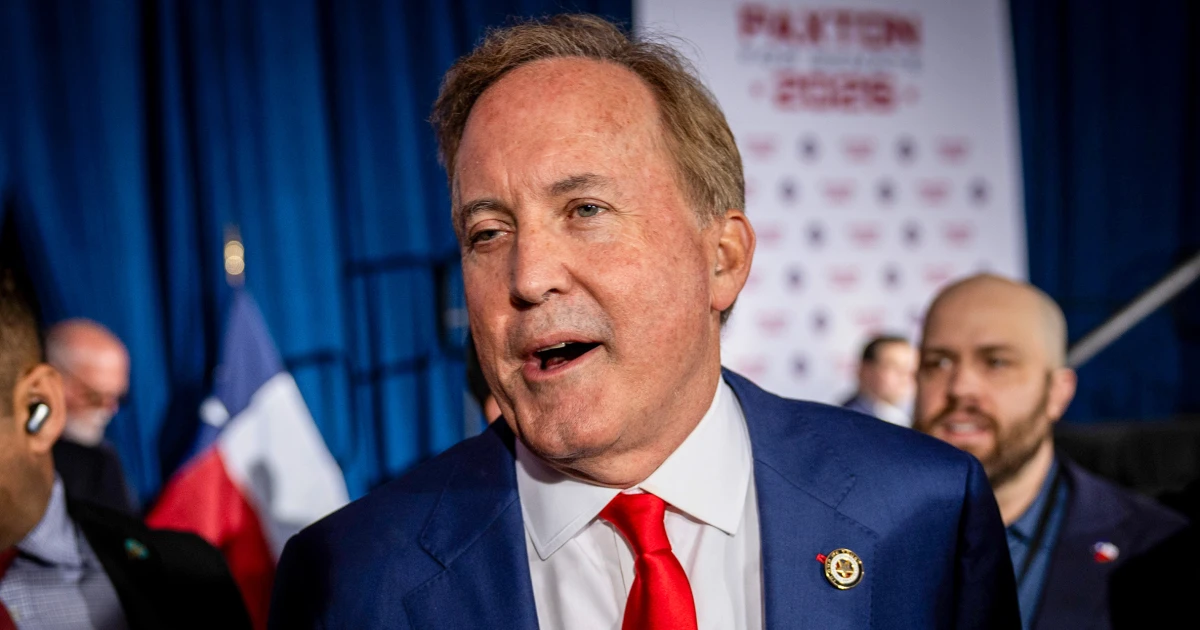
Challenges Loom for Paxton Following Senate Primary Win
While President Donald Trump may be celebrating Texas Attorney General Ken Paxton’s recent victory in the Senate primary, some Republicans are voicing concerns about the potential implications for the party. Paxton’s triumph over four-term Senator John Cornyn in a runoff election was somewhat unexpected, particularly given the controversies that have surrounded him. Despite Democrats viewing him as a weak candidate, his lackluster fundraising numbers have raised alarm bells within GOP circles.
One Republican consultant, who chose to remain anonymous, described the current Texas economic landscape as dire, emphasizing the high cost of living in the state. Their candid assessment suggests that major financial backing will be necessary to secure a Senate seat in the upcoming election.
Paxton’s fundraising efforts have severely lagged compared to those of his Democratic opponent, state Representative James Talarico. Talarico has already raised over $40 million, with fundraising expected to surge following Paxton’s primary win. According to reports, Talarico garnered $600,000 in donations within just two hours after the election results were announced.
To date, Paxton has raised approximately $7.6 million, with only $2.3 million remaining as of early May. His campaign has yet to respond to inquiries regarding their strategy moving forward. Notably, some consultants suggest that Republican groups will need to increase their financial commitment significantly—potentially up to $100 million—to ensure Paxton remains competitive.
Advertising costs in Texas are astronomical, with a state that encompasses around 20 media markets requiring substantial funding for effective outreach. There are doubts circulating among Republican donors regarding their willingness to back Paxton, especially considering his impeachment on bribery and corruption charges in 2023, despite his acquittal.
Close associates of Cornyn, including influential donors, seem wary of contributing to Paxton’s campaign. George Seay, a longtime friend and donor, declined to reveal his own plans for support while suggesting that Paxton’s nomination complicates the Republicans’ chances in Texas.
Mobilizing Financial Support for Paxton
As the GOP looks to galvanize support for Paxton, efforts are underway to mobilize resources from MAGA Inc., a super PAC closely aligned with President Trump. While specific plans for Texas remain undisclosed, the group maintains a substantial war chest estimated at over $350 million as of late April. Additionally, the conservative Club for Growth has publicly endorsed Paxton, further complicating the political landscape.
Paxton is linked with Lone Star Liberty PAC, which spent more than $17 million supporting him throughout the primary and runoff contests, as indicated by AdImpact, a media tracking firm. Greg Keller, who oversees the PAC, recently indicated that fundraising efforts are gaining momentum, though he did not disclose specific figures. The focus appears to be on attracting both grassroots and high-profile donors—many of whom previously backed Cornyn.
Keller expressed optimism, stating, “This is going to be a well-funded campaign…The response we’re getting is very good.” However, he acknowledged the challenges of matching Talarico’s impressive fundraising capabilities, especially in major financial hubs like New York City and San Francisco.
The Senate Leadership Fund, known for its significant role in Senate races, is supporting Cornyn yet has not yet secured advertising time in Texas for the fall elections. Senate Minority Leader John Thune emphasized the necessity for party unity and robust fundraising efforts, noting the importance of maintaining control of key Senate seats.
While some GOP insiders remain skeptical about Paxton’s ability to attract substantial donors, others argue that recent endorsements and unified party support could sway undecided contributors. Brendan Steinhauser, a Texas Republican strategist, pointed out that Cornyn’s public endorsement of the Republican ticket may serve as a catalyst for financial backing from his network.
Heightened Stakes in the Upcoming Election
The 2018 electoral cycle marked a pivotal moment for the Democratic Party, particularly during President Trump’s first term in office. The race between Beto O’Rourke and Senator Ted Cruz highlighted the potency of grassroots fundraising, with O’Rourke amassing $80 million compared to Cruz’s $35 million, despite Cruz ultimately winning by a slim margin.
Warning Republicans not to underestimate the upcoming general election, Cruz underscored the urgency of a cohesive strategy. He referred to James Talarico as a formidable opponent, pushing the party to remain vigilant.
Dickey echoed concerns regarding the Republican Party’s need to define Talarico. As part of their strategy, Republicans have been vocal about Talarico’s past remarks on cultural issues, which they plan to exploit in their campaign messaging.
The Lone Star Liberty PAC recently amplified its efforts with advertisements targeting Talarico, a move that has captured donor attention and enthusiasm. The rhetoric surrounding Talarico has intensified, as illustrated by comments from White House officials, heightening the discourse in this contentious political environment.
Talarico has acknowledged that some of his previous remarks may have been inappropriate but accused Paxton of using them to distract from his own controversial history. He criticized Paxton for failing to address pressing issues like the rising cost of living in Texas. Talarico emphasized his commitment to fighting corruption and reducing costs, contrasting his campaign platform against Paxton’s political actions.
