


Paris Saint-Germain (PSG) will face Arsenal in the UEFA Champions League final this Saturday in Budapest, set to be a showcase of contrasting playing styles from two high-profile teams.
With a staggering average possession rate of 64.6% per game in Ligue 1 this season, PSG excels in their passing game, maneuvering seamlessly up the pitch. Conversely, Arsenal, known for their defensive solidity with the fewest goals conceded in the Premier League (27) and the most goals scored from set pieces (25) among Europe’s elite leagues, will aim to blend tenacity with opportunism.
This matchup not only presents the clash of Luis Enrique’s offensive strategies against Mikel Arteta’s tactical discipline, but also reveals deeper nuances that could define this marquee event in European club football.
Unconventional Kick-off Tactics of PSG
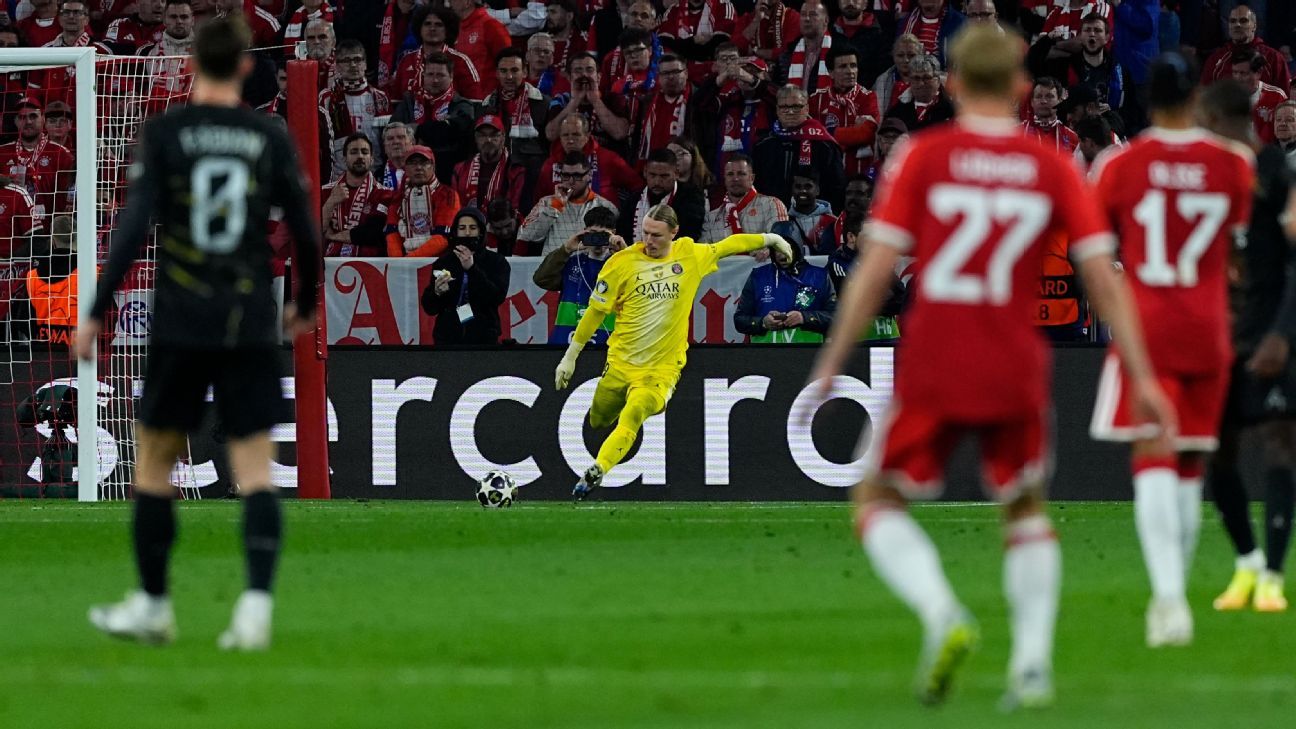
In an age defined by set-piece innovation, it is intriguing to see teams adopt straightforward strategies, such as launching the ball into the opponent’s half from the kick-off, a method that PSG notably employs more frequently than any other club.
Set-piece analyst Stuart Reid explains this strategy: “It’s crucial to assert pressure on the opposition immediately by pushing high and reclaiming possession quickly.” Indeed, PSG’s approach has paid dividends, as evidenced by their ability to win the ball back within 30 seconds of kickoff in their last two Ligue 1 matches. However, statistics reveal that they seldom take immediate shots from these situations, preferring to maintain possession by returning the ball to their defenders. Reid notes that this cautious tactic is likely due to the spaces created during kick-offs, which may be exploited by opponents.
Their approach during the Champions League semi-final against Bayern Munich raised eyebrows, with goalkeeper Matvei Safonov appearing to mismanage his distribution. Yet, as it turned out, this was a calculated pattern designed to keep Bayern’s wingers like Michael Oliseh confined, minimizing their impact on the game.
Coaches Face Decisions on Frontline Dynamics
Entering a Champions League final with uncertainty surrounding the starting striker is a rarity. Arsenal’s Mikel Arteta faces this challenge with two options: Kai Havertz or Viktor Gökeren. Both players have their strengths but require careful management in deployment to unlock victory.
Many pundits believe Gökeren, with his impressive form and goal-scoring ability in the Champions League, deserves a starting spot given his standout performance against Atlético Madrid. His capacity to dominate defenders and create opportunities was evident in their recent matchups. However, his effectiveness may hinge on the physical matchups he faces against the PSG defense.
In contrast, Havertz offers technical proficiency and better ball retention, making him potentially more valuable in tight situations. His ability to support teammates in transitions could prove critical if Arsenal struggles to gain possession. The decision looms large for Arteta as he contemplates which player will be instrumental in overcoming the formidable PSG backline.
Defensive Challenges on the Right Flank
Both teams enter the final with issues on the right flank. Arsenal is without their first-choice right-back, Jurrien Timber, who has been sidelined since mid-March due to injury. Although a return is imminent, Timber may not be at peak performance. Meanwhile, Ben White is out for the season with a knee injury, further complicating Arteta’s options.
This leaves Arsenal considering alternatives like Cristian Mosquera or Martin Zubimendi, yet the 21-year-old Mosquera is tasked with containing the explosive PSG winger Hviča Kvaratschelia—a demanding challenge against one of the best attacking duos in the sport.
Compounding Arsenal’s difficulties is PSG’s tactical flexibility; both Kvaratschelia and fellow wingers Ousmane Dembélé and Désiré Doué frequently interchange positions, which can lead to overloading on the flanks. In contrast, Arsenal may find a slight advantage if PSG’s Achraf Hakimi, recovering from a hamstring injury, is unavailable. Should Hakimi play, it will mark his return after a lengthy absence, leaving questions about his match fitness against a high-stakes Arsenal side.
With both teams grappling with lineup uncertainties, the Champions League final promises to be an exhilarating encounter, highlighting the intricacies and tactics that define modern football at its highest level.
