


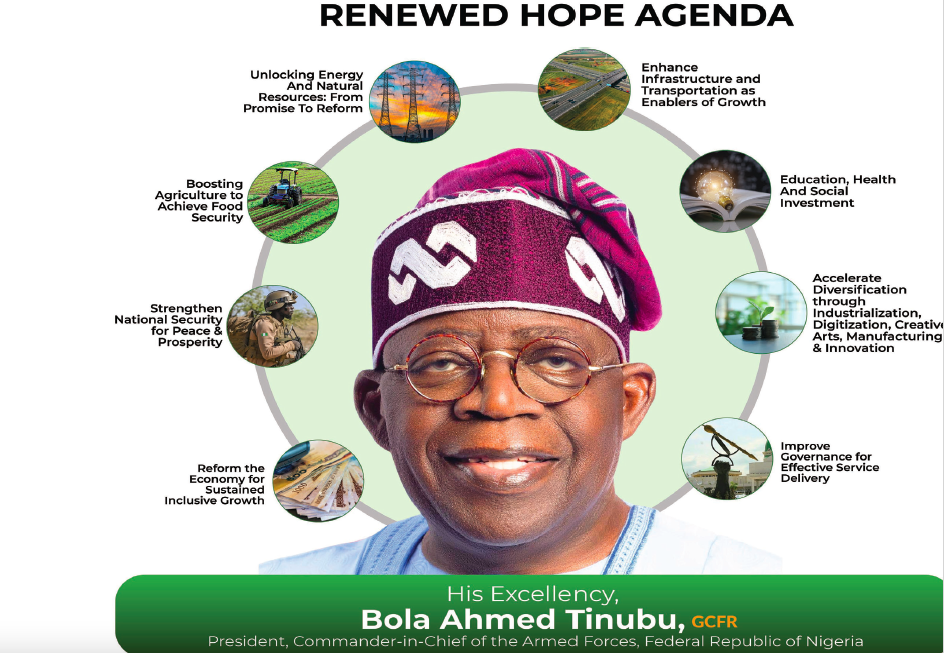
Tinubu Defends Economic Reforms Amidst Challenges
In a national address marking the third anniversary of his administration, President Bola Tinubu emphasized the urgency of the economic reforms he has pursued since taking office. He described the current moment as a critical test for Nigeria, requiring collective sacrifice and resilience to avert financial collapse.
Tinubu laid bare the dire circumstances he inherited, including crippling fuel subsidies, currency manipulation, escalating debt, dwindling revenues, and deteriorating security. He argued that without the decisive measures implemented since May 29, 2023, the nation would likely be facing an even more devastating economic crisis.
While recognizing the hardships that the reforms have brought—most notably the surging cost of living—Tinubu asserted these sacrifices are beginning to yield positive outcomes across key sectors. He believes that Nigeria is now more competitive and financially stable compared to three years prior.
Summarizing the daunting challenges upon his government’s inception, Tinubu pointed to unsustainable fiscal policies, insecurity, and declining institutional trust. He revealed that at the height of the subsidy program, Nigeria was spending an alarming N18.4 billion daily on fuel, which amounted to over N4 trillion in 2022 alone. Continuing down this path would have severely impaired Nigeria’s financial health, jeopardizing essential sectors such as infrastructure, healthcare, and education.
Furthermore, he described the pitfalls of a fragmented exchange rate system that led to significant economic distortions, costing the nation over eight trillion naira over three years. To tackle these issues, Tinubu stressed the need for “difficult but necessary decisions” to stabilize the economy, enhance investor confidence, and restore faith in Nigeria’s financial system.
Despite the economic strains, Tinubu reported encouraging signs of recovery. He cited considerable growth in the Nigerian stock market, with the all-share index rising dramatically from 53,000 points in 2023 to 250,000 points by 2026. In addition, more than 2,700 kilometers of major roads are currently under construction, part of what he described as one of the largest infrastructure expansion efforts in recent history.
In the oil and gas sector, reforms have begun to re-establish investor confidence that had waned in previous years. Notably, the near-completion of the $5 billion NLNG Train 7 project stands as a testament to this renewed interest. Tinubu also highlighted improvements in local refining capacity, which are reducing dependency on imported petroleum products and contributing to enhanced energy security. He acknowledged ongoing efforts to address long-standing issues in the power sector, facilitating much-needed investments in infrastructure.
Touching on other sectors, Tinubu spoke about significant government interventions in agriculture, education, and healthcare, all part of a broader economic recovery strategy. He reported that over N282 billion had been disbursed through the Nigeria Education Loan Fund (NELFUND) to support 1.5 million students in accessing higher education. Major housing projects under the Renewal Hope City initiative are also progressing steadily in key urban areas.
Addressing the youth, Tinubu assured them of ongoing government investments in digital skills and entrepreneurship, aiming to empower the next generation. On security matters, he reported an intensification of operations to combat terrorism, banditry, and other criminal activities, citing improvements in safety across various communities.
While acknowledging that challenges remain, Tinubu emphasized that his administration is building a foundation for long-term recovery. He promised that the next phase of governance will focus on improving living conditions for ordinary Nigerians, through lower food prices, reduced transport costs, and greater employment opportunities.
In closing, the President called for unity among Nigerians, urging them to reject cynicism and division. He reiterated Nigeria’s commitment to democratic governance and assured both domestic and international investors that the country remains open for business and investment partnerships.
