


Grassroots Movement Emerges Against Screen Time in Schools
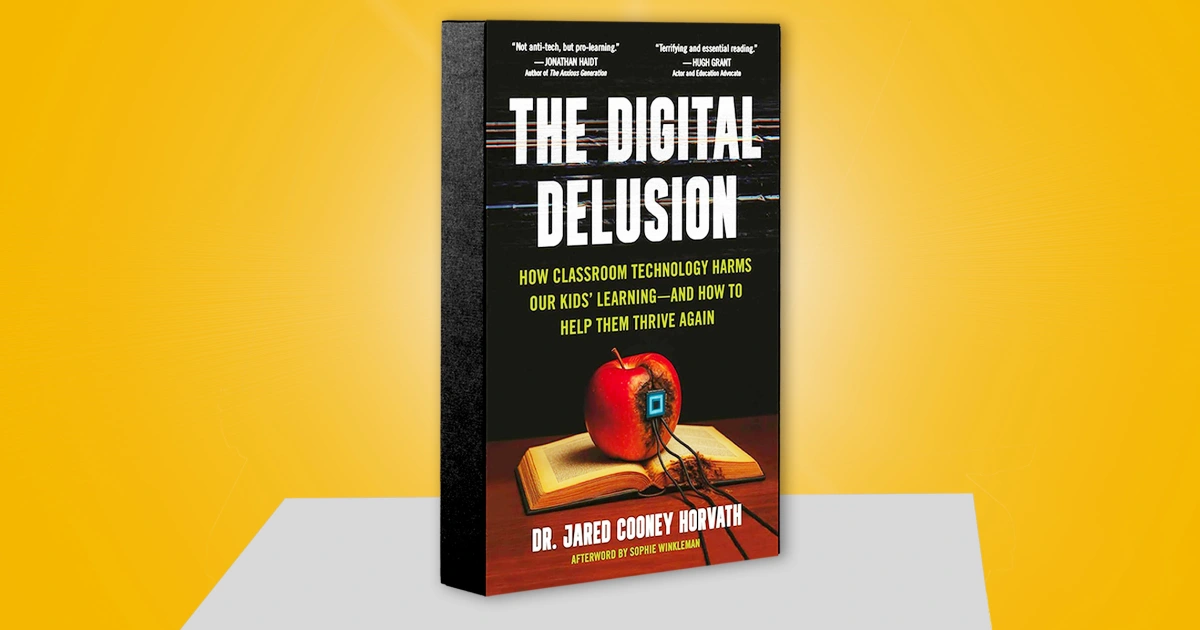
Parents are embracing a book that has gained prominence at school board meetings as they seek to influence policy regarding technology use in education. This self-published work, supported by actor Hugh Grant, serves as a guide for administrators aiming to limit screen time in classrooms.
A Rapid Rise to Prominence
Jared Cooney Horvath emerged almost overnight as a key figure in the movement advocating for reduced technology use in schools, propelled by the publication of his book, The Digital Delusion, in December. The book links declining standardized test scores among American students to the increasing prevalence of laptops and tablets in educational settings. Horvath argues that children benefit more from traditional learning methods rather than being confined to screens.
Legal Advocacy and Parental Mobilization
Since the release of his book, Horvath has actively participated in multiple hearings, including testifying before the U.S. Senate and various state legislatures as they consider restricting screen time in schools. Parent coalitions from states across the nation have engaged him for insights on promoting a return to paper textbooks. Randi Weingarten, the president of the American Federation of Teachers, has acknowledged his expertise during her advocacy for limiting technology in education.
Building Credibility Among Parents
Parents like Jodi Carreon, a San Diego mother, express that Horvath’s educational background lends legitimacy to their concerns about technology in schools. Carreon, who leads the advocacy group Schools Beyond Screen, appreciates having a credible source to reinforce the shared experiences of parents advocating for minimal screen exposure in educational environments.
The Response from Educators and Administrators
Horvath’s book has created a stir among school leaders, prompting discussions on technology policy. Administrators are confronted with parents implementing Horvath’s recommendations and questioning existing technology use. Richard Clutter, CEO of ISTE+ASCD, shared that education professionals frequently seek guidance on how to handle the increasing discourse surrounding Horvath’s assertions. Clutter warns that the book’s connections between technology and declining academic performance could distract from addressing other prevalent issues within the educational system.
Controversial Claims About Educational Technology
In The Digital Delusion, Horvath argues that educational technology fundamentally contradicts effective learning methods, asserting that students utilizing computers extensively experience a significant drop in standardized test scores. He suggests that allocating resources towards traditional learning materials might yield better results than investing in laptops and tablets.
Broader Implications and Upcoming Work
While critiquing the prevailing reliance on educational technology, Horvath recognizes that some tools, such as adaptive tutoring software, demonstrate positive educational outcomes. As he prepares to relocate to Italy, where he plans to immerse his family in a learning-friendly environment that emphasizes traditional educational values, he also anticipates the release of further works addressing various facets of learning. Horvath remains optimistic that the debate around technology’s role in schools will persist, driven by parents seeking beneficial changes in educational practices.
