


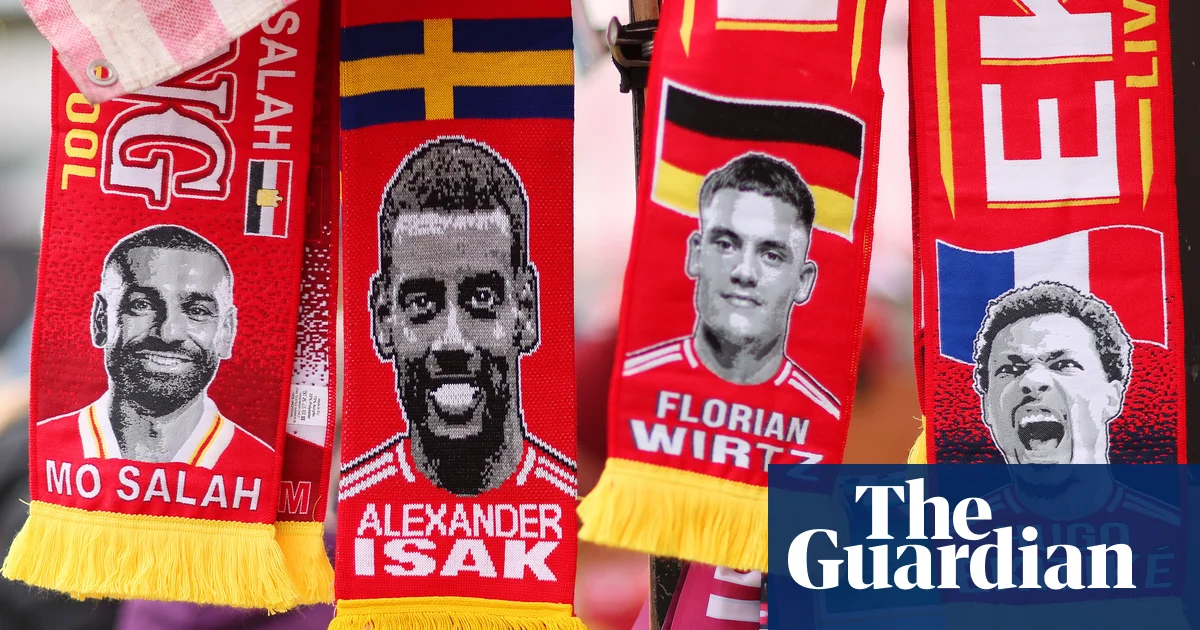
Mohamed Salah may not have the most refined communication style, but he correctly identified Liverpool’s need to transform their playing style. Under manager Arne Slott last season, the team exuded a disconcerting calmness, often struggling to assert themselves and frequently being outplayed. The new head coach aims to implement a more dynamic, attacking approach to maximize the team’s potential. Anfield fans desire a return to an exciting brand of football, one that showcases the skill and flair of the players in red. The disconnect between supporters and the club during the closing months of the last season highlighted Slott’s more subdued demeanor compared to Jurgen Klopp’s vibrant personality. Moving forward, the successor must prioritize rekindling the strong connection between the stands and the pitch, building it on engaging and thrilling football.
Wirtz and Isak as Essential Future Assets
Last summer’s efforts focused on assembling a squad capable of dominating the Premier League for years. However, identifying successful contributors among the new signings proved challenging. While Hugo Ekitike emerged as the standout addition, the record-signing Florian Wirtz and Alexander Isak saw their contributions largely overlooked. Isak’s struggles can be attributed to fitness and injuries, including a broken leg, but Wirtz’s transition to the Premier League has been marked by discomfort. Lacking the pace and competitiveness required of a number 10, he has yet to assert himself. Maximizing the potential of these clearly talented players should be a top priority. Wirtz possesses the ability to penetrate defenses and enhance Liverpool’s control of matches but would benefit from boosted confidence and support to fully thrive.
Midfield’s Physical Shortcomings
Wirtz embodies a broader issue within the midfield—a lack of physical dominance, particularly as a number six. Slott’s choice of Ryan Gravenbirch for this role showed promise initially, reflected in favorable possession statistics. Nonetheless, addressing the pressing need for a player who can effectively disrupt opponents’ play remains urgent. Unlike their rivals, Liverpool currently lacks individuals capable of dictating physicality in midfield. Since the departures of Georginio Wijnaldum and Fabinho, the club has struggled to find a player who can physically overpower opponents. In a sport that continually evolves, this oversight needs immediate rectification. Furthermore, the frequent repositioning of Dominik Szoboszlai has hampered his ability to establish himself as one of the world’s top central midfielders—clarity in his positioning is essential for the team’s success.
The Urgent Need for New Leadership
As players exit Anfield, the lingering impact of their past successes weighs heavily on the team. With the influence of established figures like Salah and Andy Robertson seemingly waning, their departure will leave a significant void in both the locker room and on the training ground. Ibrahima Konate’s exit further complicates the club’s recruitment strategy, an outcome not fully anticipated. Discussions arise regarding Alisson’s future, particularly given his recent injury woes, and the potential for a new generation to pave the way forward, led by Virgil van Dijk. While internal candidates may be poised to step into more prominent roles, an adjustment in transfer strategy could be necessary. Bringing in players in their late 20s with Champions League experience may restore the balance needed in the squad.
Defensive Challenges Awaiting the New Coach
The forthcoming departure of Konate will be somewhat mitigated by the anticipated signing of Jeremy Jaquet, yet further defensive investment is crucial. The uncertainties surrounding Van Dijk’s longevity mean that establishing a reliable long-term partnership is essential. A more robust center-back, like Nottingham Forest’s Murillo, could provide the ideal mix of balance and aggression. Additionally, the potential competition for Milos Kerkes will be critical; if Andoni Iraola takes the helm, a reunion could stimulate Kerkes’s performance after a tumultuous first season with Liverpool. Conversely, Slott’s attempts to implement various player configurations resulted in many out-of-position players, making continuity essential for success. Should Conor Bradley or Jeremy Frimpong step up, their recuperation from injuries could offer critical solutions, particularly if they harness their offensive capabilities while adhering to greater defensive discipline.
Introducing Pace on the Wings Post-Salah
Slott emphasized the critical need for a new winger to alter the game’s dynamics next season, a shift he will not personally benefit from. With Salah’s potential absence and the uncertainty surrounding Federico Chiesa’s role, the team faces openings on the flanks. Emerging talent Rio Ngmoja has showcased moments of brilliance, combining speed and skill to challenge opposing full-backs. Frimpong, originally signed as a right-back, has also displayed the pace sought by Slott and has been adapted to play on the wing. However, the transfer negotiations still require substantial work to fully compensate for the loss of Luis Diaz’s unique flair, and Kodi Gakpo has yet to demonstrate the instincts of a natural winger. Targeting new wide players is imperative; potential candidates such as RB Leipzig’s Yann Diomande, Brighton’s Yankuba Minte, or Athletic Club’s Neco Williams could reinvigorate a squad in need of dynamism, while also re-engaging the passionate fanbase.
