


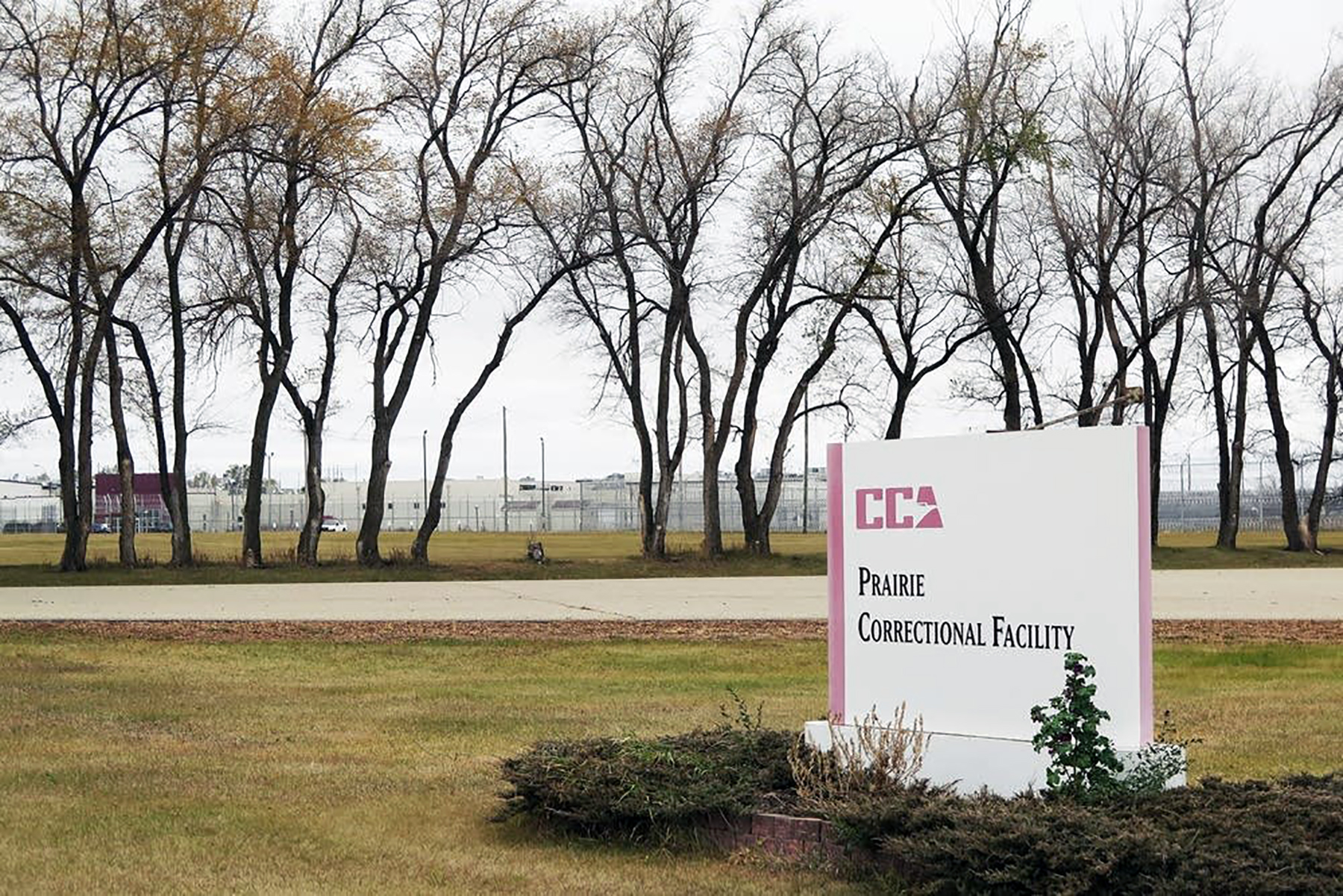
A recent contract proposal and new job postings at a Minnesota prison have intensified speculation regarding the federal government’s intention to reopen the facility as an immigrant detention center.
The Prairie Correctional Facility in Appleton, Minnesota, is undergoing a $1 million renovation. Located three hours west of the Twin Cities, this former private prison has been closed since 2010. However, rumors about its potential use by the federal government as an immigration detention facility began to circulate last year.
A 147-page contract proposal recently surfaced in a public database managed by the federal government, which records contracts and grants. This document indicates that the prison meets the standards set by Immigration and Customs Enforcement (ICE) and outlines a five-year operational plan for functioning as an immigration detention center. This facility is owned by CoreCivic, one of ICE’s primary contractors.
The contract bears the emblem of the Department of Homeland Security (DHS) and identifies an ICE official as the main contact person. While DHS did issue an email statement to the Sahan Journal regarding the matter, it stopped short of confirming whether there is an investigation into the Appleton prison. Nonetheless, ICE announced it has secured funding to expand its detention facilities, attributed to the tax and spending bill enacted during President Donald Trump’s administration.
DHS noted in its statement that there are currently no new detention centers planned. Meanwhile, CoreCivic, based in Brentwood, Tennessee, has been actively seeking to fill positions such as security chief, force manager, and warden’s assistant. While job postings were visible on the CoreCivic website, they mysteriously disappeared shortly after the Sahan Journal inquired about them. The postings lacked application deadlines, start dates, and salary information.
CoreCivic’s senior director of public affairs, Ryan Gustin, declined an interview request but shared a statement indicating that the firm is actively “marketing” and “exploring opportunities” with government partners to determine whether this site could be a viable solution. The job openings were described as a means to gauge community interest and attract potential job seekers in the event of a future reopening.
Renovation Cost is $1 Million
Appleton Mayor Justin Cope and City Administrator John Olinger refrained from commenting on the situation, stating they had not received any information from CoreCivic. Cope indicated that he learned about the developments via email on Friday, while Olinger found out through a reporter’s call. Swift County Governor Tessa Thomasett also opted not to comment, citing a lack of knowledge on the issue, and Swift County Commissioner Gary Hendricks, who represents Appleton, did not respond to requests for comment.
Should the facility reopen, city officials suggest it could more than double Appleton’s current population of 1,400. While local officials acknowledge residents’ concerns, they point out that because the facility is privately owned, CoreCivic ultimately has the authority to decide whether to resume operations.
Discussions about reopening the facility have taken place intermittently over the years. Speculation intensified last year after a Washington Post article disclosed ICE documents indicating plans to expand detention centers, including converting the Appleton facility into an immigrant detention center.
Community member Brian Wojtalewicz, who resides about two miles from the facility, expressed his opposition to its potential reopening as a detention center. He reported that significant renovations have been underway, with apparent investment from CoreCivic. Observations of helicopters, work trucks, and personnel around the facility have led him to believe that CoreCivic is earnest about reopening.
CoreCivic applied for a building permit last September to facilitate approximately $1 million in renovations, as reported by Olinger. These renovations involve roof insulation, smoke detector installations, and vent updates. A public records request revealed that CoreCivic is interested in securing the federal contract.
Matthew Duffy, an attorney for CoreCivic, reached out to Olinger on February 24, seeking confirmation regarding the facility’s zoning compliance. He informed the city that CoreCivic had finished contract negotiations and intended to “reintroduce detainees” to the facility. This triggered immediate concern among local officials, with Sheriff John Holtz urging caution, while communications suggested recruiters were reaching out to local emergency personnel about job opportunities.
Details of the Proposed Federal Contract
The proposed contract aims to align with the immigration enforcement and border management objectives of the Trump administration, as per the contract’s description on the government’s website. It details the security requirements, facility design, and maintenance needed over the next five years.
The facility is expected to accommodate up to 1,600 detainees while providing security, food, medical care, and transportation services. Staff will be present from 7 a.m. to 7 p.m., with 24/7 housing capabilities in accordance with the St. Paul ICE Field Office.
The contract states that CoreCivic is the sole owner and operator of the Prairie Detention Facility that meets ICE’s requirements promptly. In 2017, CoreCivic representatives met with local officials to discuss possibly reopening the prison as an immigration detention facility, but no further action occurred. A proposal to house detainees at the facility was submitted during the Trump administration in 2019, yet it remained unimplemented.
Opposition to the reopening of prisons as immigrant detention facilities is strong, particularly from groups like CURE, a Minnesota advocacy organization focused on rural communities. Last September, CURE held a vigil and press conference urging local officials to refuse the reopening and to collaborate with residents to seek alternative uses for the facility.
CURE’s senior organizer, Andy Pearson, expressed the group’s strong stance against the reopening, stating, “We have no desire for this facility to open as an ICE detention facility.” He criticized the privatized mass detention system being established by ICE as contradictory to democratic principles.
