


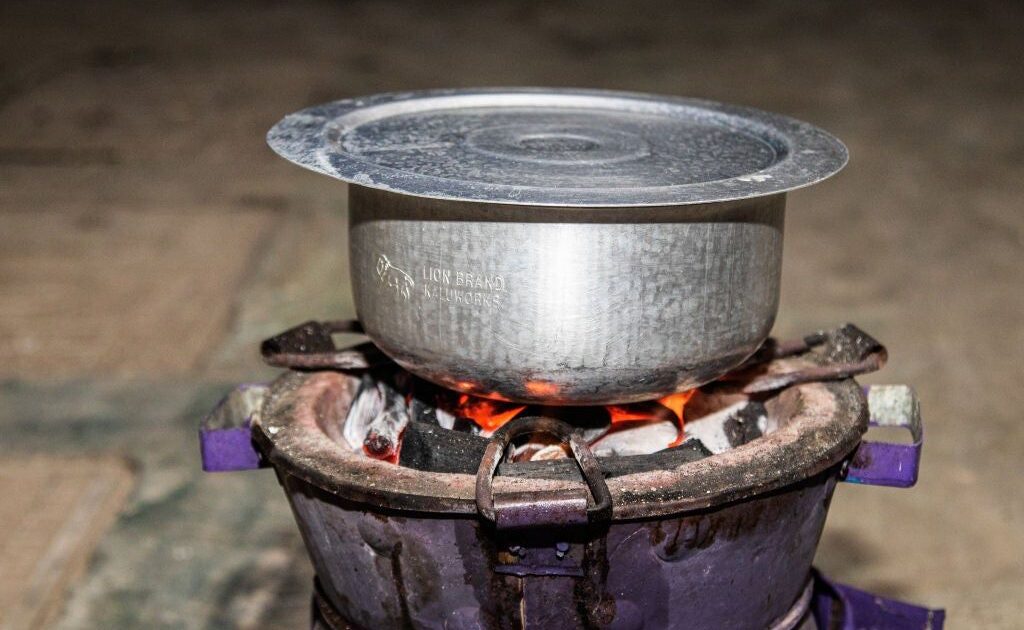
Surge in Cooking Gas Prices Drives Shift to Traditional Fuels in Abuja
The escalating prices of cooking gas are compelling many households and businesses in the Federal Capital Territory to revert to traditional fuels, such as charcoal and firewood. Recent reports indicate that the price of cooking gas in the FCT has seen a sharp increase, climbing from approximately N1,200 per kg to N2,000 per kg in recent months.
Industry experts attribute this significant rise to a combination of supply shortages, elevated warehousing costs, currency fluctuations, and rising transportation expenses. Many consumers and vendors, interviewed by the News Agency of Nigeria, expressed that the relentless hike in cooking gas prices is forcing them to seek more affordable cooking alternatives.
Mayo Akinpelu, a food vendor based in Gwarinpa, Abuja, shared his experience of switching from cooking gas to firewood and charcoal due to unaffordable costs. He noted, “As the price kept going up, it became difficult to refill gas cylinders. I couldn’t afford them anymore, but I still managed to maintain a decent profit. Currently, a 12.5kg cylinder of LPG costs about 25,000 Naira.” Akinpelu acknowledged that while firewood and charcoal lack the convenience of gas, they are essential for sustaining his business amidst rising expenses.
Victory Samson, another food vendor operating in the Dutse area, lamented that the soaring prices have severely impacted profit margins and overall business operations. He emphasized the need for governmental intervention to restore the price of cooking gas to more manageable levels.
Grace Oluwatimirehin, a business owner in Kubwa, expressed her shock at the drastic price increase. “I filled my gas cylinder at N1,600 per kg last time, and when I checked again, it had skyrocketed to N2,000 per kg.” To cope with the situation, she is increasingly relying on an electric hotplate and sometimes resorts to charcoal for cooking.
The continuous rise in fuel prices is also burdensome for households. Abike Ojo, a mother, highlighted how the surging costs strain her household budget. “Last time I purchased gas, it was N1,500 per kg, but now it’s N2,000. If these prices persist, I may have to discontinue using gas entirely,” she warned, appealing for government assistance to mitigate the rising costs.
Gas vendors like Mr. Bamisile Bolanle acknowledge the current price of N2,000 per kilogram and recognize its adverse effects on consumer purchasing power. He described supply shortages as the primary factor driving the price hike, although the specifics remain unclear. Similarly, Alfred Orcio, a gas distributor, pointed out that the increased rates have led to a noticeable decline in customer purchases.
The continuous escalation of cooking gas prices raises concerns about how residents and business owners will manage their household and operational budgets in the FCT. Stakeholders are urgently calling for governmental intervention to stabilize prices, while distributors warn that ongoing shortages and diminishing purchasing power may lead to further declines in gas consumption and adverse effects on local business activities.
