


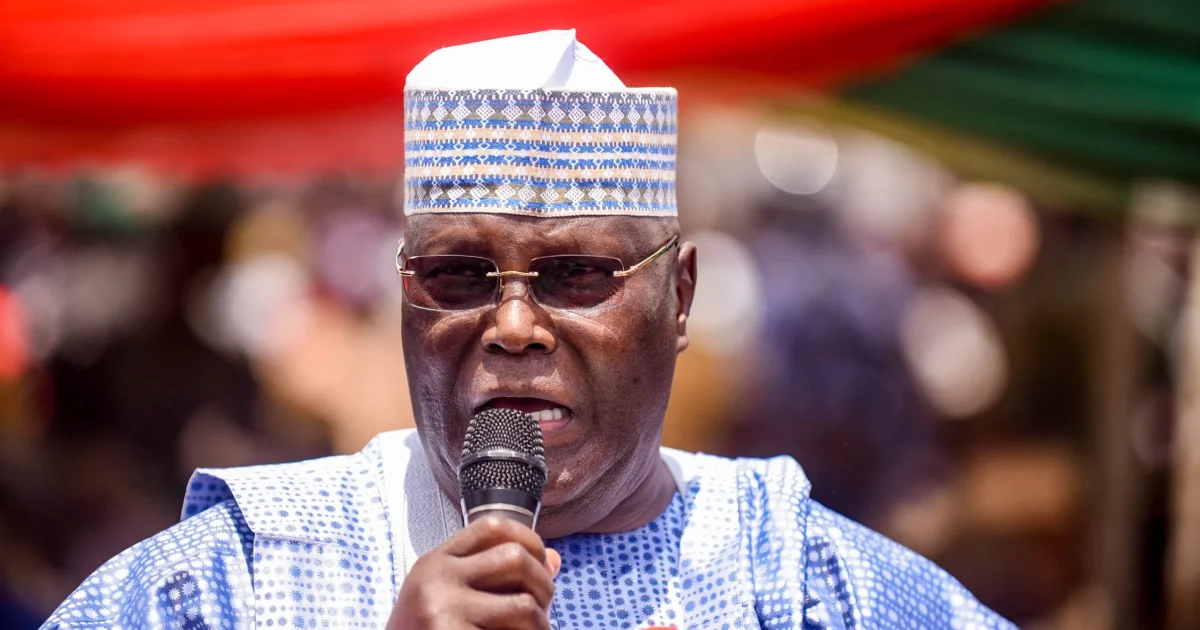
Atiku Abubakar Critiques Babachir Lawal’s Comments
Atiku Abubakar, the former vice-president of the African Democratic Congress (ADC) and a presidential candidate, has issued a strong rebuke of Babachir Lawal, the former Secretary to the Government of the Federation. Atiku accused Lawal of inciting ethnic bias, promoting conspiracy theories, and exacerbating divisions in Nigeria at a time when unity is crucial for addressing the nation’s growing challenges.
Calls for Responsible Discourse
In a statement released by his Senior Special Assistant on Public Affairs, Plank Shaib, Atiku criticized Lawal’s recent public statements for lacking factual basis. He labeled them as examples of ethnic profiling and incendiary rhetoric designed to undermine political opponents rather than contribute to meaningful dialogue.
Concerns Over Ethnic Profiling
Atiku expressed deep concern regarding Lawal’s attempts to indiscriminately associate entire ethnic communities with the actions of a few criminal elements. He expressed that it is both irresponsible and dangerous to imply that all Nigerians should bear the burden of blame for individuals’ actions based solely on shared ancestry.
Potential Threats to National Unity
The former vice-president warned that such divisive reasoning could lead to a collective responsibility narrative, further jeopardizing national unity in a landscape already marked by security challenges, economic strain, and political tension.
Political Realignments Ahead of Elections
This exchange is part of a broader political realignment in Nigeria as opposition parties prepare for the 2027 general elections. Increasingly, these parties are positioning themselves against established political figures and rival factions. Atiku pointed out inconsistencies in Lawal’s statements, highlighting that Lawal had previously claimed victimization while simultaneously branding himself as a sought-after political figure.
Accusations of Stigmatization
Additionally, Atiku condemned Lawal for allegedly trying to stigmatize the Fulani people, noting that Lawal served under former President Muhammadu Buhari, a Fulani himself. Atiku stated that Lawal never expressed objections to Buhari’s leadership, raising questions about the motivations behind his current stance.
Response to Violence Accusations
In response to claims of indifference towards victims of violence, Atiku asserted that his political career has consistently shown engagement with communities impacted by terrorism, banditry, and conflict. He cited attendance at a church service in Kagoro, Southern Kaduna, where he offered condolences to violence victims, asserting that leadership extends beyond tribal or religious affiliations.
Focus on Nation-Building Initiatives
Atiku further emphasized his commitment to nation-building through investments in education and human development, particularly highlighting support provided to the Chibok schoolgirls who were abducted by Boko Haram. He posited that these initiatives showcase a commitment to healing and hope, contrasting with those who exploit national tragedies for political gain.
A Call for Unity and Forward-Thinking Leadership
As political tensions rise, Atiku reiterated his vision for a unified Nigeria, urging a shift from ethnic and religious stereotypes in political dialogue. He emphasized the need for leaders dedicated to healing division and building a cohesive future. Atiku’s remarks come in the context of Lawal’s critical social media statements, wherein Lawal questioned Atiku’s qualifications for presidency and suggested the ADC consider replacing him as a candidate.
