


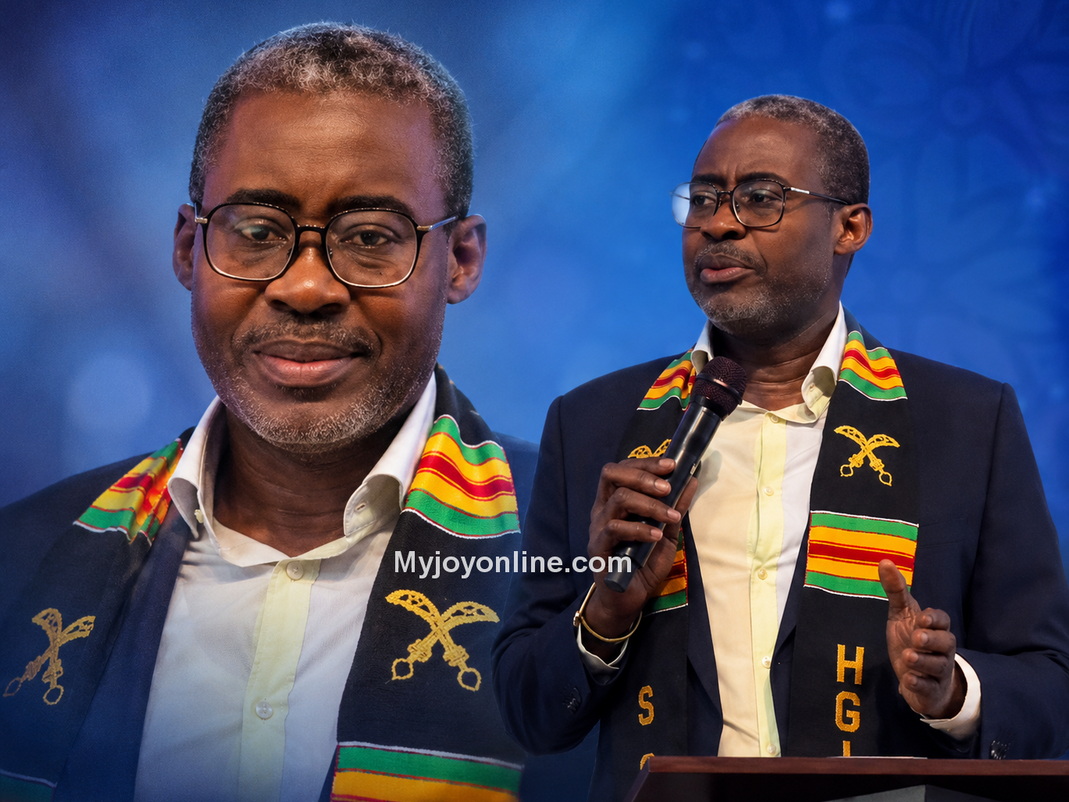
Lawyer Urges African Youth to Integrate Ethics with Technological Skills
Prominent lawyer and intellectual Ace Ankomah has called on African youth to fuse technical skills with robust ethical principles as the world increasingly navigates an era influenced by artificial intelligence (AI).
Speaking at the SOS Hermann Gmeiner International University (SOS-HGIC) graduation ceremony for the Class of 2026, Ankomah delivered a keynote address themed “Forging Ethical Leaders for an AI-Driven Future: Pan-African Responsibility.”
In his address to graduates, families, faculty, and honored guests, Ankomah characterized this moment as “an extraordinary moment in human history,” highlighting how AI is reshaping economics, politics, and interpersonal relationships globally.
He articulated a crucial distinction: “Technology may amplify intelligence, but it cannot create wisdom or conscience.” He added, “The defining question of your generation will not be what you can do with technology, but what kind of people will control it.”
Addressing urgent concerns raised by leading scientists, engineers, and world leaders regarding responsible AI development, Ankomah pointed to the calls for stronger safeguards to ensure that advancing technologies remain under human control and are utilized for societal benefit.
According to him, these issues hold particular significance for Africa, which has historically participated in global revolutions more as consumers than innovators. “For too long, our continent has been a latecomer,” he noted. “Today, however, Africa has a unique opportunity to not just participate in the new technological era but to actively shape it.”
Ankomah encouraged graduates to become ethical leaders who prioritize humanity’s interests over narrow agendas. “The AI era demands more than technical excellence,” he asserted. “It requires courage, wisdom, and vision.”
A Personal Journey of Transformation
In a deeply personal segment of his speech, Ankomah shared his academic struggles during junior high school 40 years ago. Reflecting on his graduation in 1986, he candidly admitted that his educational journey was far from a straightforward success.
“For most of my first five years in middle school, I was drifting aimlessly,” he recalled. “If we had voted for the classmate who was least likely to succeed, I probably would have voted for myself.” Ankomah recounted being placed in a class for low-achieving students and coping with a speech impediment, an experience that ultimately proved transformative.
“I realized that I was failing and needed to change direction,” he told the graduates, emphasizing the pivotal moment when he unlocked the power of reading, disciplined learning, and perseverance.
“A person only knows what he studies. You cannot study what you do not read,” he stressed. With determination, Ankomah established a rigorous study regimen that included extensive reading, revisiting study material, practicing past exam questions, and setting clear academic objectives.
By age 16, he aspired to study law at the University of Ghana, even selecting a specific dormitory for his residence. He wrote his goals and personal affirmations in his textbooks, serving as constant motivation for the future he envisioned.
One of his guiding principles was: “Where discipline and dedication lead, there is no hope to be found in failure.” This commitment bore fruit, as Ankomah gained admission to the Faculty of Law at the University of Ghana, achieving notable academic success.
Message for the Future
Reflecting on his own journey, Ankomah encouraged graduates to adopt discipline, resilience, and a commitment to lifelong learning to thrive in a future increasingly shaped by AI. He underscored that, despite technological advancements, character, integrity, and ethical leadership remain vital.
“As Africa seeks its place in the AI era, the continent will need leaders who can combine innovation with conscience,” he concluded. “You must be of that generation too.”
