


Growing Concerns Over Nuclear Weapon Deployment
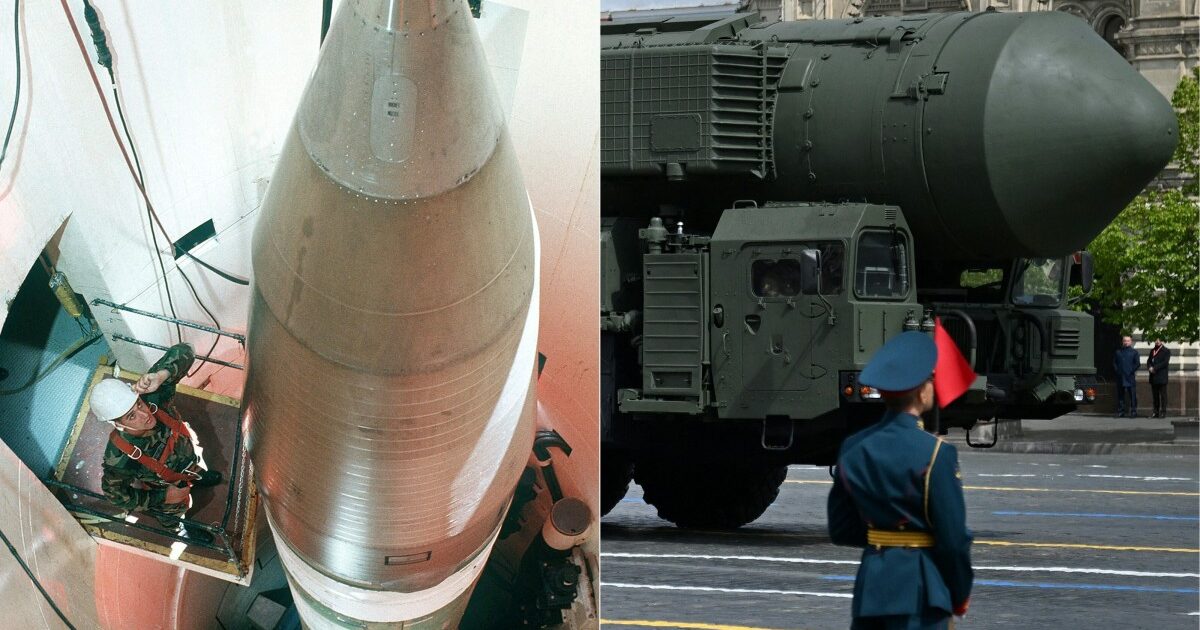
On Monday, researchers cautioned that as weapons of mass destruction increasingly influence global politics, nuclear-armed nations are actively withdrawing weapons from storage and integrating them into transportation systems. The Stockholm International Peace Research Institute (SIPRI) reported that the world’s nuclear powers possess an estimated total of 12,187 nuclear warheads, of which approximately 9,745 are in stockpiles designated for potential deployment.
This figure reflects a slight decline from the previous year, a trend marked by the dismantling of older nuclear warheads typically outpacing the deployment of new ones since the Cold War’s conclusion. However, SIPRI director Karim Haggag emphasized that despite this reduction, the risks associated with nuclear weapons are escalating, noting, “the level of nuclear danger and risk is increasing.”
Impending Reversal of Decommissioning Trends
SIPRI’s statement also warned that the downward trend in nuclear arsenals may soon reverse. The organization forecasts a slowdown in decommissioning as the deployment of new nuclear weapons accelerates. This concerning projection comes amid warnings regarding the collapse of strategic arms control agreements and intensified competition among major nuclear powers.
Concerns of Deployment and Modernization
Worryingly, there is a trend where nuclear-armed nations are actively deploying these weapons from storage into delivery systems, further raising the possibility of increased nuclear weapon availability. The United States and Russia dominate the global nuclear landscape, holding approximately 83% of the world’s stockpile, with each nation boasting more than 5,000 warheads.
While both countries are pursuing modernization programs, they face significant challenges. The US modernization initiative is making headway, yet it grapples with financial and planning obstacles that could lead to delays and increased costs, according to SIPRI. Meanwhile, Russia’s modernization efforts are hindered by a recent failure in an intercontinental ballistic missile (ICBM) test, combined with economic sanctions related to the Ukraine conflict and competing national priorities.
China’s Accelerating Nuclear Expansion
China is rapidly expanding its nuclear arsenal, outpacing all other nations. According to Haggag, the intensifying geopolitical competition is a strong motivator for China to enhance its reliance on nuclear capabilities. SIPRI estimates that China currently possesses 620 nuclear warheads and may match the intercontinental ballistic missile counts of the US or Russia by 2030, depending on future strategic decisions.
Notably, even if Russia reaches 1,000 nuclear warheads by that time, it would still represent merely a quarter of the arsenals held by the United States and Russia. In Europe, France and the UK have maintained stable stockpiles of 290 and 225 warheads respectively, although the UK’s arsenal is expected to grow following a 2021 review advocating for an increase. Similarly, French President Emmanuel Macron called for a stockpile increase this past March.
Regional Dynamics of Nuclear Armament
SIPRI indicates that India has likely expanded its nuclear arsenal to approximately 190 warheads. In contrast, Pakistan, India’s neighboring rival, maintains a stable stockpile of around 170 warheads but continues to gather fissile material, suggesting potential future expansion. Additionally, North Korea is reportedly progressing towards its goal of rapidly augmenting its nuclear arsenal, with an estimated 60 warheads currently in its possession.
Israel, which maintains a policy of ambiguity regarding its nuclear capabilities, is believed to be modernizing its arsenal, with SIPRI estimating it currently holds about 90 nuclear warheads. These developments highlight a complex and evolving landscape in global nuclear armament, raising critical concerns for international security.
