


Nigeria to Utilize €59 Million West Africa Sustainable Oceans Program for Maritime Sustainability
Nigeria is poised to leverage the €59 million West Africa Sustainable Oceans Program (WASOP) to enhance its initiatives against illegal, unreported, and unregulated (IUU) fishing, while fostering sustainable management of its marine resources.
Commitment to Maritime Security and Governance
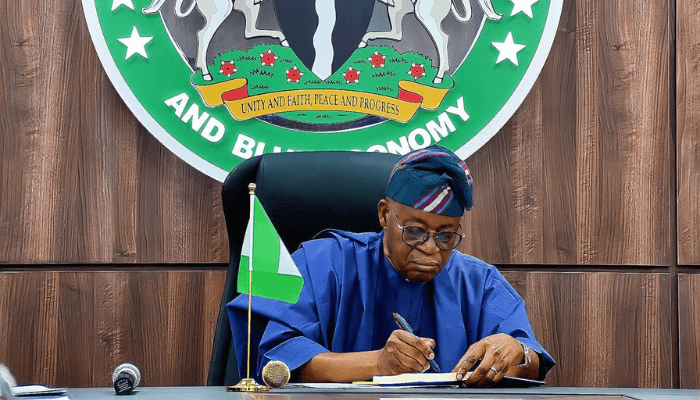
During a recent meeting in Abuja with Gautier Mignot, the European Union’s Ambassador to Nigeria, Minister of Oceans and Blue Economy Adegboyega Oyetola emphasized both parties’ commitment to bolstering cooperation in maritime security and governance. This collaboration aims to solidify Nigeria’s maritime stability and support regional economic development.
Recognizing the EU’s Partnership
According to a statement issued by Bolaji Akinola, Special Assistant to the Minister, Oyetola praised the EU’s enduring partnership with Nigeria. He noted the importance of this collaboration for enhancing maritime stability in the Gulf of Guinea, a critical area for global shipping.
Addressing Illegal Fishing and Governance Challenges
Oyetola described WASOP as a timely intervention that seeks to intensify efforts against illegal fishing, improve ocean governance, and promote the sustainable development of marine resources throughout West Africa. He expressed Nigeria’s eagerness to participate fully in the program to enhance enforcement capabilities and secure technical and financial support for the nation’s blue economy objectives.
The Threat of IUU Fishing
The Minister cautioned that illegal fishing practices remain a significant threat to marine ecosystems and the livelihoods of coastal communities, leading to depleted fish stocks and jeopardizing food security. He stressed that IUU fishing is detrimental to national security and the survival of local economies, urging a proactive approach to protect Nigeria’s marine resources.
Call for Enhanced International Cooperation
Oyetola called for stronger international collaboration, advocating for robust surveillance systems and rigorous enforcement measures to dismantle IUU fishing networks. “We must foster an era of enhanced cooperation backed by active monitoring to effectively safeguard our waters,” he stated, emphasizing the need for a strategic response to combat these unlawful practices.
Ongoing Reforms in the Maritime Sector
The Minister highlighted the ongoing reforms in Nigeria’s maritime sector, rooted in the National Policy on Oceans and Blue Economy. These reforms prioritize innovation, private sector participation, and the sustainable development of marine resources. He noted that such initiatives are already yielding improvements in port operations and maritime security, while efforts are in progress to enhance maritime infrastructure.
Request for Expanded Support from Partners
In addition, Oyetola urged development partners to broaden their support to encompass environmental crime, human trafficking, and IUU fishing, advancing a more integrated regional strategy. He specifically requested increased technical assistance from the European Union in areas such as surveillance technology and fisheries monitoring to strengthen Nigeria’s ability to combat IUU fishing in the Gulf of Guinea.
EU’s Commitment to Strengthening Maritime Cooperation
Ambassador Mignot reaffirmed the European Union’s dedication to enhancing maritime collaboration with Nigeria, supporting the region’s endeavors to achieve safer and more sustainable ocean environments. He highlighted the EUR 59 million WASOP initiative as a pivotal EU-funded effort aimed at promoting integrated ocean governance, sustainable fisheries management, and protection of coastal and marine ecosystems across West Africa.
