


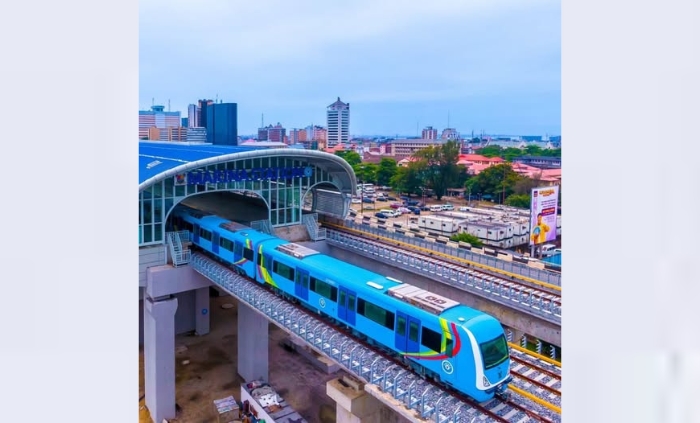
Plans for Rail Extension to Murtala Muhammed Airport Unveiled
The Federal Government is set to enhance Lagos’ rail network with a direct connection to both the domestic and international terminals of Murtala Muhammed Airport (MMA). This initiative aims to bolster the city’s role as a premier aviation hub in Africa.
Investment Forum Highlights Rail Connectivity Discussion
This announcement was made by the Minister of Aviation and Aerospace Development, Festus Keyamo, during the opening of Invest Lagos 3.0, an investment forum organized by the Lagos State Government.
Details of the Proposed Rail Link
Keyamo indicated that discussions are currently underway between the ministerial office and Lagos State authorities regarding the project. The proposed railway line will connect from the General Aviation Terminal (GAT) to Murtala Muhammed Airport Terminal 2 (MMA2), which is managed by Bicourtney Aviation Services Limited (BASL), and will ultimately terminate at the International Terminal.
Strategic Impact on Aviation Access
The minister expressed optimism about the rail extension, stating that it would significantly enhance access to Nigeria’s busiest airport and further the government’s goal of positioning Lagos as a major aviation and logistics hub on the continent.
Integration with Lagos’ Expanding Transportation Network
The new rail connection will complement the ongoing expansion of Lagos’ rail infrastructure, which is a vital aspect of the state’s transportation ecosystem. Recently, the Lagos State Government announced that the Blue Line is projected to accommodate 3.5 million passengers by 2025, translating to an estimated 15,000 daily commuters. Additionally, work is underway to extend services to Okokomaiko and enhance the Red Line offerings.
Lagos’ Strategic Geographical Advantage
Keyamo highlighted that Lagos accounts for approximately 67% of the passenger traffic at Nigeria’s airports, underscoring the state’s critical importance to the aviation sector. He noted the strategic geographical advantages that Lagos offers, as it provides an equidistant point for various international destinations. He explained that the airport’s location allows quick access to regions such as South America, South Africa, the Middle East, and Europe, positioning Lagos as a competitive hub for air travel.
Ongoing Investment in Airport Infrastructure
Discussing infrastructure improvements, Keyamo mentioned that under President Bola Tinubu’s administration, around $500 million has been allocated toward the reconstruction and modernization of the international terminal at Lagos Airport. This upgrade is expected to evolve the aging facility into a modern airport capable of handling a growing volume of both passenger and cargo traffic.
Future Opportunities for Investors in the Aviation Sector
Keyamo also announced the expansion of Nigeria’s international airport network with the recent designation of Victor Atta International Airport in Uyo and Maiduguri International Airport, raising the total to seven international airports in the country. He urged both local and international investors to explore opportunities within the aviation sector, including the proposed airport project on the Lekki-Epe corridor that the Lagos State Government is promoting.
Should the Airport Rail extension come to fruition, it promises to provide direct rail access to Nigeria’s busiest aviation gateway, aligning with broader efforts to enhance mobility in Lagos, which is known as Nigeria’s commercial capital. Murtala Muhammed International Airport, named after the nation’s former head of state, has been in operation since March 1979, serving as a critical international access point for decades.
