


Weather Concerns Loom Over Upcoming World Cup
As preparations intensify for the World Cup to be hosted in the United States, Canada, and Mexico, the potential impact of weather conditions on the tournament has emerged as a significant concern. Researchers have indicated that 14 out of the 16 tournament venues may face challenges related to extreme weather, prominently including England’s training base in Kansas City.
A recent study conducted by Climate Central highlights the probability of temperatures exceeding 28 degrees Celsius, a threshold linked to diminished player performance. This study found that athletes could encounter these unfavorable conditions in a staggering 97 out of 104 matches slated for the tournament.
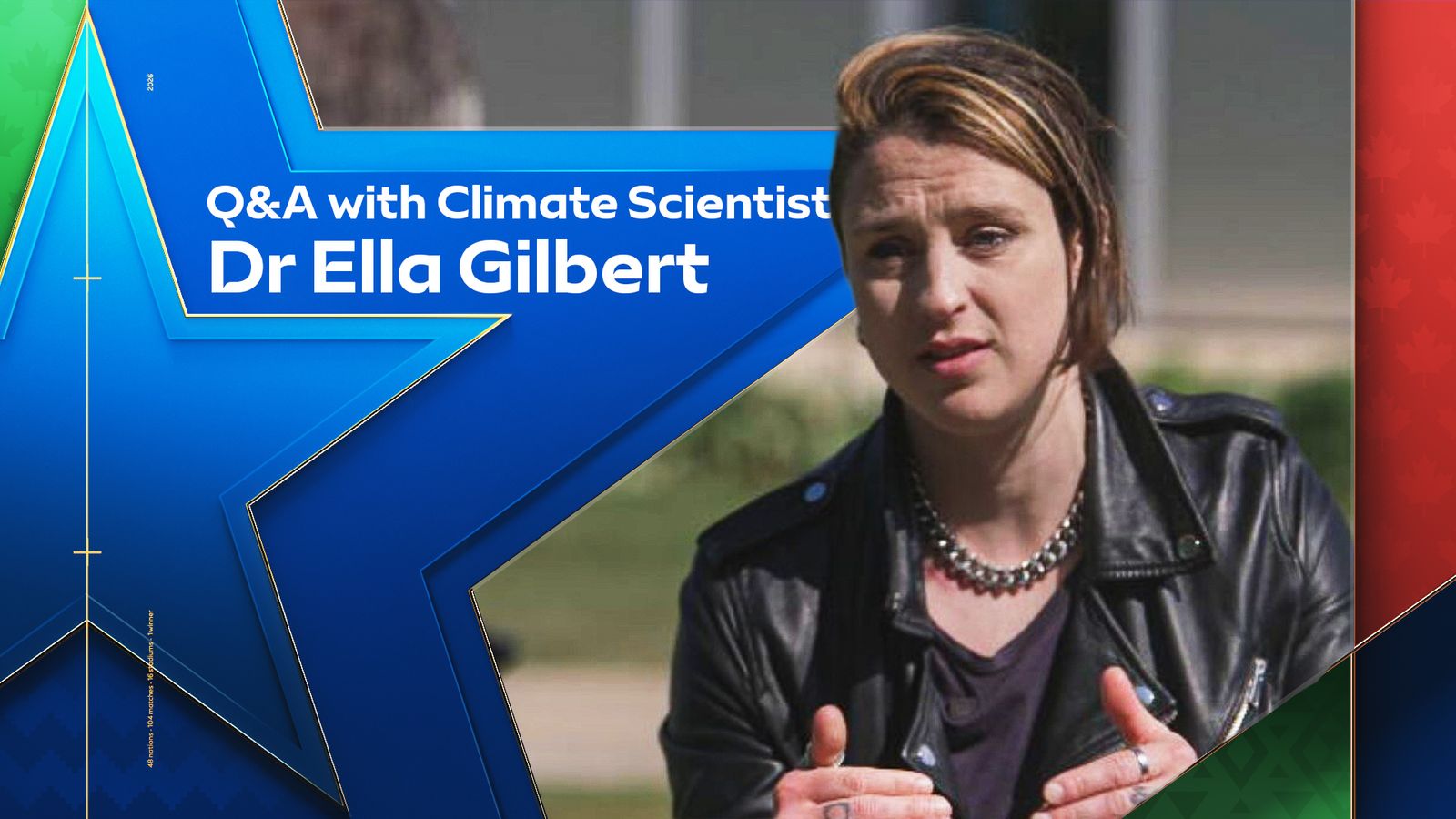
To shed light on this pressing issue, Sky Sports News’ David Garrido engaged climate scientist Dr. Ella Gilbert in a discussion at Sky Studio. The conversation explored the differences between the climate conditions of the 1994 World Cup, the last held in the U.S., and the current circumstances.
Comparing Past and Present Climatic Conditions
Dr. Gilbert pointed out that 1994 was notably hot, following a period where a volcanic eruption had briefly cooled the climate. During that summer, temperatures soared into the 40s, with some areas reaching almost 53 degrees. Uncharacteristically low rainfall during that time contributed to the heatwave’s intensity.
Since then, the global average temperature has risen significantly—by about 1.55 degrees Celsius from pre-industrial levels—leading to more frequent and severe heatwaves. Dr. Gilbert emphasized that extreme weather events such as floods and droughts are occurring more regularly, emphasizing the need for increased awareness as the upcoming tournament approaches.
The Shifting Climate Landscape
The rise in average temperatures, while seemingly minor at one degree, presents substantial differences in climate stability. Dr. Gilbert elaborated on how it took 140 years for the climate to warm by just half a degree compared to pre-industrial levels. However, in the last 30 years, the pace of temperature increases has accelerated, leading to more severe weather phenomena.
These climatic changes not only increase the intensity and duration of heat waves but also transform what can be classified as normal weather. Players and spectators alike will face hotter, more humid conditions, which can significantly alter the dynamics of the matches.
Impacts on Player Performance During the Tournament
The extent to which players will feel the effects during the World Cup will depend on daily weather conditions. Dr. Gilbert cautioned that extreme heat and unpredictable weather could affect athletes’ performances. Players may need to stop frequently for hydration, and the potential for sudden downpours could disrupt matches, necessitating changes in strategies and tactics to safeguard player health.
Both teams will face the same challenges, leveling the playing field, but it will be critical for fans and professionals to recognize the adjustments required for a successful tournament in such extreme conditions.
Risks of Extreme Weather Events
With climate change contributing to increased atmospheric moisture—resulting in an expected 7% rise with each degree of warming—the likelihood of heavy rainfall during the tournament also rises. Certain U.S. regions are already known for their rain, but as the climate continues to warm, the probability of torrential downpours grows, raising concerns about potential game cancellations due to extreme weather conditions.
Understanding El Niño’s Effects
The El Niño weather pattern, which occurs every five to seven years, has significant global implications. Dr. Gilbert explained how variations in ocean surface temperatures during this phenomenon influence weather systems across different regions. The effects can lead to increased temperatures and varying levels of rainfall depending on the geographical location.
An El Niño event was present during the 1994 World Cup, contributing to record-high temperatures. With a recent El Niño event occurring in 2023-2024, concerns about how these factors will intersect during the upcoming tournament are heightened.
Future of World Cup Hosting in the Context of Climate Change
As the climate continues to shift, questions arise about the feasibility of hosting summer sports events in North America and similar climates. Adaptation strategies, such as building air-conditioned stadiums, will be crucial. However, costs may dictate the viability of hosting prestigious tournaments like the World Cup in increasingly challenging climates.
Dr. Gilbert warned that if countries fail to mitigate climate change and its effects, future World Cups could see even more extreme conditions than we’re currently anticipating, impacting players, fans, and officials alike. The choices made today regarding emissions will define the climate landscape by 2050 and beyond.
