


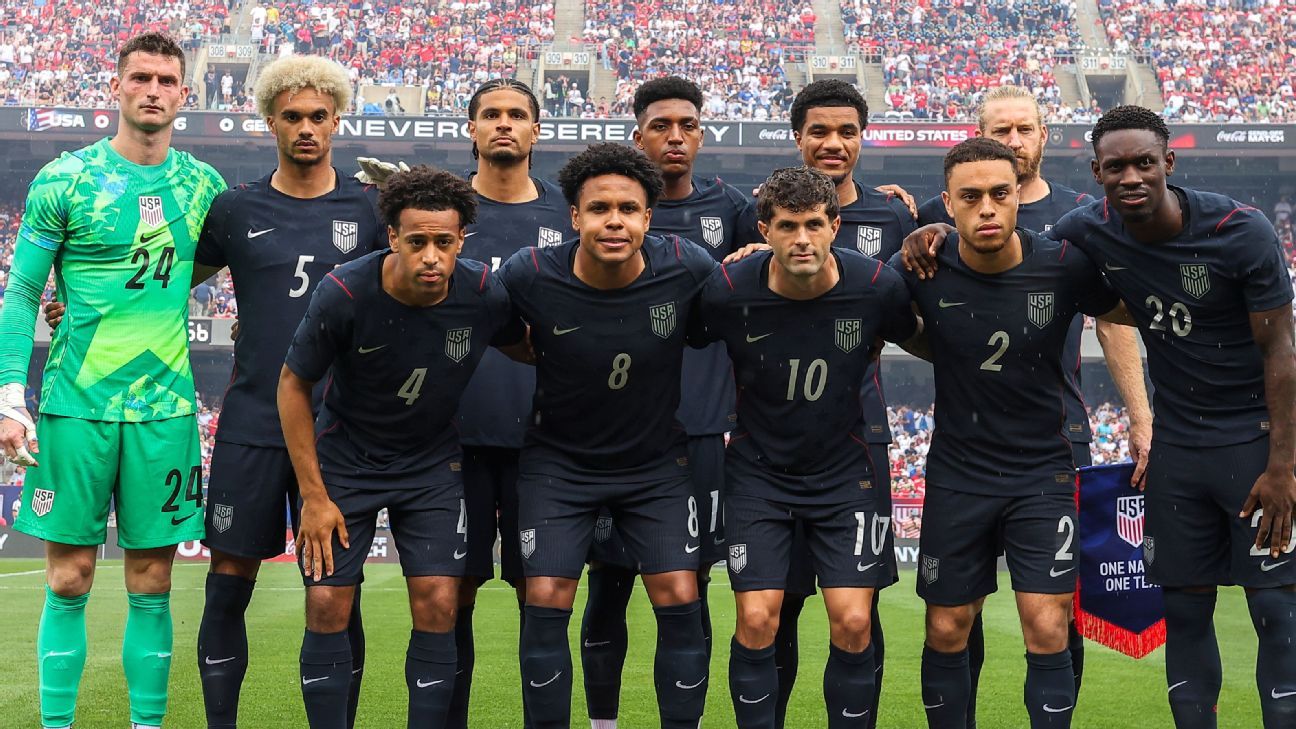
After nearly four years and 54 matches, the U.S. Men’s National Team is back in the World Cup, poised to deliver their best performance in the tournament yet, this time on home soil.
What steps must the American team take to make history?
Excluding the inaugural 1930 World Cup, which featured no qualifiers and only 13 teams, the U.S. Men’s National Team’s highest finish was in 2002, when they reached the quarterfinals. Remarkably, that was the only occasion when the United States won a final round match in the current World Cup format.
History beckons as the tournament expands to 48 teams, introducing the first-ever Round of 32. This change could offer the U.S. a viable route to clinch their first World Cup victory in 24 years.
However, the journey may be more challenging than it appears. Progressing past the group stage is not guaranteed, and matchups in the Round of 32 could prove difficult, depending on the team’s final ranking.
ESPN will provide live updates on permutations, odds, and predictions regarding the U.S. team’s likely trajectory during the World Cup, detailing what they need to do to advance and potential opponents they may face. Be sure to stay connected for real-time insights.
Pathways to Glory: Analyzing USMNT Scenarios
The increase in tournament participants from 32 to 48 and the addition of the Round of 32 theoretically makes it easier for the U.S. to progress from the group stage. Yet, this expansion complicates predictions regarding the USMNT’s path to advancement.
Notably, all 12 group winners and 12 runners-up will move on to the knockout rounds, along with the top eight third-place teams. The eventual matchups will depend on the final allocations within the tournament bracket, which can be influenced by 495 possible combinations for third-place teams. This scenario sets the stage for a dramatic final match week as teams strive to keep their World Cup aspirations alive.
Third-place teams will be evaluated based on the following criteria, in order:
1. Points
2. Goal difference
3. Goals scored
4. Team behavior score
5. FIFA World Ranking
Thus, if two teams are level on points, the team with the superior goal difference will be ranked higher, subsequently following the tiebreaker list.
Implications of Group Stage Finishes for USMNT
The implications of each potential group stage finish significantly influence the U.S. team’s trajectory.
If the U.S. finishes first in Group D, they will advance to the Round of 32, though the identity of their opponent won’t be determined until after the group stage concludes. Likely contenders include the runners-up from one of five groups: B, E, F, I, and J.
A second-place finish will still secure progression to the Round of 32, with the U.S. facing the second-place team from Group G, featuring Belgium, Egypt, Iran, and New Zealand.
Finishing in third place could be a double-edged sword. The team’s fate would hinge on whether they rank among the top eight third-place teams. If they do advance, potential opponents in the Round of 32 could include Germany, France, Portugal, or Colombia. Otherwise, a third-place finish would result in elimination.
A fourth-place finish would end the U.S. team’s World Cup journey, prompting a lengthy wait until the next tournament.
Current Betting Odds for USMNT Success
According to DraftKings, the U.S. currently holds odds of +6000, or 60-1, making them an underdog compared to other teams in the tournament.
Betting lines point to Christian Pulisic and Folarin Balogun as the expected top scorers for the USMNT, both positioned at +320. Giovanni Reyna is forecasted as the sixth top scorer, with odds of 10-1.
When the U.S. faces Paraguay in their opening match, they are slightly favored, with odds set at -105. A draw carries somewhat longer odds, while Paraguay is given +295 to secure a victory, reflecting a 25% implied probability.
Predicted Outcomes for USMNT: Insights from Data Models
For those skeptical of sportsbook predictions, data-driven models offer an alternative for forecasting the 2026 World Cup. Various analytics frameworks exist, but we focus here on those well-supported by comprehensive data.
The DTAI Sports Analytics Lab at Leuven University employs the Elo rating system, evaluating each team based on recent performance, scoring history, and opponent strength. Notably, Opta integrates this model with betting odds, suggesting a 77% probability that the U.S. will emerge from the group stage.
DTAI’s model takes it a step further, combining Elo ratings with offensive and defensive assessments to predict goal outcomes against an average challenger.
This framework estimates a 78% likelihood that the U.S. will advance through the World Cup finals, though this comes with a 22% chance of failing to progress. In terms of individual match predictions, the model foresees a challenging road ahead.
Predicted Match Outcomes for USMNT
It’s important to highlight two critical points:
First, even though the U.S. has the highest probability of losing in each match, there remain encouraging chances to avoid elimination from the group stage. The introduction of the third-place advancement criteria provides additional hope.
Secondly, DTAI’s projections indicate a less favorable outlook for the U.S. compared to sportsbooks, showcasing a potential divide between human and algorithmic forecasts. While the model contributes valuable insights, it cannot fully encompass the advantages of playing on home turf in the World Cup.
As we head closer to the tournament, the effectiveness of both the oddsmakers and predictive models will come into sharper focus. The journey of the U.S. Men’s National Team promises to be riveting; follow along as we track their progress and updates in real-time.
