


NADF Launches Initiative to Enhance Agricultural Productivity
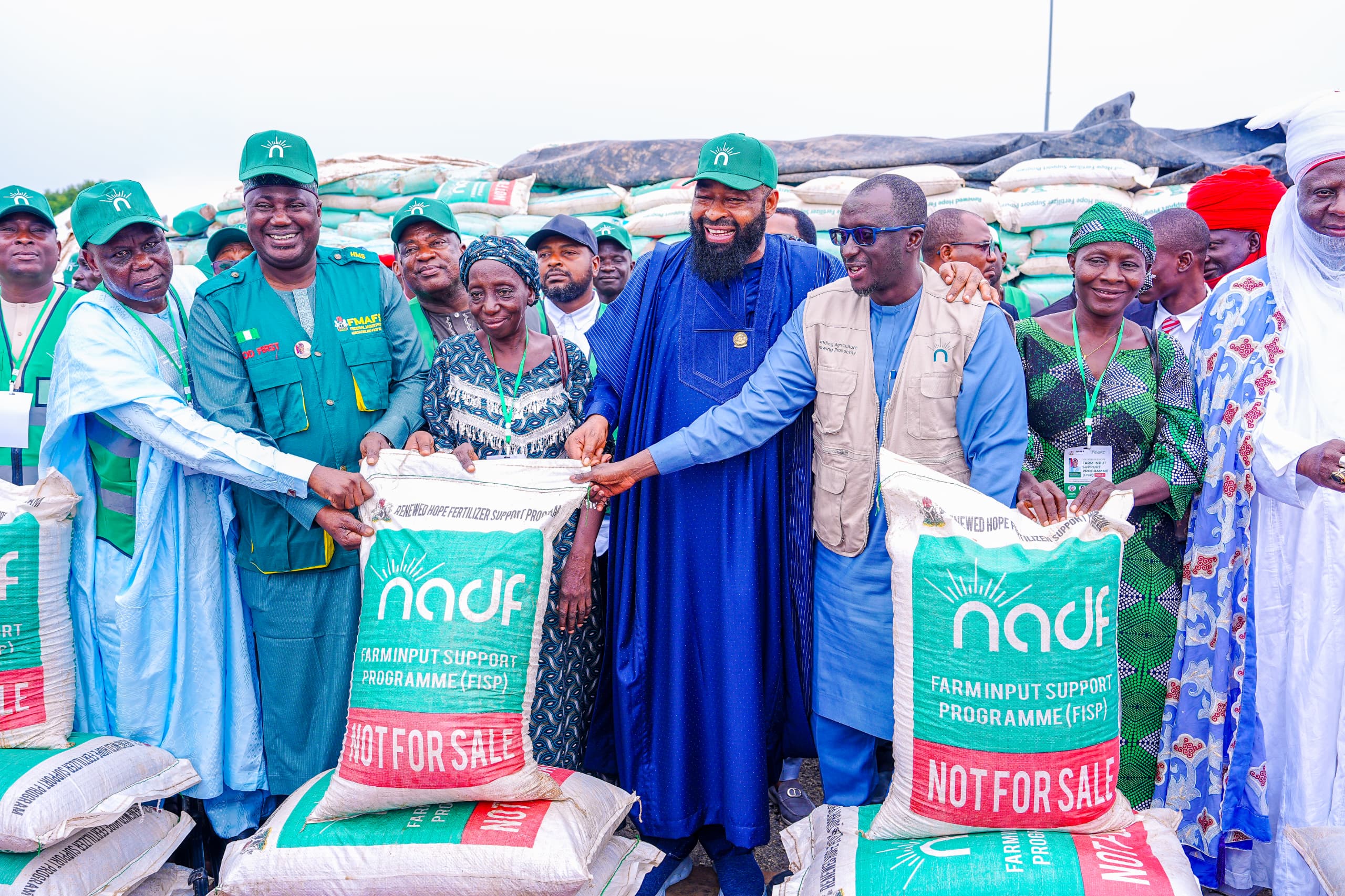
The National Agricultural Development Fund (NADF) has unveiled a program aimed at distributing 80,640 subsidized bags of NPK fertilizer to 20,160 smallholder farmers across Niger, Benue, Nasarawa, and Kwara States. This initiative targets essential food security crops, with the goal of boosting yields, lowering production costs, and improving overall food supply.
Addressing Key Challenges Faced by Farmers
During the flag-lowering ceremony for the initiative, NADF Director-General and CEO Mohamed Abu Ibrahim emphasized that the program represents a strategic intervention to combat one of the critical challenges farmers face: access to high-quality, affordable agricultural inputs.
Supporting National Agricultural Transformation
Ibrahim highlighted that this initiative aligns with President Bola Ahmed Tinubu’s vision of transforming agriculture into a pivotal driver of economic growth, job creation, and national development.
Focus on Sustainable Agricultural Practices
The initiative is designed to ensure that support reaches the farmers who produce vital crops for food security and economic sustainability. Ibrahim clarified, “FISP is not merely about distributing fertilizer; it aims to supply the right resources to the appropriate farmers and crops at the right time.” He emphasized the importance of increasing productivity, improving agricultural yields, and fostering stability in food markets.
Tailored Support for Priority Crops
In his remarks, Ibrahim shared that NADF carefully identifies priority crops for each participating state, factoring in their comparative advantages and production potentials. For instance, in Niger State, the primary focus will be on rice, maize, and yam, while Benue State farmers will receive assistance to cultivate rice, yam, and soybean.
Ensuring Accountability Through Traceability
The NADF chief revealed that all fertilizers distributed through the program are produced locally in Nigeria, are fully traceable, and explicitly marked as ‘not for sale’ to prevent diversion. Each bag is linked to verified beneficiaries through a stringent verification process involving stakeholder engagement and beneficiary vetting.
Commitment to Long-term Results
“Success will not be measured solely by today’s event, but rather by the developments on farms in the months ahead. We are committed to monitoring results and leveraging data to enhance future initiatives,” Ibrahim stated. He urged beneficiaries to use the fertilizers judiciously and exclusively for their designated purposes, reminding them of their critical role in achieving sustainable food security in the nation.
Support from Local Leaders for Agricultural Transformation
Niger State Governor Mohammed Umaru Bago praised President Tinubu for his dedication to agricultural reform, describing this effort as evidence of the government’s commitment to achieving food security and economic vitality through targeted investments. He added that supplying essential inputs to smallholder farmers is one of the most effective ways to bolster food production, enhance rural livelihoods, and strengthen agricultural value chains.
Government Commitment to Addressing Food Insecurity
Aliyu Abdullahi, the Minister of State for Agriculture and Food Security, spoke at the event, reiterating the federal government’s commitment to tackling food insecurity through increased support for farmers. He remarked that the timing of this initiative is particularly strategic, coinciding with the rainy season when fertilizer demand peaks.
Future Plans for Broader Agricultural Interventions
Abdullahi noted that NADF, as an agency of the Federal Ministry of Agriculture and Food Security, is positioned to implement such concrete interventions in the agricultural sector. He also indicated that similar programs would be rolled out in other states to stimulate agricultural production and bolster food sovereignty.
A Milestone in Strengthening Domestic Food Production
The launch of the Fertilizer Intervention Support Program (FISP) in the North-Central Zone signifies another important step in the Federal Government’s mission to amplify domestic food production, enhance agricultural value chains, and improve food affordability. This initiative aligns with President Tinubu’s vision of cultivating a food-secure, prosperous, and economically resilient Nigeria.
