


In late March, officers from the Florida Fish and Wildlife Commission detained a Guatemalan couple walking their dog in Bonita Springs, a wealthy coastal community. According to the wife, an officer asked her to retrieve her husband’s ID from their car and then ordered her to leave the park.
Upon reaching the parking lot, the officers arrested her husband on what she described as unfounded charges. Speaking to The Associated Press anonymously for fear of jeopardizing their pending asylum cases, she expressed her distress over the situation. “He claimed he was ticketed due to a dog bite, but that was untrue; the officer never exited the vehicle,” she recounted. “After making some phone calls, he executed the arrest and waited 40 minutes for federal Immigration and Customs Enforcement (ICE) agents to arrive and take my husband away.”
President Trump’s administration has faced strong opposition in Democratic-led sanctuary cities, where local authorities have limited cooperation with federal immigration enforcement. Residents have rallied to protect their immigrant neighbors, demonstrating against the presence of federal agents, whom they perceive as intruders. However, in Republican-controlled Florida, the response has been significantly different. A total of 347 state and local agencies have allied to support this crackdown, resulting in a surge of immigration-related arrests. This coalition includes not just traditional law enforcement agencies but also the Florida National Guard, Highway Patrol, and even the Fish and Wildlife Conservation Commission.
The dramatic increase in immigrant arrests in Florida during Trump’s second term, often initiated by routine traffic stops, has largely escaped public scrutiny. State and local entities have consistently declined requests for arrest records and body camera footage, adhering to the directives from the Department of Homeland Security. Interestingly, public sentiment appears to lean increasingly in favor of these enforcement actions.
Significant Rise in Immigration Arrests
According to data provided to the University of California, Berkeley’s Deportation Data Project and analyzed by The Associated Press, nearly 39,000 immigrants were arrested in Florida over a 416-day period from January 20, 2025, to March 11, 2026. Comparatively, during the corresponding timeframe prior to the Biden administration, only 11,088 arrests occurred. Under the Trump administration, Florida averaged 93 immigration arrests daily, placing it only behind Texas, which experienced an average of 239 arrests daily, driven by its extensive border with Mexico.
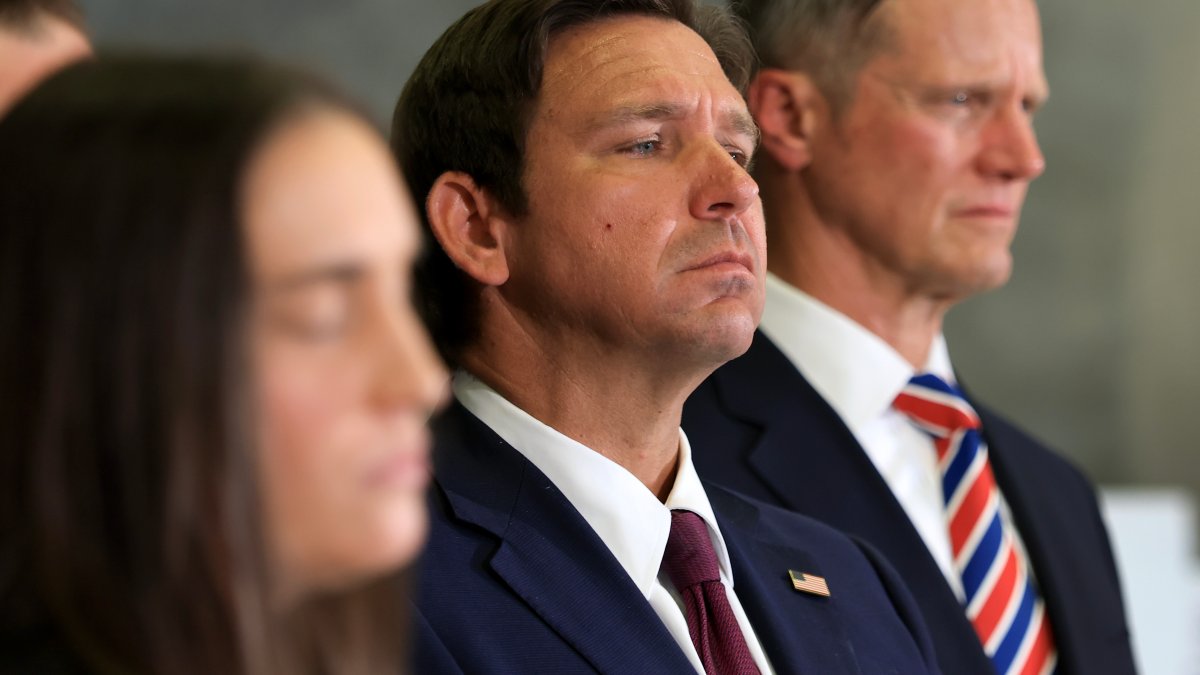
Florida Governor Ron DeSantis has expressed strong support for state collaboration with ICE under the 287(g) program, which empowers local law enforcement to carry out immigration enforcement duties. Experts suggest that local agencies feel pressure to demonstrate results. “Many officers now have immigration authority and focus on identifying potential violations,” commented Villerca Bilbao, an immigration attorney representing detained clients in Jacksonville. “They’re employing tactics that lead to arrests, often using minor infractions as pretexts.”
Bilbao noted that law enforcement often stops vehicles for minor issues, such as broken taillights or excessive window tinting, which can subsequently result in ICE involvement.
Recent Deportations Highlight Ongoing Concerns
An illustrative case occurred on February 15, when deputies from Lee County arrested a 44-year-old Guatemalan man and his 21-year-old son outside Fort Myers. The wife and mother of the individuals reported they were approached in a store parking lot, where officers informed them their license plates were expired, despite the fact they remained valid until March 25. Speaking anonymously due to safety concerns, the mother lamented the impact of this incident on her family, explaining that her husband and son were deported back to Guatemala within a week, leaving her to care for their two younger sons and an American daughter.
This mother highlighted that her husband and son had ongoing cases pending in immigration court, with her husband missing a hearing in Miami, approximately 120 miles from Fort Myers, due to financial constraints. Meanwhile, her son, seeking asylum, was in possession of a valid driver’s license and work permit. In contradiction, DHS contended that both men were unlawfully in the United States, citing their illegal border crossing in 2017 and a final deportation order issued in 2019.
Legal and Transparency Issues Persist
In both incidents, the Florida agencies involved in the crackdown, including the Fish and Wildlife Commission and the Lee County Sheriff’s Office, refused to release arrest reports or body camera footage to The Associated Press. Their rationale stemmed from ICE directives that require all inquiries related to immigrant arrests to be routed through the agency.
Both ICE and its parent agency, DHS, have declined to distribute arrest reports or body camera footage, asserting that they “do not intend to disclose confidential law enforcement information.” A directive from ICE aimed at Florida’s 287(g) partners declared that any information produced under this agreement remains under ICE’s jurisdiction, prohibiting its release without federal consent. This directive raises potential conflict with Florida’s Sunshine Law, which mandates public access to records unless explicitly protected, though recent legislative changes have created loopholes.
Wider Trends Beyond Florida
Florida’s aggressive stance toward immigration enforcement has been part of a larger national strategy, evidenced by the establishment of immigration detention centers, such as Alligator Alcatraz, and a specialized deportation center. The state has seen considerable growth in participation in the 287(g) program, escalating from 135 agreements across 20 states at the outset of Trump’s second term to over 1,700 agreements in 41 states and territories.
The DHS has also introduced financial incentives to encourage state and local law enforcement agencies to collaborate, offering salary reimbursements and allocations for equipment. Among these is a funding package of up to $7,500 for each participating officer’s gear and up to $100,000 for agency purchases of new vehicles, intensifying the push for immigration enforcement.
