


Urgent Call for Action on Child Education and Play-Based Learning in Nigeria
Child development experts, educational authorities, and UNICEF officials have raised alarm over the increasing number of out-of-school children and worsening security conditions in Nigeria. They emphasize that immediate collective efforts are essential to uphold children’s rights to education, safety, and play.
UNICEF Representative Jocelyne Lafkrière highlighted the myriad risks children in Nigeria face, including kidnapping and unsafe educational environments. She underscored the need for an urgent societal response to safeguard the future generation. “These two things are related, and both need to be fixed now. Our children are watching; let’s not let them down,” she asserted.
Lafkrière explained that early childhood development begins at birth, significantly impacted by both home and educational settings. She noted that children learn most effectively when parents are engaged and when they have access to safe learning spaces and appropriate learning materials.
She emphasized the collaborative nature of education, stating, “It takes a village to educate a child.” While governments must lead the charge, she believes parents, educational partners, communities, and families all play vital roles.
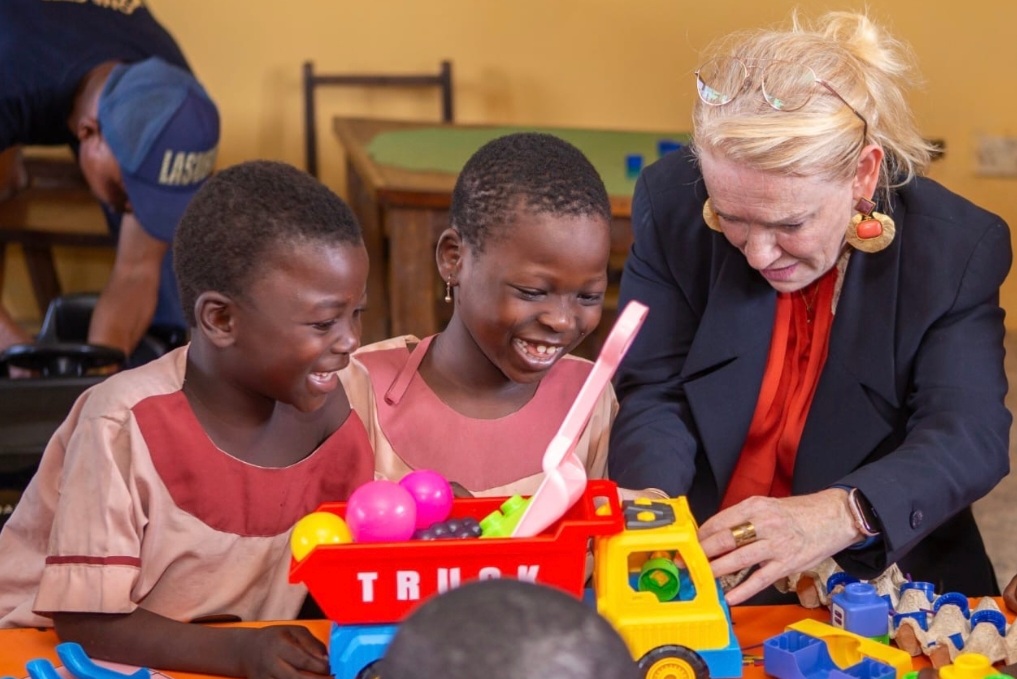
Moreover, Lafkrière stressed the importance of play in early learning. She stated that play is far more than mere recreation; it is crucial for brain development and enhancing communication skills. “As soon as children are allowed to play, their brains begin to develop, and their learning abilities improve,” she noted.
With a significant number of children out of school in Nigeria, she insisted that education should remain a fundamental right for every child and called for a more holistic approach to ensure children remain in school. “Nigeria still has a huge number of out-of-school children, so we have to keep them in school,” she emphasized.
Hakeem Shittu, the Executive Chairman of the Lagos State Universal Basic Education Board, echoed this sentiment, stressing that the welfare and development of children must remain a priority for both the government and stakeholders. He observed that children learn more effectively and express themselves better when they can interact and play in a nurturing environment. “Children learn more when they are happy. Interaction improves communication and mental development,” he stated.
Shittu further shared that Lagos public schools are designed to be inclusive, ensuring equal access for all children, independent of their backgrounds or physical abilities. He also affirmed the government’s commitment to support students by providing essential learning materials, including textbooks, uniforms, sandals, and bags.
In response to these challenges, UNICEF education expert Yetunde Oluwatoshi reported that the organization is collaborating with the government to promote play-based learning and bolster parental involvement in early education. “It’s important to engage with parents at home and connect them with what’s happening at school. Children should be able to continue learning even when they’re at home,” she said. She highlighted that early childhood development necessitates a comprehensive approach across sectors, including education, health, nutrition, and child protection. Additionally, she called for trained teachers who are equipped to effectively deliver play-based learning.
Oluwatoshi stressed the imperative of making education accessible to every child and advocated for stronger systems to ensure safe, high-quality learning opportunities for all.
