


Video Assistant Referee (VAR) continues to stir debate across major football tournaments, including the Premier League, Champions League, and FA Cup. But how are these pivotal decisions made, and do they hold up against scrutiny?
This FIFA World Cup edition showcases crucial incidents, providing insights into the VAR protocols while clarifying the nuances of the Laws of the Game.
Andy Davies, a former Select Group referee with over 12 seasons of elite-level experience in both the Premier League and Championship, offers valuable commentary on the VAR process. Having engaged deeply in the VAR framework, Davies sheds light on the rationale and protocols enforced during matchdays.
Referee: Yael Falcon Perez
VAR: Juan Lara
Time: 84 minutes
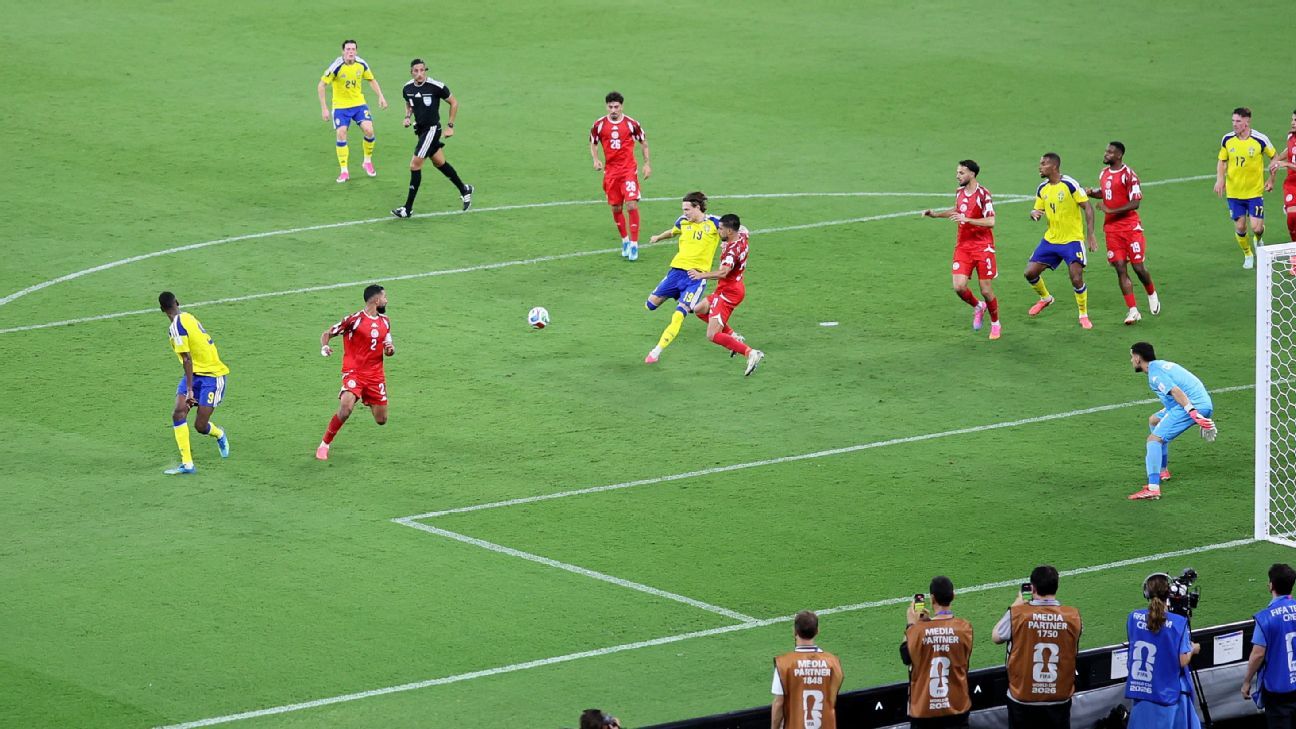
Incident: VAR intervention. A goal awarded to Sweden was upheld after a VAR review utilizing connected ball tracking technology, despite an initial offside call that was ultimately not sustained.
What transpired? Sweden’s Matthias Svanberg netted his fourth goal just 12 seconds after entering the game, marking the fastest substitute goal in World Cup history—initially ruled offside.
However, VAR reversed this decision, determining that teammate Alexander Isak’s slight deflection positioned Svanberg onside. The analysis was aided by Adidas’ advanced connected ball technology, akin to cricket’s “snickometer,” which detects player contact with the ball.
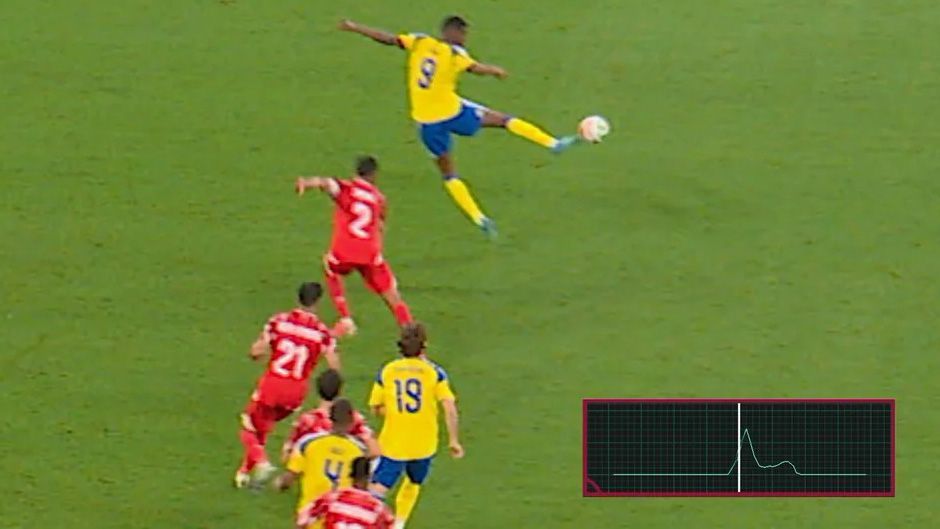
(Credit: SVT)
The VAR review zeroed in on whether Isak had touched the ball prior to reaching Svanberg, a factor that reset the play and dictated the goal’s legitimacy. This nuance was too subtle for the naked eye, and the initial offside judgment seemed credible. Nevertheless, with the ball tracking technology’s insight, VAR confirmed Isak’s intervention, thereby validating the goal.
This approach is not groundbreaking. The ball itself is embedded with technology that relays real-time data to referees, including sensors that monitor player contact. This innovation enhances the accuracy and speed of VAR’s decision-making, as stated in the original press release, which asserted that it would aid in identifying offside situations and vague touches.
Such instances aren’t isolated. At the 2022 World Cup, a contentious goal by Cristiano Ronaldo against Uruguay sparked confusion about whether he had touched the ball, with new Adidas technology ultimately ruling in favor of teammate Bruno Fernandes. Despite the absence of clarification during the broadcast, FIFA and Adidas confirmed Ronaldo’s non-contact to ESPN at that time.
Fast forward to Euro 2024, and the application of VAR was more controversial. In a match against Slovakia, Belgium’s Reus Openda was observed handling the ball before Romelu Lukaku’s goal was disallowed. The evolution of VAR’s reliability has since improved significantly.
With the recent 2026 World Cup ruling, VAR once again validated its role by leveraging technology to achieve a fair outcome. In contrast to previous inconsistencies, this incident exemplifies how technological advancements can rectify human errors in judgment during pivotal moments in football.
