


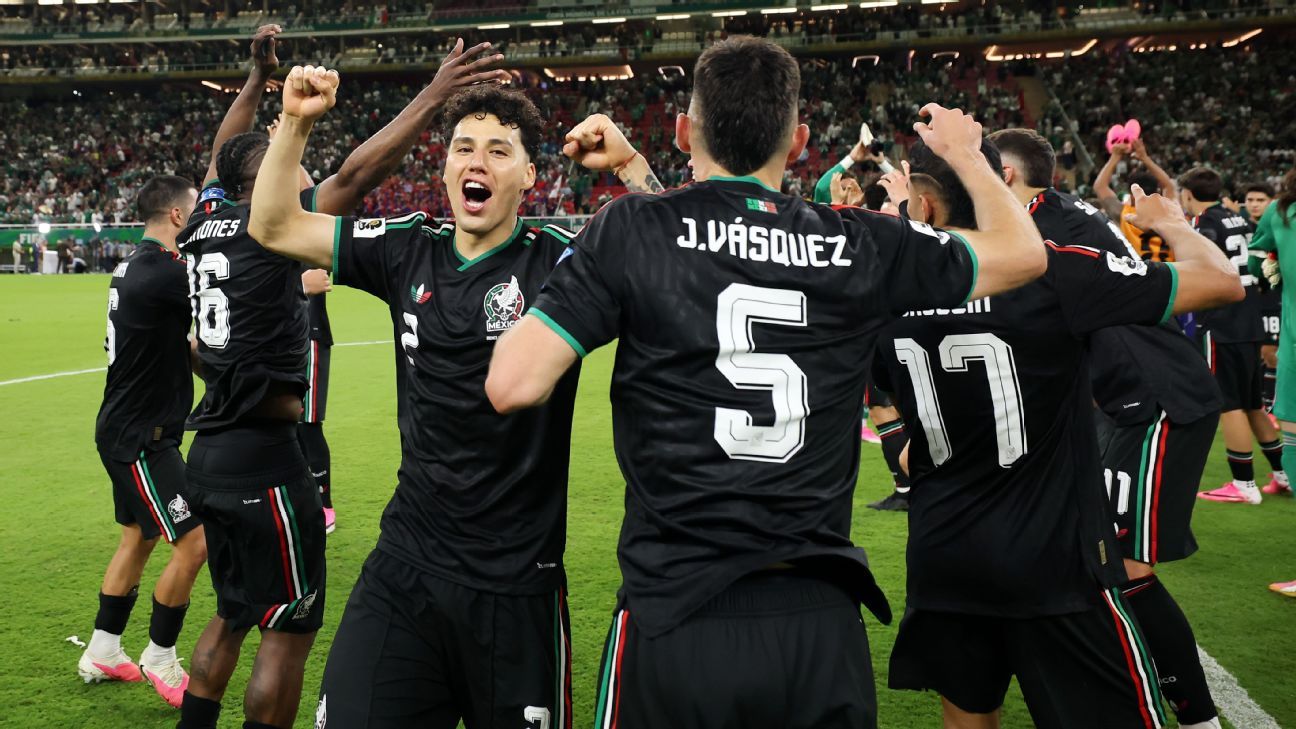
Zapopan, Mexico – Mexico has officially secured the top spot in Group A with a narrow 1-0 victory over South Korea, thanks to Luis Romo’s decisive goal. This win marks the team’s qualification for the World Cup’s final round, making them the first to advance.
The match, held before a lively crowd of 45,522 at Guadalajara’s Estadio Akron, showcased a cautious strategy from both teams. They appeared content to play for a draw, aware that their previous game had yielded favorable results. However, just five minutes into the second half, Romo capitalized on a mistake from South Korean goalkeeper Kim Seung-kyu, delivering a cross into the box where Mexican winger skillfully slotted the ball into an open net.
While the second half saw some improvement in play, the final whistle confirmed that the co-hosts had achieved their second victory of the tournament. Here are some insights shared by commentators covering the event.
Aguirre’s Strategy Reflects Pragmatism
The relationship between Mexican soccer and national coach Javier Aguirre is one of contrasts. Fans and journalists have long desired an attacking style of play, yet Aguirre has carved out a niche as a tactician known for prioritizing defense. His successes in Europe with smaller clubs showcased his ability to instill stability through a solid defensive setup.
This clash of philosophies was evident during the game, where Aguirre appeared willing to sacrifice possession to reinforce his defense. His approach doesn’t involve simply “parking the bus,” but relies on organization and effective use of offside traps.
However, this strategy led to some lackluster moments in the first half, culminating in fans expressing their displeasure with audible boos after a scoreless 45 minutes. Nevertheless, Aguirre adapts. Following Romo’s goal, he permitted his team to play more freely in a frenetic final 15 minutes. Although this shifted the momentum in South Korea’s favor, the co-hosts remained resolute.
Son Adjusts to New Role
For over a decade, much of South Korea’s offensive creativity has stemmed from Son Heung-min, typically operating on the left flank. However, coach Hong Myung-bo’s recent shift to a 5-2-3 formation to bolster defensive integrity required a repositioning of the captain. With Lee Kang-in and Lee Jae-sung on the field, Son Jung-seon found himself in a more central role, a change that may take some adjustment on the international stage.
During the match, Son managed just 21 touches before his substitution in the 57th minute, marking a decline in involvement compared to his prior outing against the Czech Republic. Despite opportunities to influence the match, South Korea will need Son’s contributions to be more pronounced, particularly ahead of their next clash against South Africa.
Fan Discontent Over Hydration Breaks
As the game progressed, both hydration breaks frustrated attendees at the stadium. Fans expressed their dissatisfaction with the mandated three-minute pauses, observing that play could resume swiftly after just two minutes. While FIFA stipulates these breaks for player safety, they often serve as commercial opportunities for broadcasters, raising eyebrows among those in attendance.
The relatively mild temperature of 71 degrees Fahrenheit during the second half only intensified calls for reconsideration of such pauses. Although fans hope for change, the likelihood of FIFA adjusting their policy during the tournament remains slim.
Romo’s Game-Winning Moment
Previously an unused substitute, Luis Romo unexpectedly found himself starting against South Korea. Despite skepticism surrounding Aguirre’s tactical choices, Romo leveraged an opportunity that came his way. His initial role was more of a defensive midfielder, but his decisive strike in the 50th minute proved pivotal.
Romo’s goal emerged not from an aggressive offensive strategy, but rather from a well-timed advance that capitalized on Julián Quiñones’s assist. Despite concerns over whether he would continue to feature prominently in the lineup, Romo’s performance reinforced his potential contribution to the team’s success moving forward.
Kim’s Roller Coaster Performance
South Korea’s goalkeeper Kim Seung-gyu has delivered a mixed bag of performances leading into the World Cup. His early efforts, including crucial saves during the prior match against the Czech Republic, positioned him as a frontrunner for the Golden Glove Award. However, a critical misstep against Mexico saw him fumble a high ball, enabling Romo to net the winning goal.
Despite the setback, Kim’s resilience shown through as he executed impressive saves against Raul Jimenez and Obed Vargas later in the game. His standing remains intact for now, but the up-and-down nature of his performance leaves little room for error as South Korea prepares for their upcoming match.
Challenges Ahead for Mexico
While Mexico has historically been a dominant force within the CONCACAF region, the quest for global recognition remains elusive. Having advanced to the quarterfinals only twice in World Cup history, the pressing ambition to reach the last eight is palpable among fans. Following their victory over South Korea, Mexico appears on a favorable track, with their next matches crucial for further advancement.
However, despite this recent win, the team’s lack of dynamism raises concerns about their ability to compete against stronger opponents, particularly if they face powerhouses like England in the round of 16. While advantages such as home crowd support in Mexico City could bolster performance, the overarching question remains: do they possess the quality necessary to make a lasting impact in this World Cup?
