


Nigerian Government Approves International Routes for United Nigeria Airlines
The federal government has granted United Nigeria Airlines approval for several international flight routes, including destinations in New York, Dubai, and Canada. This initiative aims to bolster Nigerian airlines and enhance their share of the international passenger market.
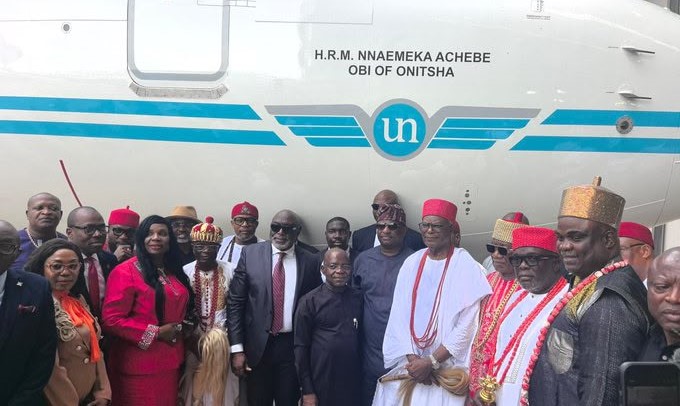
During the unveiling of the airline’s newly acquired Boeing 737-800 aircraft, Minister of Aviation and Aerospace Development Festus Keyamo announced the new routes. He emphasized that this decision is part of ongoing efforts to empower domestic airlines, enabling them to better compete internationally, an arena typically dominated by foreign carriers.
Keyamo mentioned that the government is offering United Nigeria Airlines access to approximately four or five strategic routes, including New York, Canada, and Dubai among other viable destinations. This move is a crucial step in repositioning Nigerian airlines to capture a more significant share of international air traffic.
Despite existing bilateral agreements that provide rights for airline operations, Keyamo pointed out that Nigerian carriers currently handle only a small fraction of the international passenger traffic. He noted that foreign airlines account for 90 to 95 percent of passengers traveling from Nigeria to regions like Europe, North America, and the Middle East, and stressed the importance of empowering local airlines to actively participate in this market.
Expansion of Fleet and Aircraft Leasing Initiatives
The approval of new routes aligns with the government’s broader mission to facilitate improved access to aircraft acquisition and leasing for Nigerian airlines. Keyamo revealed that President Bola Tinubu has approved the creation of a Nigerian aircraft leasing company aimed at assisting national airlines in securing government-backed aircraft. This initiative is expected to address historical financing challenges and support airline expansion.
Keyamo emphasized the government’s preference to support privately owned airlines over reviving the state-owned national carrier. He argued that many successful global airlines thrive under commercial models that minimize political interference and enhance operational efficiency.
The recent announcement follows United Nigeria Airlines’ unveiling of two Boeing 737-800NG aircraft, named after prominent figures in Nigerian literature. This acquisition is part of the airline’s fleet expansion strategy, despite facing significant operational losses of approximately N10 billion in the past three months, largely attributed to rising operating costs and aviation fuel prices.
Despite these financial headwinds, Keyamo reiterated the government’s commitment to enhancing connectivity in the domestic and international aviation landscape. He also highlighted ongoing collaboration with the Abia State Government to advance the Abia International Airport project, which is envisioned as the main operational hub for United Nigeria Airlines upon completion.
Furthermore, plans are underway to transform the Akanu Ibiam International Airport in Enugu into a dedicated cargo hub, enhancing trade logistics for local businesses. Discussions are also in progress to facilitate direct cargo flights between China and Enugu, aimed at bolstering trade opportunities for importers and exporters in the region.
Keyamo expressed optimism regarding the recent reforms in the aviation sector, noting that they are beginning to yield positive results. He acknowledged the significant effort invested in engaging various stakeholders—including operators and regulators—to address long-standing industry concerns and to foster sustainable growth in aviation.
Related article: Keyamo discusses China-Enugu cargo flights
Industry representatives at the event highlighted advancements in aircraft financing and regulatory protocols, emphasizing the necessity for ongoing investment to bolster Nigeria’s aviation sector. They underscored the importance of expanding access to modern aircraft and enhancing local technological capabilities to ensure that Nigerian airlines can effectively compete in both regional and international markets.
