


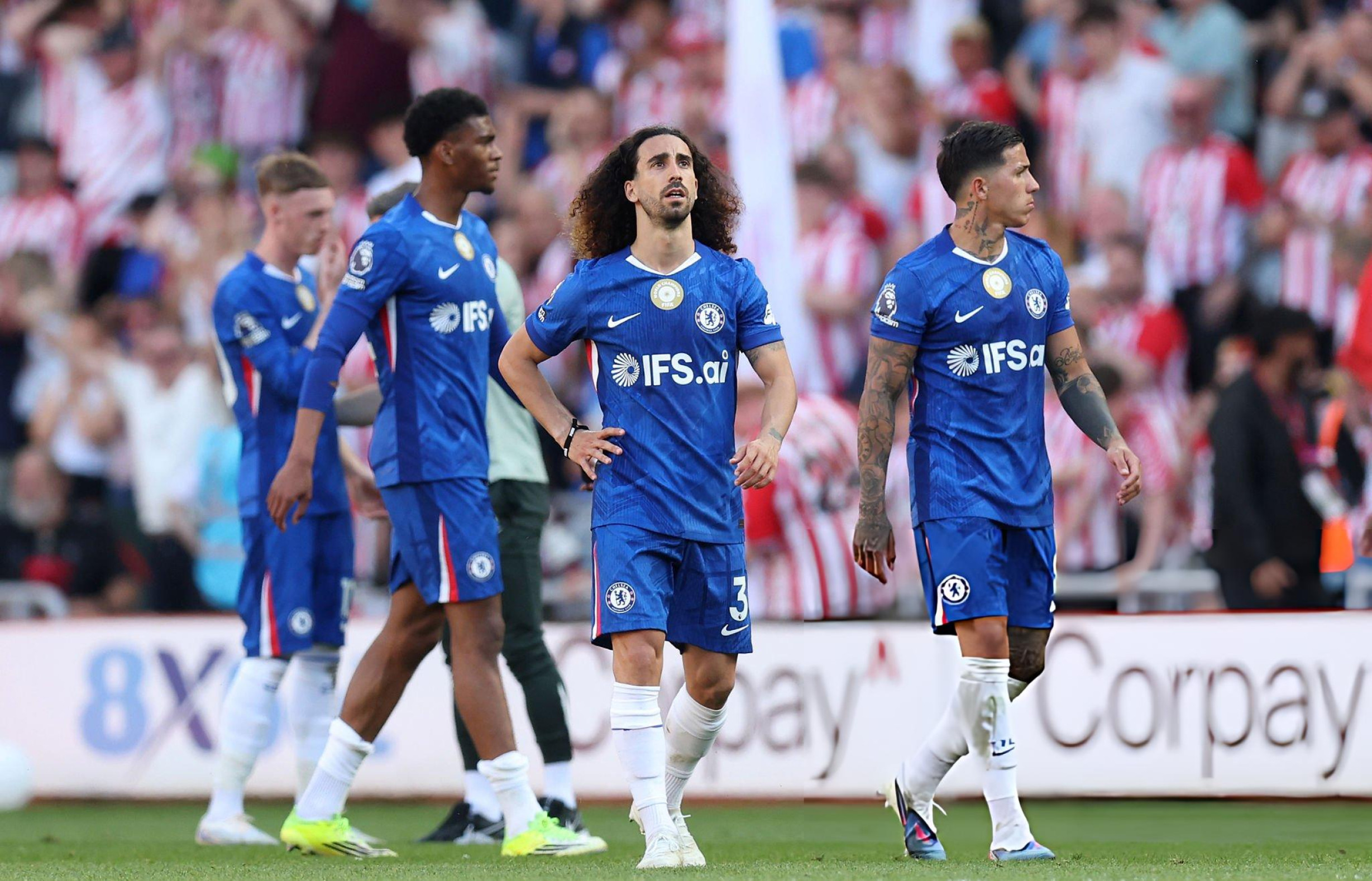
Chelsea’s tumultuous 2025/26 season concluded in the most disheartening fashion on Sunday night, with a 2-1 defeat to newly promoted Sunderland. This disappointing outcome left Chelsea in a surprising 10th place, resulting in a ban from European football for the upcoming season.
The club, which began the season as FIFA Club World Cup champions and boasted one of the highest payrolls in global football, experienced an abrupt end to their ambitions. The final whistle at the Stadium of Light resonated as the closing of a chapter, rather than a mere conclusion to the season.
Next season, Chelsea will find themselves watching from home rather than competing for Champions League glory, with added embarrassment stemming from the fact that Sunderland, promoted just a year ago, celebrated a fairy-tale qualification for the Europa League at Chelsea’s expense.
Chelsea’s Final-Day Collapse
The match itself was a microcosm of Chelsea’s struggles throughout the season. Defensive errors, a lack of control, and a noticeable absence of discipline plagued their performance, leading to another failure in high-pressure situations. Sunderland struck first in the 25th minute when Trey Hume’s stellar shot found the net, following a moment of disarray in the Chelsea backline caused by Luke O’Nien’s flick-on.
The home side displayed greater speed, sharper instincts, and a more profound hunger for victory. Just five minutes into the second half, Chelsea’s woes deepened as a misguided pass from Enzo Le Fe sparked chaos in the box, resulting in Maro Gusto inadvertently scoring an own goal, extending Sunderland’s lead to 2-0. Chelsea was left reeling, facing yet another stunning setback.
Temporary hope emerged when Cole Palmer scored a low finish in the 56th minute, briefly alleviating the gloom. However, Chelsea’s struggles flared up once again just six minutes later, when Wesley Fofana received a second yellow card after fouling Wilson Isidore. The team’s discipline issues came to light vividly, with Chelsea ending the season having accumulated an alarming total of 11 red cards across all competitions, eight of which occurred in the Premier League—far surpassing any other top club.
Sunderland’s Remarkable Achievement vs. Chelsea’s Disappointment
The stark contrast in fortunes was striking on the final day. As Sunderland enthusiasts celebrated their first European qualification in 53 years, the Chelsea squad trudged off the pitch demoralized. The Black Cats’ historic 2-1 triumph at the Stadium of Light secured them a seventh-place finish and a spot in the Europa League, while Chelsea slipped from 8th to 10th place.
Over the course of 38 matches, Chelsea’s record stood at 14 wins, 10 draws, and 14 losses, totaling 52 points with a goal difference of just +6. This marked the third time since the 1995/96 season that Chelsea finished outside the top ten in England’s premier football league, a staggering statistic for a club that has invested billions since the acquisition by BlueCo.
Addressing the Discipline Crisis
In his post-match press conference, caretaker manager Callum Macfarlane openly acknowledged that the team’s disciplinary issues had been a significant concern throughout the season. He noted, “We are the team with the most red cards in the league,” emphasizing the need for improvement heading into next year.
Despite the plethora of talent within the squad, Macfarlane recognized that the players had not consistently performed to their potential. He lamented the inconsistency, stating that the team had shown glimpses of their capability but failed to maintain this standard throughout the season.
The Shift from Glory to Turmoil
The sudden decline of Chelsea is especially surprising given their promising start to the season. After winning the Club World Cup, optimism was high among supporters. The Blues had invested heavily in an impressive roster that included stars like Cole Palmer, Joao Pedro, and Enzo Fernandes. On paper, Chelsea appeared poised to challenge for a return to the Champions League. However, the team quickly became ensnared in a web of inconsistencies and contradictions, ultimately leading to their downfall.
Managerial Instability and its Consequences
Business instability further exacerbated the chaos. Enzo Maresca began the campaign but was dismissed due to poor results and growing tensions within the squad. Liam Rosenior’s brief tenure also failed to stabilize the situation, resulting in his departure in April. By the season’s end, Chelsea found themselves under the interim leadership of Callum Macfarlane, while preparations for Xabi Alonso’s arrival were underway.
Struggles in Domestic and European Competitions
Chelsea’s disarray carried over into their European campaign as well. Although they advanced to the knockout stage of the Champions League, they suffered a humiliating defeat to Paris Saint-Germain, losing 8-2 on aggregate in the Round of 16. This result marked one of the club’s most significant failures in recent memory. Their FA Cup runner-up finish, along with a semi-final exit from the EFL Cup and failure to qualify for European competition, compounded the disappointment for Chelsea’s supporters.
Bright Spots in a Dark Season
Amidst the chaos, a few players managed to shine. Joao Pedro emerged as Chelsea’s top scorer with 15 goals in the Premier League and 20 across all competitions. Cole Palmer continued to be a crucial creative force, contributing goals, including one against Sunderland. Enzo Fernandes also showcased his quality in midfield. However, individual achievements could not mitigate the team’s broader systemic issues—defensive instability, tactical inconsistencies, and lack of cohesion plagued their season.
Sunderland’s Triumph as Chelsea Faces a Reckoning
While Chelsea faltered, Sunderland crafted a remarkable narrative. Just a year after securing promotion, the Black Cats celebrated their entry into European competition, an achievement that few anticipated. The Stadium of Light erupted in celebration, marking a historical moment for Sunderland while serving as a humiliating reminder for Chelsea.
As Chelsea heads into the offseason, the path forward appears fraught with challenges. Supporters are beginning to perceive this season as not only a painful reset but potentially a turning point in the club’s trajectory. With incoming manager Xabi Alonso at the helm, the coming months will be critical in determining the club’s future through recruitment, discipline, leadership, and a solidified identity. For a club of Chelsea’s stature, finishing 10th while missing European competition signifies not only a failure but a crisis that demands immediate attention.
