


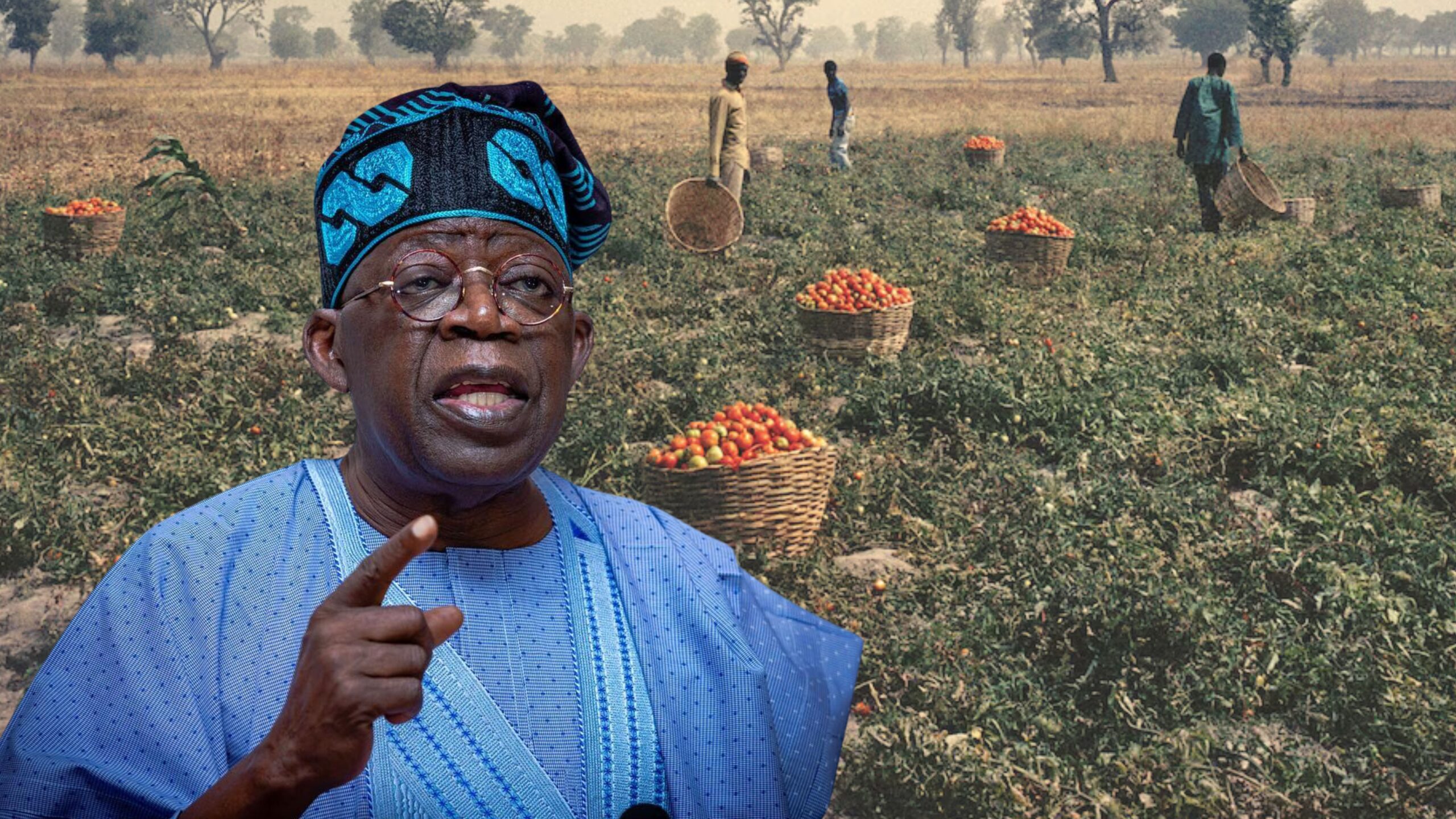
Nigeria Secures Major Fertilizer Supplies to Bolster Food Security
President Bola Tinubu has announced that Nigeria has successfully secured over 449,000 tonnes of fertilizer inputs—equivalent to approximately 9 million bags—aimed at enhancing agricultural production and ensuring food security nationwide. He shared this development through a statement on X’s official platform, emphasizing it as a critical component of his administration’s commitment to achieving food security in Nigeria.
As of May 2026, Tinubu indicated that 10 vessels are either unloading or in transit to deliver these vital agricultural inputs. He highlighted that making food security a cornerstone of the “New Hope” agenda was among the first actions taken upon his administration’s inception.
The President reiterated the government’s pledge to support farmers, enhance local production, minimize reliance on imports, and create robust agricultural systems capable of withstanding external shocks. He affirmed that the administration has thus far kept its promise in this regard.
Challenges in Fertilizer Procurement
Nigeria has historically faced challenges in sourcing fertilizer, primarily due to rising raw material costs, supply chain bottlenecks, and instances of product diversion. These factors have limited access for the smallholder farmers who contribute significantly to the nation’s food supply. The previous administration led by former President Muhammadu Buhari initiated strategic partnerships with Morocco in 2016 and Russia in 2019 under the Presidential Fertilizer Initiative (PFI) to tackle these issues.
This initiative began with a memorandum aimed at revitalizing a previously inactive fertilizer compounding factory and allowed for the import of phosphate from Morocco at discounted prices. In 2021, the partnership evolved into a comprehensive $1.3 billion basic chemistry platform designed to facilitate local ammonia and fertilizer production. While these agreements have increased the availability of raw materials and domestic production capacity, challenges such as product diversion continue to obstruct farmers’ access to essential supplies.
Experts have linked fertilizer shortages to decreased crop yields, escalating food prices, and heightened food insecurity. Nigeria’s food systems are under increasing strain due to frequent flooding, deteriorating security in agricultural areas, rising transportation costs stemming from the removal of fuel subsidies, and long-term structural challenges. The United Nations World Food Program (WFP) projects that approximately 35 million Nigerians will face severe food insecurity during the challenging harvest season in 2026.
Impacts of Global Supply Disruptions
Tinubu also pointed out that global supply chain disruptions, exacerbated by ongoing conflicts in the Middle East, pose substantial risks for countries dependent on imported raw materials. Nigeria stands to face fertilizer shortages, heightened input costs, diminished productivity, and increased food prices as a result.
In response, the President announced that early actions have been initiated to mitigate these risks. Under the reorganized Presidential Fertilizer Initiative, now part of the Ministry of Finance (MOFI), the government has strengthened procurement systems, secured critical raw materials, and established forward contracts. These efforts aim to improve coordination across the fertilizer supply chain and insulate Nigeria’s fertilizer formulation industry from the most severe impacts of global market disruptions.
Boosting Agricultural Resilience
Tinubu confirmed that the government is on track to deliver a fertilizer program totaling 1.1 million tonnes—equivalent to around 22 million bags—by 2026. The strategic contracting of essential inputs has led to a reported savings of N61.58 billion in 2026, helping to maintain the affordability of fertilizer for farmers.
Currently, Nigeria boasts over 90 functioning fertilizer blending plants, giving it the largest blending capacity in sub-Saharan Africa. This capacity is critical for creating jobs, boosting local production, fostering industrial growth, and enhancing the resilience of the country’s food systems. However, the President emphasized that ensuring timely delivery of these inputs to farmers is paramount.
Supporting Farmers with Renewed Initiatives
To further assist farmers, the Nigerian government has launched the Renewal Hope Farm Input Support Program (RH-FISP) via the National Agricultural Development Fund (NADF). This program has already distributed 515,720 bags of locally produced fertilizer to 128,930 smallholder farmers across 25 states and the Federal Capital Territory during the current planting season.
Moreover, NADF also supports modern agricultural practices through digital extension services, harmonized fertilizer application guidelines, and targeted interventions for key crops such as rice, maize, cassava, and soybean. The President asserted that his administration will remain committed to safeguarding farmers, enhancing productivity, fortifying agricultural value chains, supporting local industries, and addressing long-term food price pressures. He underscored a commitment to making promises and delivering on those promises to strengthen agriculture and food security for all Nigerians.
