


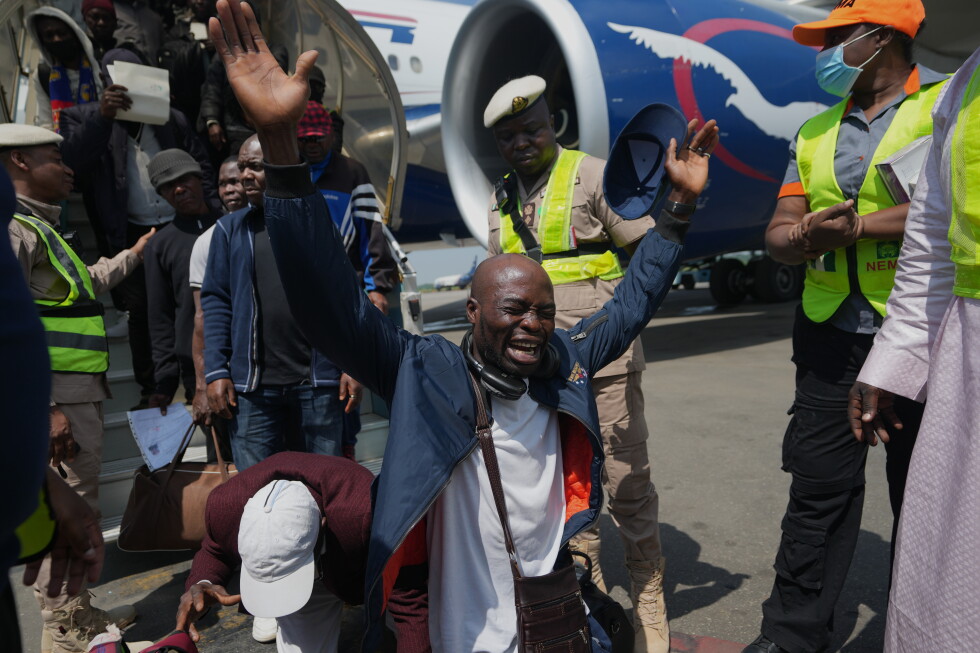
LAGOS, Nigeria (AP) — A flight carrying hundreds of Nigerians fleeing South Africa recently arrived in Lagos, evoking a mix of relief and apprehension for many passengers. Inyebon James, who returned last week, expressed relief as he stepped back on his home soil. However, he quickly shifted to concerns about his future.
Now nearly two weeks back in Nigeria, the 52-year-old James finds himself longing for the life he led a decade ago when he left for South Africa on a six-month tourist visa. Despite overstaying and facing challenges in obtaining a residence permit, he managed to establish himself as a car mechanic in the Eastern Cape.
His life took a dark turn in May when he was assaulted by anti-immigrant protesters, resulting in a head injury. This incident was part of a broader surge in anti-immigrant sentiment in South Africa, which has seen demonstrations and violence targeting foreigners in recent months.
Governments across Africa, including Nigeria, have recently facilitated the repatriation of their citizens from South Africa amid growing threats of violence and heightened tensions. Historically, South Africa has drawn migrants from various African nations due to its relatively robust economy; however, this influx has been met with occasional xenophobic violence, prompting local resentment. Many South Africans blame foreign nationals for exacerbating the country’s challenges, including high unemployment rates and strained public services.
Before moving to South Africa, James was a truck driver in Lagos, but the closure of his transport company in 2016—triggered by Nigeria’s first recession in two decades—left him feeling vulnerable. Daily power outages further fueled his decision to leave home. In South Africa, he faced a precarious existence, paying weekly bribes to local police to keep his shop running while also dealing with immigration enforcement. The Associated Press could not independently verify the specifics of these claims.
While James expressed joy at regaining his “freedom,” he is acutely aware of the difficult financial landscape back in Nigeria, worsened by inflation and the struggle to find employment. “I will submit my resume if someone accepts me, but I still hope the government will help me find a job,” he stated, reflecting the uncertainty of many returnees.
Challenges of Rebuilding Life in Nigeria
When the Nigerian government announced repatriation flights last month, James recognized it was his chance to return home and rebuild. He was among the first group of Nigerians flown back from South Africa on June 11.
In recent years, Nigeria’s economy has stagnated, leading to significant reforms under President Bola Tinubu’s administration in 2023. These changes included the removal of long-standing fuel subsidies, altering the pricing structure for nearly all goods and services and allowing the naira’s value to fluctuate according to market forces. As a result, inflation has surged, with the price of fuel skyrocketing from 85 naira ($0.1) per liter when James left in 2016 to 1,400 naira ($1.03) upon his return. “Everything is too expensive,” he lamented.
The Nigerian government has assured returnees that they will receive necessary support upon arrival, although the Ministry of Foreign Affairs has not responded to inquiries about long-term assistance or plans for reintegration. Margaret Mognani, founder of the OLAM Africa Institute, emphasized that returning home is far more complex than simply packing one’s bags: “Reparations are not transformation. Going back is not as easy as you think. People just think about going home and starting over.”
Struggles for Acceptance
Omotola Adeniyi, a fellow Nigerian who moved to South Africa with her mother in 2015 when she was just eight, experienced firsthand the barriers facing foreigners. After graduating high school, she struggled to find employment, often facing rejection solely because of her nationality. “I always heard, ‘No, we don’t want to hire foreigners,’” she recounted.
Last year, she began saving for a ticket back to Nigeria but found the cost prohibitive. Eventually, she accepted a return ticket offered by her government. However, after living away for eleven years, Adeniyi feels a sense of estrangement in her hometown. As protests against xenophobia swept through South Africa, diplomatic reactions intensified, with several African nations, including Nigeria, summoning South African officials to express their concerns.
“Any sacrifice you have to make when fleeing a conflict zone or an environment of hate is worth the price. Survival is the noblest form of revenge,” said Nigeria’s Foreign Minister, Bianca Odumegwu Ojukwu, as she welcomed returnees. Despite the violence they faced, experts note that South Africa remains a primary destination for many African migrants, owing to its relatively advanced economy and infrastructure, though the challenges facing newcomers persist.
