


Brazil Seeks Redemption After Mixed FIFA World Cup Start
PHILADELPHIA — Following a lackluster 1-1 draw with Morocco in their FIFA World Cup Group C opener, Brazil was eager for a comeback that would appease its ardent fans and media. The country’s expectations, rooted in a storied football history, set a high bar for performance; despite their sixth position in the FIFA World Rankings, the pressure remains to live up to the legacy of five stars on their jerseys.
Strong Comeback Against Haiti
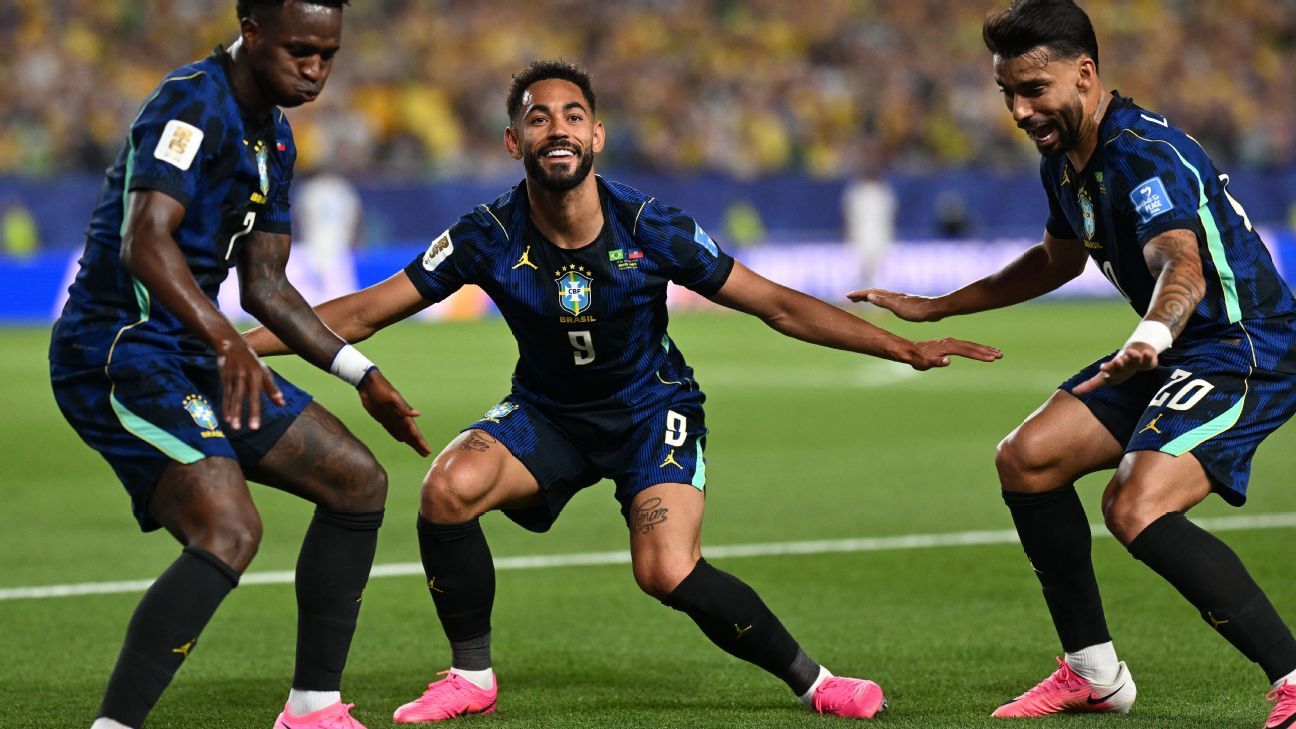
Brazil responded decisively, defeating Haiti 3-0 and effectively sealing the match by halftime. The performance, particularly from players previously criticized, showcased a shift in momentum. Lucas Paquetá and Casemiro stepped up their game, while others, such as Roger Ibáñez and Igor Thiago, could only watch from the sidelines as public sentiment shifted in favor of those who played well.
Standout Performances from Key Players
Matheus Cunha emerged as a notable contributor with two goals, demonstrating his potential as a centre-forward in the tournament. Additionally, Vinícius Júnior had a significant impact, both scoring a goal and providing an assist, displaying far more involvement than in the previous match against Morocco.
Concerns Despite Victory
However, questions remain about whether Brazil’s victory against Haiti signals a return to form. The absence of Rafinha, who left the match due to a muscle injury, raises further uncertainties. His replacement, 19-year-old Ryan, brought a different dynamic to the game, indicating that Brazil may need to adapt its strategy depending on Rafinha’s availability.
Analyzing the Competitive Landscape
While Brazil’s technical superiority was evident against Haiti, the match also served as a reminder of the team’s need for improvement ahead of tougher opponents. Carlo Ancelotti, Brazil’s head coach, acknowledged that every match presents its unique challenges, stating that even against stronger teams like France, Brazil must be ready to compete.
Contingency Plans in Place for Brazil
Ancelotti is aware of potential weaknesses and is prepared with contingency plans. Despite Cunha’s two-goal performance, Ancelotti had not originally intended to use him as a centre-forward. The coach emphasized that tactical flexibility is crucial; Cunha might be called to play deeper, depending on how future matches unfold.
Adaptations and Future Strategies
The need for adjustments extended to Brazil’s formation after Rafinha’s injury. Ancelotti opted for a de facto 4-2-4 system, positioning Gabriel Martinelli and Ryan on the wings with Vinícius and Endrik at the forefront. This approach aims to optimize playmaking and heighten Vinícius’s offensive presence, a critical focus given his current form.
Moving Forward with Determination
Brazil’s mixed fortunes reflect a journey still in progress. While their latest victory provides a much-needed psychological boost, the team faces a series of pivotal matches where performance will determine their trajectory in the tournament. With a mix of optimism and caution, Ancelotti’s squad must navigate the challenges ahead, embodying the spirit of competition that Brazil is known for.
