


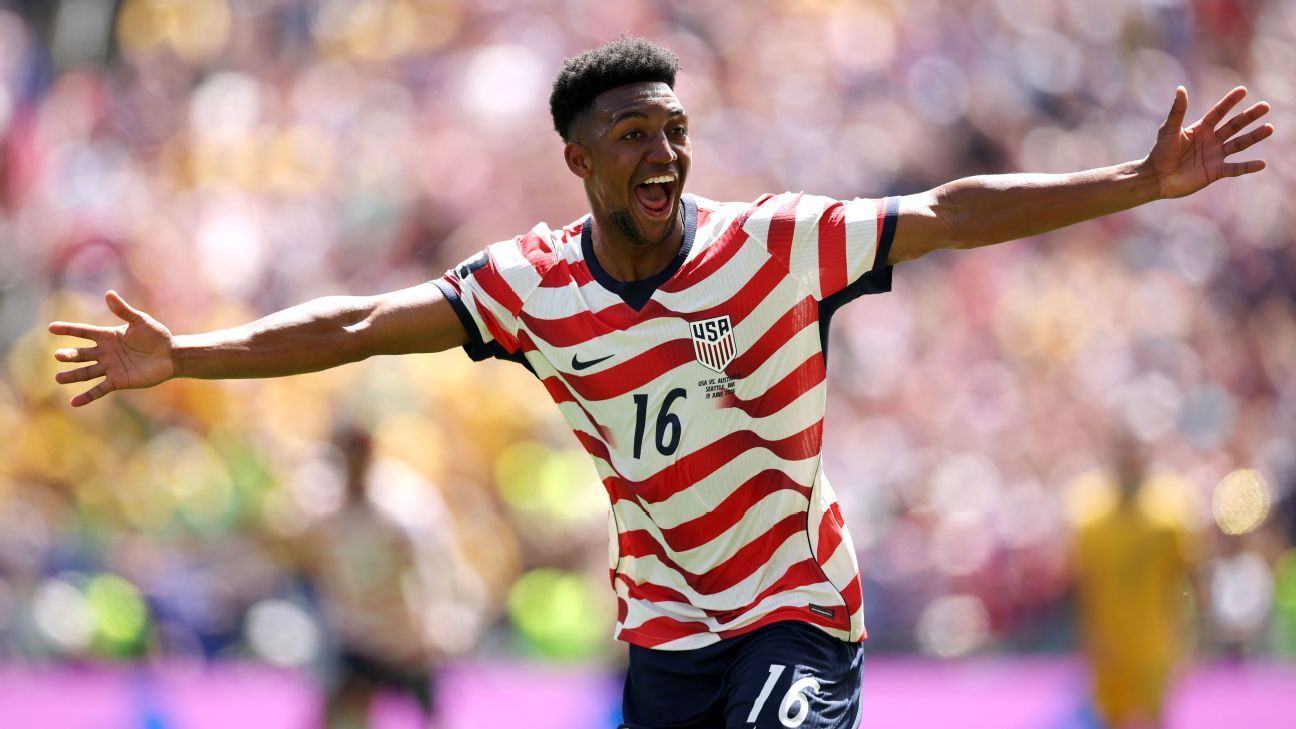
SEATTLE — The U.S. men’s national team secured a 2-0 victory over Australia on Friday, advancing to the finals as Group D leaders in the 2026 FIFA World Cup. Folarin Balogun played a pivotal role, as an own goal from Australian defender Cameron Burgess put the U.S. ahead in the 11th minute. Alex Freeman then extended the lead with a fortunate deflected shot in the 43rd minute.
This match was especially significant, as the U.S. managed to win without star player Christian Pulisic, who was sidelined due to a calf injury. This marks a historic moment for the USMNT: it’s their first instance of back-to-back World Cup wins since 1930, not to mention their first consecutive games scoring two or more goals in the first half of World Cup matches.
With Paraguay playing Turkiye later in the day, a draw could further solidify the American team’s position atop the group. Meanwhile, Australia’s path to the knockout stages remains viable. A win against Paraguay would grant them six crucial points.
Pulisic’s Absence, Team Resilience Shines Through
The announcement of Pulisic’s absence came just 90 minutes before kick-off, requiring immediate tactical adjustments, namely the inclusion of Ricardo Pepi. Adapting quickly, the U.S. switched between a four-defender and three-defender setup, effectively utilizing Pepi and Balogun to pressure Australia’s center-backs while maintaining attacking support from the wings.
U.S. manager Mauricio Pochettino praised his team’s adaptability, highlighting their capacity to embrace new strategies. He mentioned their belief and determination, which were evident in their performance. Although not as dynamic as in their previous match against Paraguay, the U.S. showcased their ability to secure results even in the absence of key players. This was exemplified by Balogun’s sprint down the left flank leading to the own goal by Burgess.
Freeman’s goal, albeit a bit unconventional, further illustrated this point. After a deflected shot from Serginho Dest caused confusion, Freeman’s quick thinking allowed him to find the back of the net following a loose ball. The way the U.S. has learned to adapt in Pulisic’s absence is a testament to their growth as a team.
Australia’s Struggles Highlighted by Slow Start
In pre-match discussions, Pochettino emphasized the need for his team to match Australia’s belief and grit. However, it quickly became apparent that the U.S. was not only matching but also surpassing the Socceroos in intensity and urgency. Australia struggled in the first half, failing to secure crucial second balls and appearing lethargic throughout the match. Coach Tony Popovich lamented the team’s inability to regain momentum, attributing it to a deficient performance and several soft goals conceded.
Despite a commendable display against Turkiye previously, the Socceroos faltered under the U.S. pressure, making uncharacteristic errors that proved costly. Australia’s high defensive line and slow responses left them vulnerable, particularly to Balogun’s quick movements, culminating in Burgess’s unfortunate own goal.
USMNT Tightens Grip on Success
The U.S. approached the match with a bold strategy, opting to maintain their pressing style despite concerns about conceding counterattack opportunities to a technically adept Australian side. Notably absent from the Socceroos’ lineup was speedster Nestly Ilankunda, whose omission may have benefitted the Americans by neutralizing immediate threats.
The conscious choice to employ two strikers effectively limited the Australian defense’s long-ball options. Pochettino observed their work ethic, emphasizing the role of Weston McKennie, Tyler Adams, and others in providing a solid foundation that enhanced their backline’s performance. This strategy not only disrupted Australia’s buildup but also intensified the physicality of the match—an area the U.S. took control of.
While energy levels dipped as the match progressed, the U.S. maintained a dominant presence on the field, showcasing Pochettino’s pressing game philosophy. The tactical adaptation reflects significant progress in the team’s overall dynamics and strategy.
Popovich’s Risky Decisions Backfire
Popovich faced criticism for his decisions ahead of the match, particularly after experiencing success with aggressive tactics against Turkiye. By replacing Ilankunda and Conor Metcalfe, he aimed for a fresh approach, but the substitutions did little to alter the course of play. Neither Matthew Leckie nor Nishan Velupillai made substantial contributions, prompting earlier-than-expected changes in the second half.
Although substitutes Volpato and Ilankunda displayed promise, their late arrival left lingering questions about Popovich’s tactical choices. As the team prepares for their next match, the fitness and readiness of key players like Thule will be under scrutiny moving forward.
Adams’ Defensive Mastery Remains Essential
Amidst a standout performance from forwards Balogun and Freeman, Tyler Adams emerged as a crucial defensive anchor for the U.S. His relentless work rate and exceptional defensive interventions provided vital insurance for the backline, underscoring the importance of his role in the team’s success.
Adams’ ability to recover quickly from setbacks demonstrated his resilience, adding much-needed stability against a physical Australian side. He nearly served up an assist to Balogun during a breakaway, solidifying his influence and importance on the field as the U.S. continues to build momentum in the tournament.
Australia’s Slow Starts Become a Critical Concern
Slow starts have plagued the Australian squad throughout the tournament, reminiscent of their recent warm-up matches where they consistently fell behind early. Despite their victory over Turkiye, their struggles returned against the U.S., proving detrimental to their campaign.
Right from the first whistle in Seattle, the U.S. dictated the pace. Both goals conceded were a result of their accumulated pressure and should serve as a wake-up call for the Socceroos, who must find a way to counter such aggressive tactics. As they gear up for a crucial clash against Paraguay, rectifying these slow starts will be paramount to their chances for advancement in the tournament.
