


New Radio Telescope Array to Transform Cosmic Research
A remote sector of the Nevada desert in the Great Basin is set to host the world’s most advanced array of radio telescopes. This project, led by the California Institute of Technology, promises to revolutionize our understanding of the universe by detecting phenomena such as supermassive black holes, pulsars, and fast radio bursts—intense flares of radio waves originating from deep space.
Deep Synoptic Array Construction Underway
Last week, Caltech announced its intention to proceed with the construction of the Deep Synoptic Array, contingent upon securing sufficient funding. This ambitious project will consist of 1,650 individual radio antennas, each crucial for enhancing our astrophysical observations.
Unique Features of the Array
Greg Hallinan, a professor of astronomy at Caltech and the principal investigator of the Deep Synoptic Array, emphasized that the large number of antennas distinguishes this telescope from any currently operational. The array’s design enables the detection of faint radio waves emitted by celestial bodies, allowing scientists to analyze their structure, composition, and other essential characteristics.
Advancements in Radio Astronomy
While traditional optical telescopes capture images directly, radio telescopes excel at translating radio emissions into data that can be converted into visual representations. Hallinan stated that the Deep Synoptic Array is poised to outperform all existing ground-based radio telescopes, observing the skies at a speed 100 times greater and creating unprecedentedly high-quality radio images.
Significant Potential for Discovery
Hallinan noted the project’s potential to dramatically increase the catalog of known radio-emitting objects. Currently, the cumulative effort of all telescopes over the past century has identified approximately 20 million radio sources. Remarkably, he predicts that the Deep Synoptic Array could double this number within its first day of operation.
Construction and Design of the Array
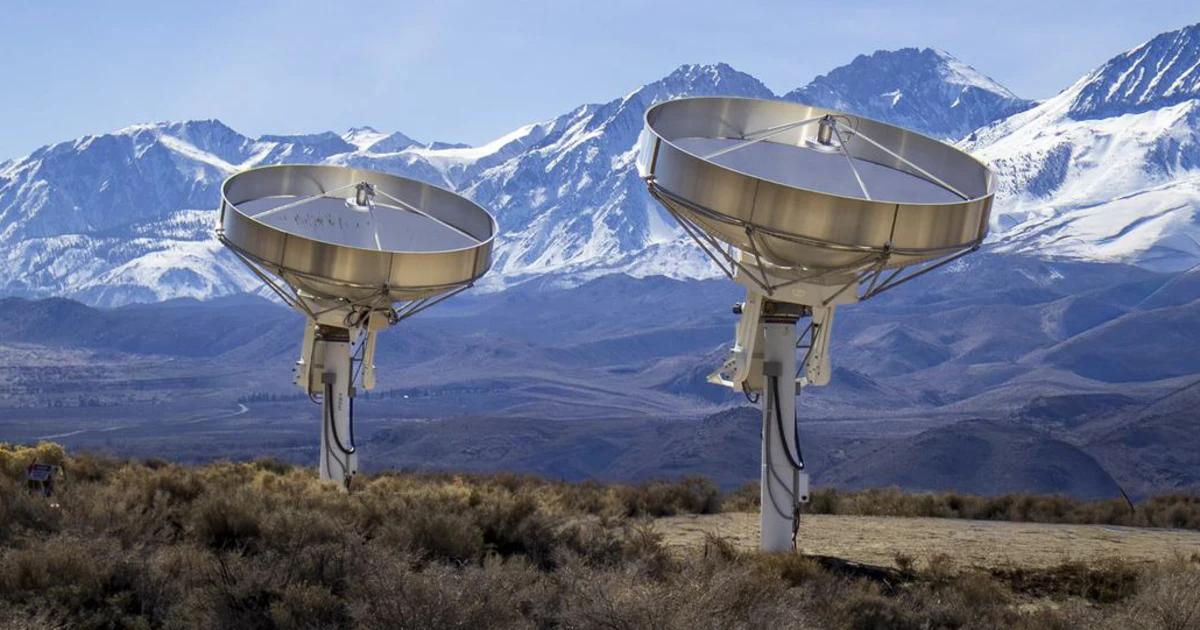
Each antenna in the array will measure around 20 feet in diameter, collectively forming one of the largest radio telescope arrays ever constructed. Situated under the management of the Bureau of Land Management in White Pine County, Nevada, the project is expected to span over 123 square miles. Hallinan indicated that the project is currently in the permitting phase, aiming to commence construction next year and finalize it by 2029.
Technological Innovations in Astronomy
The Deep Synoptic Array will advance the capabilities of radio astronomy with its dual functionality; while single-dish telescopes like the Green Bank Telescope in West Virginia can detect faint signals, extensive arrays such as New Mexico’s Very Large Array deliver clearer images. Hallinan asserted that the new deep synoptic arrays will achieve both objectives efficiently.
Initial Steps and Funding Sources
Funding for this pioneering project has been sourced from Schmidt Science, a philanthropic organization established in 2024 by former Google CEO Eric Schmidt and his wife, Wendy. Last year, Schmidt began his role as CEO of Relativity Space, a rocket company that recently secured a significant contract with NASA to deliver scientific instruments to Mars in 2028. As an early step, two prototype plates have been constructed near Bishop, California, serving as initial technology demonstrations.
Strategic Location Choice for the Array
Identifying an optimal site for the array involved extensive searches across California, Nevada, New Mexico, and Utah. The preferred location needed to be free from radio frequency interference, which can disrupt data collection. Hallinan mentioned that the array is so sensitive it can detect cell phone signals from as far away as the sun. The quiet surroundings of Nevada’s Great Basin provide a natural buffer against unwanted interference, making it an ideal site for cutting-edge radio astronomy.
