


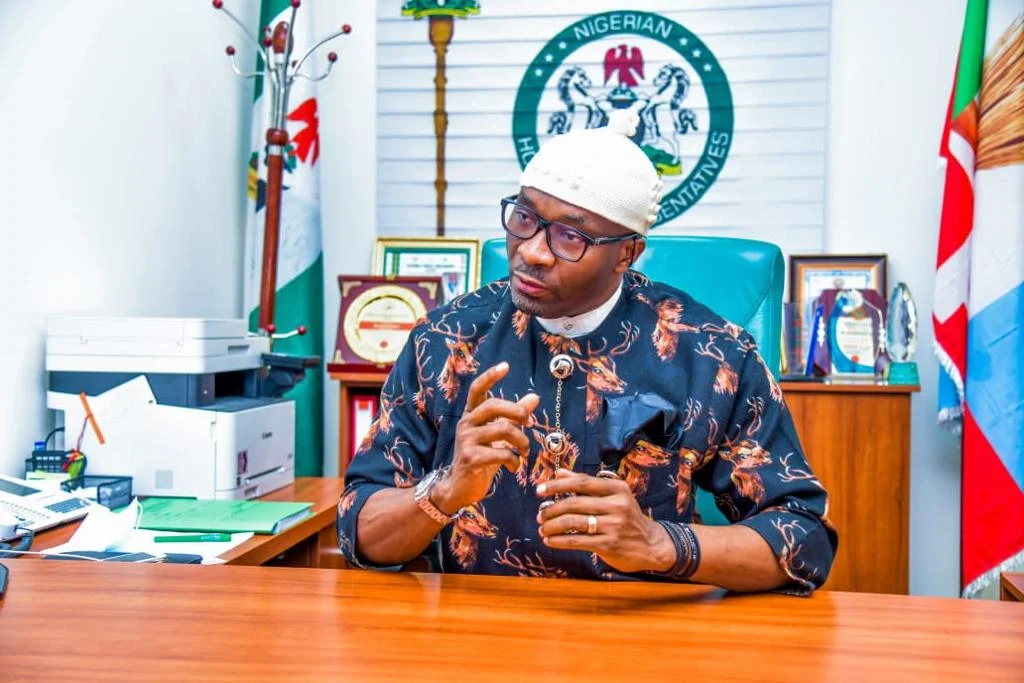
Nigeria’s Global Image Demands Ownership, Says Deputy Speaker
Deputy Speaker of the House of Representatives Benjamin Kalu urged Nigerians to take charge of the nation’s global image, cautioning that allowing others to define Nigeria’s narrative could jeopardize its diplomatic relations, investment opportunities, and international standing.
Promoting Nigeria’s Progress to the Global Community
After a week of engagements at Chatham House and London Climate Action Week, Kalu spoke to reporters in Abuja about the necessity of presenting Nigeria’s democratic advances, governance reforms, and economic potentials to the world with prudence. His discussions with global policymakers, investors, and development partners focused sharply on the constitutional and electoral reforms as well as preparations for the upcoming 2027 general elections.
Perception in Global Politics
Describing Nigeria as a “nation of nations,” Kalu emphasized that in global politics, perception is crucial. He remarked, “If you don’t communicate well and build your own story, other people will create it for you.” He highlighted the importance of informing the international community about ongoing reforms aimed at enhancing the credibility of Nigeria’s electoral process as the next election cycle approaches.
Innovations in Electoral Transparency
Kalu pointed to Article 60(3) of the Electorate Law, which mandates the electronic transmission of election results, as a vital reform intended to promote election transparency. He underscored that with international observers set to monitor the elections, it is imperative for Nigeria to convey its readiness and the innovations in electoral laws that aim to boost credibility.
Investment in Security and Climate Initiatives
On another front, Kalu revealed that Congress is actively pursuing proposals to allocate defense funding to frontline forces to ensure consistent and timely financing for national security. Furthermore, during London Climate Action Week, he advocated for Nigeria as an investment hotspot, particularly in climate adaptation, energy transition, and the green economy. His efforts focused on attracting global investors to Nigeria’s energy transition policy and reforms within the solid minerals sector.
Encouraging Positive Narratives
During his engagements, Kalu encouraged Nigerians, especially the youth, to act as ambassadors for the nation’s image. He stressed the importance of promoting a balanced narrative that acknowledges current challenges while also spotlighting areas of progress and opportunity. He warned that negative portrayals on social media can shape international perceptions long after their political origins have faded.
A Personal Commitment to Nigeria’s Narrative
Notably, Kalu clarified that neither the Federal Government nor the National Assembly funded his international trip; rather, he and his team financed it personally, driven by a commitment to present Nigeria’s story accurately and factually. Reflecting on the nation’s democratic evolution, Kalu called for patience with Nigeria’s institutions, pointing out that the country’s democracy is still in its early stages compared to established democracies around the world.
Balancing Criticism and Progress
While acknowledging the role of constructive criticism in a democracy, Kalu insisted that showcasing Nigeria’s reforms and investment opportunities is equally vital. He urged Nigerians to prioritize the country’s interests when projecting Nigeria on the world stage, emphasizing that the narratives we create are instrumental in defining our identity and influencing international economic decisions.
