


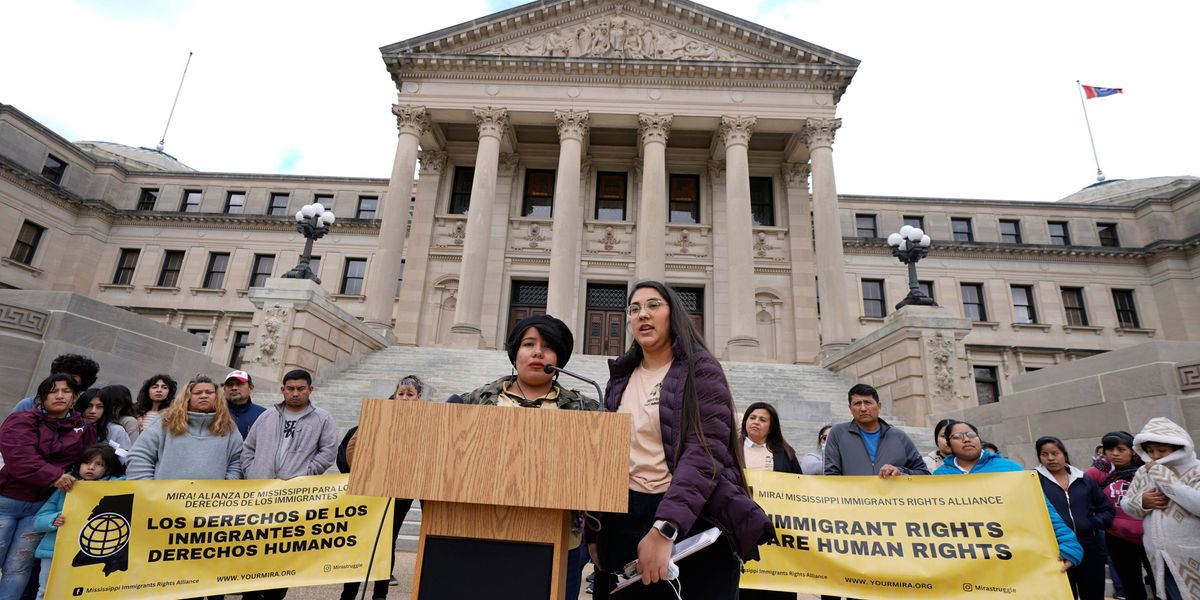
Mississippi Law Empowers Law Enforcement to Identify Undocumented Immigrants
Mississippi’s new legislation grants the state’s leading law enforcement agency the authority to compile a list of undocumented immigrants residing in the state. Set to take effect on Wednesday, this law has raised concerns among immigration advocates, who view it as a potential tool for targeting immigrants in line with former President Donald Trump’s broader plans for mass deportation.
The law empowers the Mississippi Department of Public Safety to utilize “all reasonable lawful investigative means” to ascertain the number and identities of individuals deemed “illegal aliens.” This includes gathering personal data such as names, addresses, countries of origin, and age categories, alongside records of criminal history and details surrounding deportation proceedings.
Furthermore, the Department of Public Safety is mandated to share information regarding those suspected of violating immigration laws with state and local authorities. Notably, the legislation does not explicitly require or prohibit the sharing of these databases with U.S. Immigration and Customs Enforcement (ICE).
State Senator Angela Hill, the bill’s sponsor, argues that states have both the right and responsibility to assist the federal government in curbing illegal immigration, which she claims contributes to various crimes, including drug trafficking and human trafficking. Hill contends that understanding the scope of undocumented immigration in Mississippi is essential for effectively addressing related challenges.
Growing Trends in State Immigration Legislation
This year, over 100 immigration-related laws have been enacted across the United States, as reported by The Associated Press. Many of these measures in Republican-led states align with the Trump administration’s policy agenda, which includes mandating local sheriffs to cooperate with ICE, tightening restrictions on public benefits, and requiring election officials to verify voter eligibility against federal databases to identify noncitizens.
Conversely, Democratic-led states have generally sought to counter Trump’s initiatives by enacting laws that prohibit cooperation with ICE, outlaw certain enforcement tactics, and limit immigration checks in sensitive environments such as schools and hospitals.
Mississippi’s law bears similarities to a 2021 executive order from Florida Governor Ron DeSantis, which instructed state law enforcement to employ all lawful means to determine the identities of undocumented immigrants transferred from the southern border. The consequences of that order remain unclear, as Florida officials have not responded to inquiries.
Scrutiny Surrounds the Practicality of Mississippi’s Legislation
The law presumes an ongoing responsibility to monitor undocumented immigrants over the next two years, raising complexity as individuals transition between statuses, from undocumented to eligible for legal residency. Efren Olivares, the vice president of litigation and legal strategy at the National Immigration Law Center, expressed concern that such tracking could create a climate reminiscent of past government practices targeting specific populations.
Jessica Vaughan, director of policy research at the Center for Immigration Studies, acknowledged the need for reliable methods to verify immigration status, asserting that the law could enhance visibility of undocumented immigrants to federal authorities. However, she underscored the challenges this approach may present in execution.
Community Concerns Over Trust and Enforcement
Mississippi has a relatively low number of undocumented immigrants, estimated at fewer than 28,000 or less than 1% of the state’s population, according to data from the American Immigration Council. Victoria Francis, deputy director of state and local initiatives at the Council, has emphasized the law’s potential to divert law enforcement resources away from protecting communities to investigating individuals who may be contributing positively to the local economy.
Critics argue that such initiatives could foster profiling and undermine trust in law enforcement. Lydia Grizzell, policy and advocacy manager at the ACLU of Mississippi, raised alarms that this legislation may deter individuals from seeking help from police when necessary, ultimately conflicting with community safety efforts.
