


The Call for Immigrant Dignity at Border Mass 250
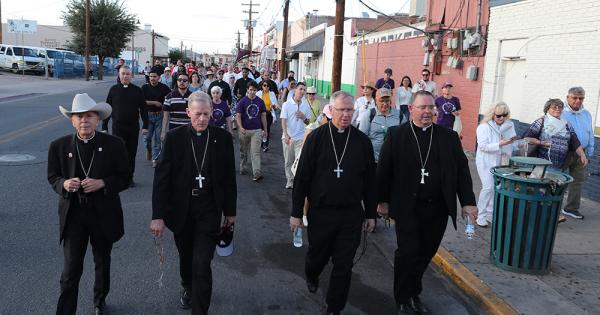
During a special Mass on June 26 near the U.S.-Mexico border, Bishop James Misko of Tucson emphasized the importance of respecting the dignity of immigrants. The event, which took place at Sacred Heart of Jesus Parish in Nogales, brought together seven bishops from both the U.S. and Mexico, along with dozens of priests, seminarians, religious women, and laypeople. The gathering, known as Border Mass 250, celebrated the significant contributions immigrants have made to the United States since its inception in 1776. Many attendees, carrying flags of Our Lady of Guadalupe, crossed the border into Nogales, Mexico, while reciting the rosary.
Impact of Supreme Court Rulings on Immigration Policies
This poignant rally occurred a day after the U.S. Supreme Court ruled in favor of the Trump administration’s ability to temporarily end protections for hundreds of thousands of Haitian and Syrian immigrants, heightening concerns around immigration policy. That same day, the court also permitted the U.S. government to restrict the processing of asylum claims at the border, an action certain to affect countless families seeking refuge.
The Role of Nogales in Immigration Enforcement
The Supreme Court’s decision coincided with renewed scrutiny of the U.S. government’s mass deportation efforts, with Nogales frequently serving as a key deportation hub. Catholic-run nonprofit organizations have been tirelessly providing support to immigrants abruptly expelled from the United States, stepping in to fill crucial gaps left by policy changes.
Bishops Advocate for Immigrant Rights
Before the Mass, Bishop Misko stated, “We are here as shepherds and pastors to walk with the people, to listen to the voices of the people, and to stand alongside God’s community at the borders.” His remarks highlighted the Christian responsibility to uphold the dignity of every individual, particularly those in vulnerable situations.
Unity Among Religious Leaders
Attending the Mass were prominent figures including Archbishop John Wester from Santa Fe, New Mexico, and Bishop Mark Seitz from El Paso, Texas. They gathered in a picturesque Spanish-style church adorned with a red tile roof and a towering bell tower. Other contributors included Bishop John Dolan of Phoenix, Bishop Enrique Sanchez Martinez from Mexicali, Mexico, and former Tucson Bishop Gerardo Quicanas. Notably, Brendan Curran, a Dominican priest from Chicago, also participated, representing the International Dominican Justice and Peace Committee and advocating for immigrant rights.
Calls for Comprehensive Immigration Reform
Prior to the procession, which was organized by the Center for Immigration Studies, Kino Border Initiative, Hope Border Institute, and the Diocese of Phoenix-Tucson, the bishops highlighted the immense economic contributions that immigrants have made to the United States. They urged Congress to pursue comprehensive immigration reform. “Immigrants have given so much to our country over the past 250 years,” Archbishop Wester remarked. “It’s time for us to reciprocate with justice in the form of immigration reform.”
The Human Aspect of Migration
Bishop Misko articulated a compelling perspective on migration, stating, “Human dignity is the foundation of migration. People do not migrate out of choice but out of necessity.” His background positions him strongly to uphold the tradition of support for immigrants among Southern Arizona’s bishops. Appointed by Pope Leo XIV late last year and officially installed in February, Misko was born in Los Angeles, raised in Texas, and has a profound understanding of both English and Spanish, having worked in a restaurant before pursuing a path in the clergy.
Welcoming Immigrants Through Shared Experience
After entering Mexico through a metal border gate, attendees paused for prayer before proceeding to the Kino Border Initiative migrant shelter. Executive Director Joanna Williams welcomed them for dinner and conversation, summarizing the role of the initiative as a connective force in the community. “In some ways, we’re the glue that holds the different parts of the afternoon and evening together,” Williams noted. “Ending the day inside the shelter feels very fitting because it allows us to welcome everyone who participated in the Mass, as well as the many immigrants we will support in Nogales, Sonora, who could not attend.”
