


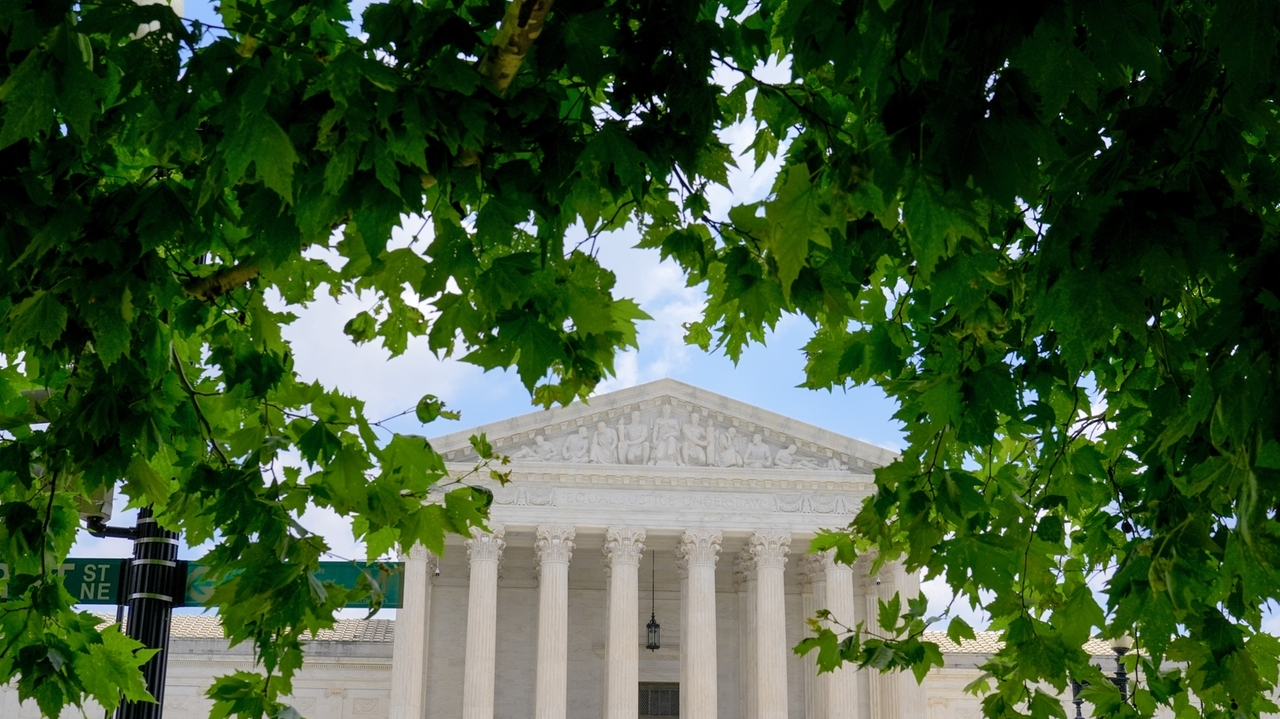
Supreme Court Upholds Birthright Citizenship
In a significant ruling on Tuesday, the Supreme Court affirmed the principle of birthright citizenship, invalidating President Donald Trump’s executive order, which sought to deny citizenship to children born in the U.S. to parents who are in the country illegally or on temporary visas.
The justices based their decision on the established interpretation of the Fourteenth Amendment to the U.S. Constitution, which was ratified following the Civil War, as well as relevant federal law. According to this ruling, anyone born on American soil is considered a U.S. citizen, with very few exceptions.
Trump’s proposed restrictions had faced barriers in multiple lower courts and were never enforced across the United States. Despite the administration’s efforts, the courts consistently ruled against the executive order before it could take effect.
During April’s oral arguments, justices from both sides of the political spectrum expressed skepticism about the legality of Trump’s order. This ruling gained additional weight due to Trump’s unprecedented attendance at the proceedings, marking a pivotal moment in his challenge of executive power.
This case represents a critical examination of Trump’s assertions regarding executive authority, diverging from the established legal precedents upheld by courts that have traditionally leaned conservative and often supported his administration’s initiatives. Notably, Trump’s response to prior unfavorable rulings included personal critiques of judiciary officials, which marked a departure from protocols established by past presidents.
The Supreme Court’s decision came while evaluating Trump’s appeal following a lower court’s ruling in New Hampshire that deemed the citizenship restrictions unlawful. The birthright citizenship order, issued on the first day of Trump’s second term, forms part of a larger strategy aimed at overhauling immigration policies.
This ruling regarding birthright citizenship is the first major immigration policy from Trump’s administration to be conclusively reviewed by the Supreme Court. Previously, the court invalidated global tariffs that Trump had applied under the Emergency Powers Act—a mechanism that had not been utilized in that manner before.
Following the ruling on tariffs, Trump expressed his frustration, denouncing the judges as unpatriotic. He appeared to anticipate a negative outcome regarding birthright citizenship as well, taking to his Truth Social platform to disparage the judiciary and criticize what he termed “wealthy pregnant women” traveling to the U.S. solely to secure American citizenship for their children.
Trump’s order aimed to challenge the widely accepted interpretation of the Fourteenth Amendment, which guarantees citizenship to anyone born on U.S. soil, with the sole exceptions being children of foreign diplomats and those of occupying forces. The amendment was designed to secure citizenship for Black Americans, including former slaves, but its citizenship clause applies broadly: it states, “All persons born or naturalized in the United States and subject to its jurisdiction are nationals of the United States and the state in which they reside.”
Lower courts have consistently ruled against Trump’s executive orders, establishing a legal context which invokes the landmark 1898 Supreme Court decision in Wong Kim Ark, affirming that children of Chinese immigrants born in the United States are citizens. The Trump administration contended that the existing interpretation of citizenship was flawed, asserting that children born to noncitizens do not qualify for citizenship since their parents are “not subject to the jurisdiction” of the U.S.
Research from the Migration Policy Institute and the Population Research Institute at Penn State University estimates that more than 250,000 U.S.-born children each year would be impacted by these citizenship restrictions. While Trump has largely concentrated on illegal immigration in public statements, the proposed birthright citizenship restriction was also intended to encompass legally residing individuals, such as international students and green card applicants.
