


U.S. Officials Comment on Iran’s World Cup Exclusion
Markwayne Mullin, Secretary of the U.S. Department of Homeland Security, expressed satisfaction regarding Iran’s exclusion from the World Cup. His remarks were met with accusations of hostility from Iran’s soccer federation.
Iran’s Uncertain Participation
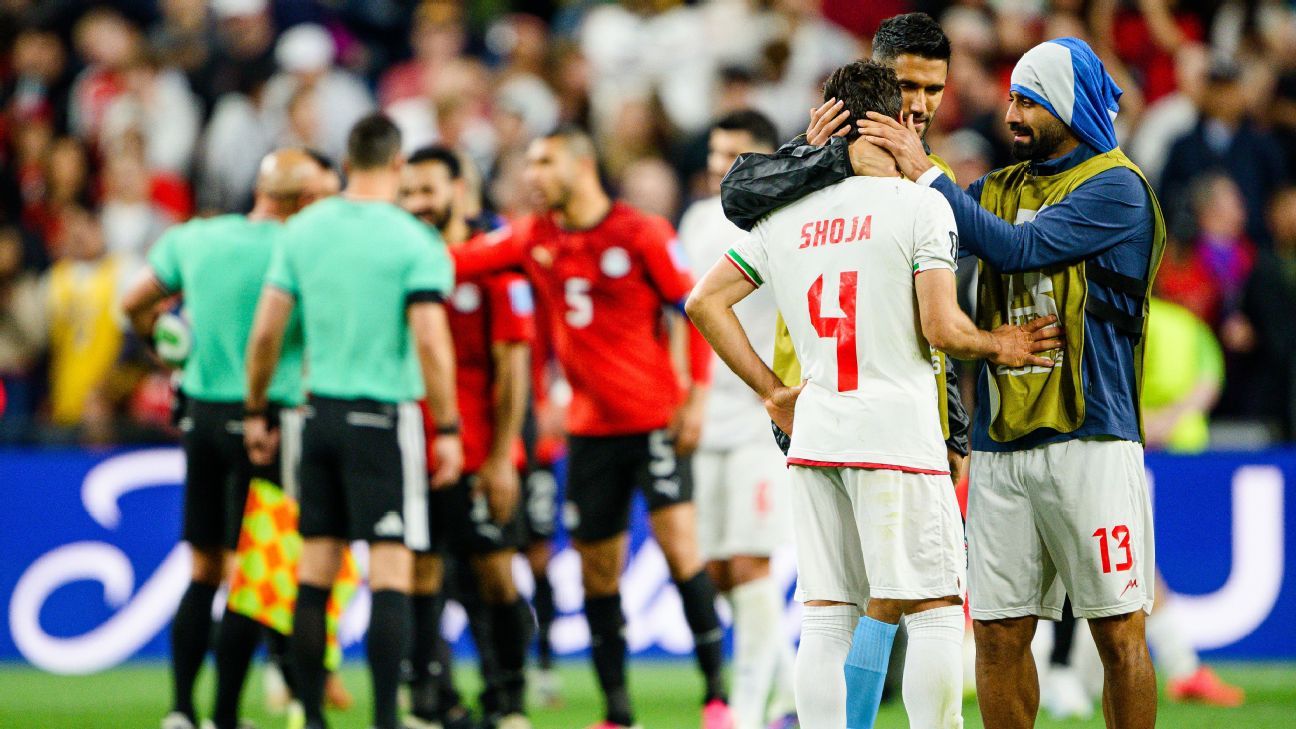
Leading up to the tournament, Iran’s participation was in question following U.S. and Israeli airstrikes on the country earlier in the year. Despite initial uncertainties, Iran did compete and managed to draw all three group matches, narrowly missing out on advancing to the knockout stage after a controversial offside call resulted in a loss against Egypt.
Allegations of Unfair Treatment
The Iranian soccer federation has lodged numerous complaints regarding what it describes as discriminatory treatment by U.S. authorities during the tournament. Coach Amir Galenoei characterized his team as “the most repressed” at the World Cup. Following the tournament, Iran stated that its experiences had “undermined the sense of fairness” they expect in international competitions.
Responses from Iranian Officials
In response to Mullin’s comments, the Iranian soccer federation emphasized that such remarks are indicative of the nation’s unwelcoming stance during the tournament. “The Iranian people are accustomed to falsehoods and malfeasance from U.S. officials,” the federation stated, referencing ongoing investigations into the missile attacks on Iran.
Concerns Over Treatment and Regulations
The federation further asserted that U.S. officials’ statements highlight a failure to adhere to international law and the principles of fair hosting. One official noted, “The fact that he is celebrating Iran’s defeat reflects a level of narrow-mindedness that sidesteps the spirit of international competition.” Following their final game, the head coach remarked that the U.S. seemingly did not want Iran to succeed due to the “inhumane” treatment faced by the team.
Training Base and Match Regulations
Iran had shifted its training base to Tijuana, Mexico, after initially planning to use facilities in Tucson, Arizona. All of their matches were played in the U.S., with the first two in Los Angeles and the final one in Seattle. One major point of contention for the team was the requirement to leave the field immediately after each match, a decision Marin attributed to prior agreements with FIFA.
Reflections from the Iranian Team
Many players on the Iranian squad had documented ties to the Islamic Revolutionary Guards Corps (IRGC), which complicated their participation in the tournament. Following their departure, the team left behind a note expressing gratitude to the people of Mexico, stating, “You taught us that hosting the FIFA World Cup is about more than stadiums and tickets.” They emphasized the importance of respect, humanity, and dignity, declaring Mexico as a second home.
Questions of Fair Competition
As the team exited the World Cup, they carried a mix of pride and disillusionment, questioning whether all teams truly competed under equal and fair conditions. “What we experienced was a series of decisions and circumstances that compromised our sense of fairness,” a team spokesperson remarked, underscoring the impact of their final group match.
