


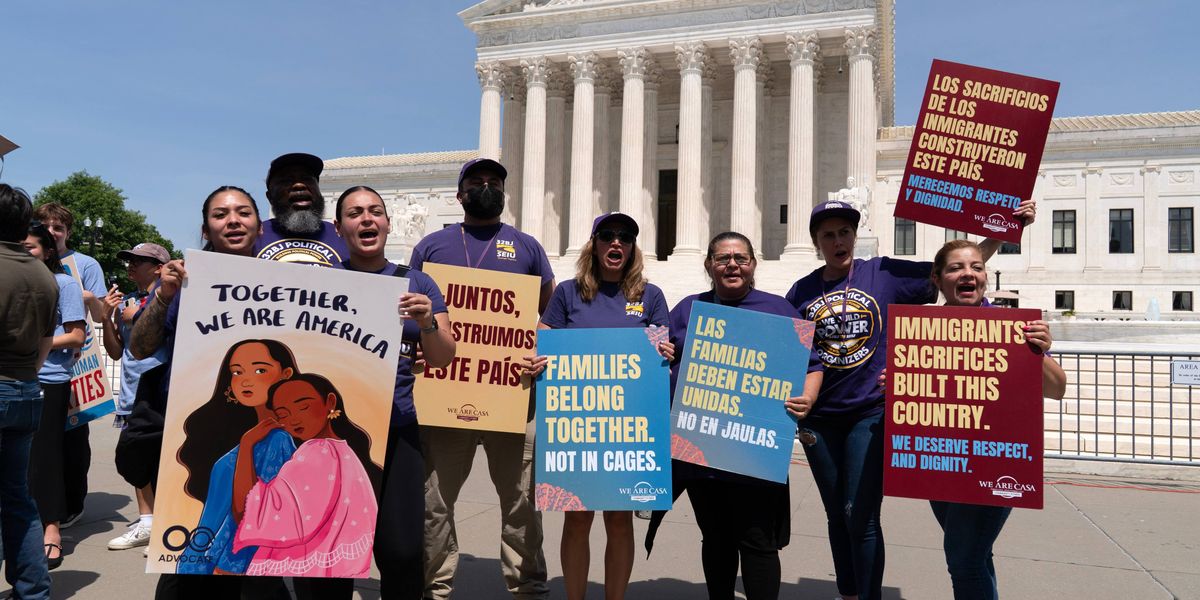
WASHINGTON (AP) — The Trump administration has turned to the Supreme Court to validate its aggressive immigration policies, largely achieving its objectives except for one significant point: birthright citizenship.
The Supreme Court upheld the administration’s efforts to terminate temporary protections for individuals fleeing conflict, which lower courts had previously ruled against. This decision empowers immigration officials with increased discretion in managing green card holders returning from abroad and permits the government to impose restrictions on asylum applications.
In a landmark ruling on birthright citizenship, the court demonstrated its commitment to constitutional principles, reinforcing that anyone born in the United States is considered American, irrespective of their parents’ immigration status. This ruling is seen as pivotal in defining who qualifies as a citizen, settling a contentious issue amid ongoing debates over immigration policy.
The implications of these rulings could be significant for individuals seeking to live in the U.S. and may influence public opinion about America’s role as a sanctuary for immigrants.
Supreme Court Upholds Birthright Citizenship Amid Calls for Stricter Measures
The Trump administration aimed to strip citizenship from children born to undocumented individuals or those in the U.S. temporarily. In a split decision, the Supreme Court reaffirmed the principle of birthright citizenship, with a majority of five justices supporting the enduring interpretation of the Fourteenth Amendment, which allows citizenship to anyone born on American soil, with very limited exceptions.
This ruling is a setback for the Trump administration’s immigration agenda, which has been a focal point of President Trump’s second term. Although he signed an executive order on his first day in office to restrict birthright citizenship, legal challenges prevented its implementation.
While supporters lauded the court’s decision, some Republicans are advocating for alternative measures to curtail birthright citizenship. Mark Krikorian, director of the Center for Immigration Studies, noted that the ruling emphasizes the urgent need for a robust deportation strategy aimed at removing undocumented individuals before they have children.
End of Temporary Protections for Haitians and Syrians
The Supreme Court’s ruling has paved the way for the Trump administration to eliminate legal protections for immigrants escaping violence and disasters in Haiti and Syria. The 6-3 decision, announced on June 25, threatens the ability of hundreds of thousands to work in the U.S., placing them at increased risk of deportation by Immigration and Customs Enforcement (ICE).
Since President Trump resumed office in January 2025, the Department of Homeland Security has worked to dismantle protections for immigrants from 13 countries, many of which had been in place for over a decade. Critics within the Republican party argue that these temporary measures have effectively morphed into permanent solutions, while immigration attorneys contend that conditions in nations like Haiti and Syria remain perilously unsafe.
The court’s conservative majority concluded that the law does not empower courts to scrutinize the process immigration authorities employ in revoking protections. In a previous ruling, the high court had similarly favored the government, allowing the cessation of protections for Venezuelans.
Stricter Standards for Asylum Seekers
U.S. law permits immigrants who arrive on American soil to apply for asylum. The number of migrants at the southern border has seen a substantial decline during the Trump administration, contrasted with a sharp increase in asylum applications during the previous administration. The asylum metering system, initiated under former President Obama and expanded during Trump’s first term, limited the daily number of asylum applications accepted at the border.
This ruling enables the Trump administration to consider reinstating this now-defunct policy. The administration argues that assessing refugee eligibility is a critical component of immigration management, suggesting that those denied entry could return for future applications. However, advocates caution that, under prior standards, many asylum seekers faced protracted waits in makeshift shelters in Mexico, leading to chaotic and humanitarian crises.
Increased Administrative Discretion Over Green Card Holders
In a separate 6-3 ruling, the Supreme Court backed the Trump administration’s proposal to grant immigration officials broader authority in determining the fate of returning green card holders. The case centered on Muk Choy Lau, a lawful permanent resident whose green card was revoked upon returning from China after being charged with forgery but not convicted.
Lau contended that his treatment demonstrated an overreach of authority by immigration officers, paving the way for the Department of Homeland Security to potentially deport him after he later pleaded guilty to selling counterfeit goods.
Justice Ketanji Brown Jackson, in her dissent, expressed concern that the ruling effectively handed the government unchecked power over millions of lawful permanent residents wishing to travel abroad. The American Immigration Council remarked that existing laws provide substantial protections for green card holders, complicating efforts to detain or deport them upon their return, though certain criminal offenses may nullify those protections.
While the full ramifications of the Supreme Court’s decision remain uncertain, the expectation is that the government will leverage this ruling to assert broader powers in immigration enforcement.
