


Factorial Secures $150 Million in Series D Funding Led by General Catalyst
Factorial, a rapidly growing European enterprise technology firm expanding its reach in African markets, has successfully raised $150 million in a Series D funding round. This round, led by General Catalyst, has propelled the company’s valuation to $2.5 billion.
Participation from Existing Investors Enhances Funding Landscape
Key existing investors, including Atomico and Four Rivers, joined the funding round. In conjunction with the equity investment, General Catalyst will provide an additional $540 million in non-dilutive capital through its Customer Value Fund, bringing Factorial’s total non-dilutive capital to over $700 million.
Growing Demand for HR Technology in East Africa
The investment comes against a backdrop of accelerating adoption of HR technology throughout East Africa. According to Deloitte’s Africa Talent Trends 2025 report, more than 60% of mid-sized businesses in major African cities have implemented at least one digital HR tool. The payroll software market across the continent, valued at $487.3 million in 2026, is anticipated to soar to $1.66 billion by 2035, reflecting a compound annual growth rate of 14.60%. This growth is driven by increasing cloud adoption, compliance complexities, and the expansion of mobile-first enterprise infrastructures. As countries tighten tax regulations, organizations are increasingly relying on cloud-based HR platforms to navigate these evolving legal frameworks. For instance, a logistics company in Kenya successfully reduced its payroll processing time from five days to under six hours while dramatically minimizing errors, thanks to its advanced HR system.
Shift in Factorial’s Product Strategy
This funding round signals a significant shift in Factorial’s product strategy. Over the past decade, the company has developed one of Europe’s largest records management ecosystems across HR, finance, and IT, serving over 16,000 companies in more than 90 countries. Factorial is now transitioning from being a traditional Software-as-a-Service provider to an AI-driven workforce operations platform. Central to this evolution is Factorial One, an integrated workspace featuring two AI agents. One agent is designed to learn an organization’s HR, financial, and IT policies, while the other assists individual employees by drafting work, offering recommendations, and performing tasks on their behalf.
CEO Highlights Transition Towards AI-Driven Solutions
Jordi Romero, CEO and co-founder of Factorial, remarked on this evolution, stating that the company has transitioned from a SaaS model to prioritizing artificial intelligence. “Factorial is now an AI-first company dedicated to developing agents for our clients. This partnership empowers us with the confidence and financial backing necessary to create industry-defining products,” he noted.
Addressing Challenges in Payroll Management and HR Compliance
This strategic shift aims to tackle the pressing challenges faced by East African enterprises, particularly regarding payroll management, HR compliance, talent engagement, and performance tracking as they expand. Technologies such as cloud-based HR systems, automated recruitment, onboarding tools, data analytics, and employee engagement platforms are anticipated to see greater adoption in Kenya between 2025 and 2026. These innovations will help organizations streamline costs, enhance employee experiences, and adhere to local labor laws.
East Africa: A Strategic Growth Frontier for Enterprise Technology
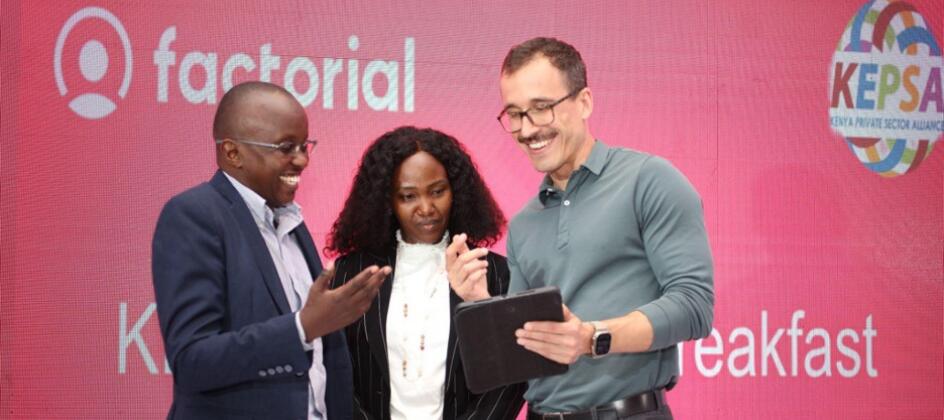
Francesc Rul·lan, Vice President of Strategy and Partnerships at Factorial, emphasized the unique opportunities in East Africa. “This region is one of the most exciting growth frontiers for enterprise technology. The ambitions and pace of business growth, coupled with a strong appetite for intelligent solutions, distinguish Kenya and the surrounding areas from other markets we engage with,” he explained. “We are committed to serving as a long-term partner for East African organizations as they develop the talent management infrastructure crucial for competing and expanding.”
