


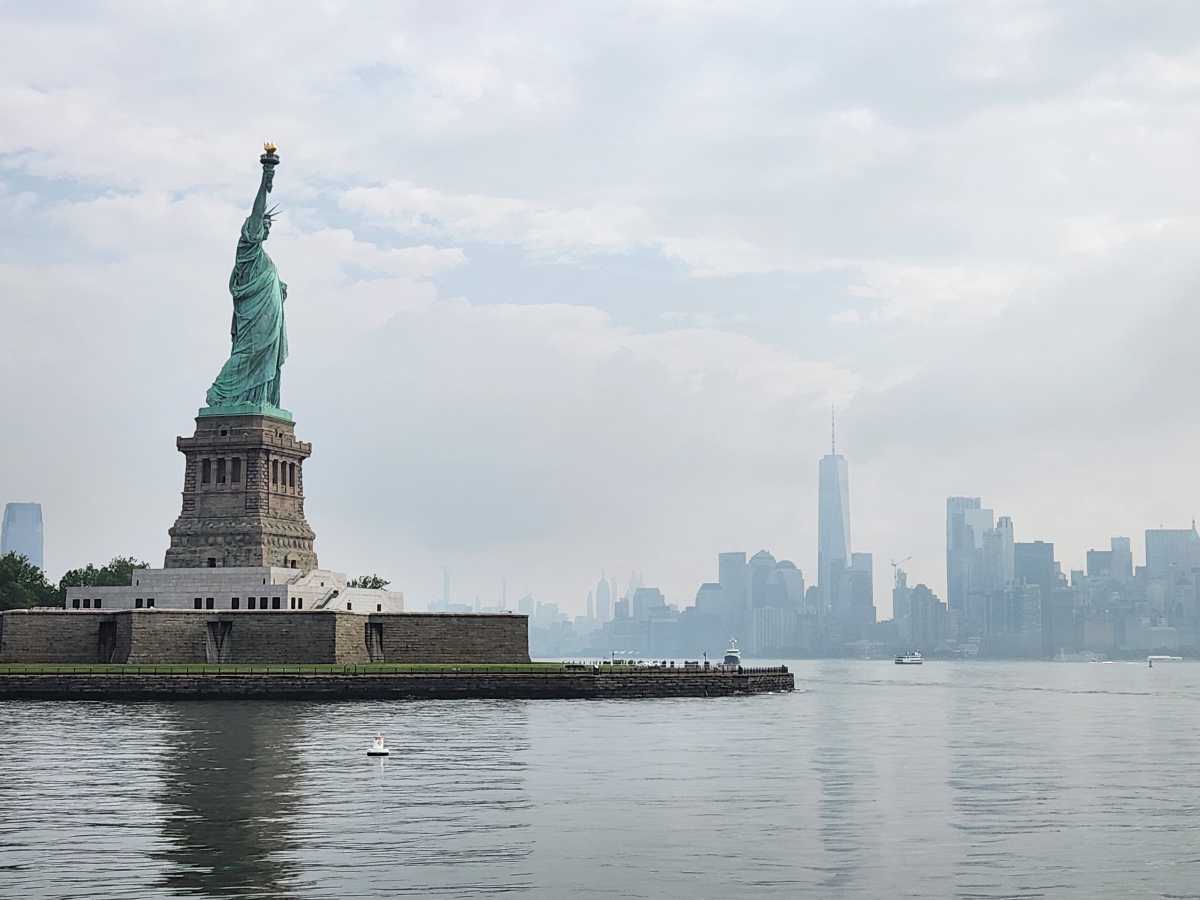
New York City’s immigrant population has significantly shaped America over the past 250 years, according to historians and city officials. From the Dutch settlers in the early 1600s to the opening of Ellis Island and the official recognition of neighborhoods like Little Haiti in 2018, New York has remained a gateway for countless individuals seeking a better life, despite increasing federal efforts to restrict immigration.
Faiza N. Ali, the Director of the Mayor’s Office of Immigration Affairs (MOIA), emphasizes the pivotal role of immigrants in shaping American history. As the daughter of immigrants from Azad Kashmir, Pakistan, she notes that two-thirds of New Yorkers are first or second generation, with one-third directly comprising the immigrant population. Notably, 43 percent of the city’s workforce is also made up of immigrants.
However, the 250th anniversary marks a challenging period for many immigrants. The previous Trump administration initiated an aggressive crackdown on immigration, resulting in increased raids and arrests across New York City. In response, city and state officials are implementing various initiatives and policies to uphold the city’s sanctuary status, which offers protection against potential deportation by the federal government.
The Historical Roots of Immigration
New York City has long been characterized as a city of immigrants, a point highlighted by Nancy Foner, a distinguished professor of sociology at Hunter College. With decades of research on immigration, she explains that even during the 1600s, when the city was a modest Dutch outpost of about 500 people, immigrants from various non-Dutch backgrounds began to arrive. Following this, the British colonial era saw waves of newcomers from the far reaches of the British Empire.
The 19th and early 20th centuries saw significant immigration from Germans and Irish, followed by Eastern European Jews and Southern Italians as the city transitioned into a bustling manufacturing hub. Tyler Ambinder, a historian and professor emeritus at George Washington University, cites New York’s advantageous location and robust port as critical factors contributing to its status as an immigrant destination.
Ambinder asserts that New York City has consistently been a primary destination for immigrants over its nearly 400-year history, although some have begun migrating to other urban centers like Los Angeles. Nonetheless, New York remains the largest city in the United States and continues to attract diverse populations.
Ellis Island’s Role in Immigration History
Ellis Island once served as the epicenter of immigration in the United States. Between 1892 and 1954, it processed over 12 million immigrants, primarily from Europe, accounting for nearly half of all immigrants to the U.S. during that era. Processing operations eventually moved abroad, leading to a decline in arrivals at Ellis Island by the mid-1920s, following the implementation of national origin quotas under the Johnson-Reed Act.
This legislation was designed to limit immigration from Eastern and Southern Europe and made the exclusion of Asian immigrants a permanent fixture of U.S. policy. Ambinder emphasizes that every generation of American immigrants faced some degree of hostility, and the question was not if they should be welcomed, but rather how swiftly they could attain citizenship and voting rights.
Following the abolition of quotas in 1965, New York City has experienced a new wave of immigration from virtually all corners of the globe, a trend largely driven by existing communities and family connections already established within the city.
The Current Climate for Immigrants in New York City
Established in 1987, the New York Immigration Coalition (NYIC) is among the many organizations supporting immigrants throughout the city. The coalition provides advocacy, workshops, legal services, and medical assistance to help newcomers adjust to their lives in America.
According to Murad Awadeh, NYIC President and CEO, true freedom remains elusive for many who’ve called America home over the past 250 years, as the American Dream feels increasingly distant for a significant portion of the population. The coalition has strongly opposed the policies of the previous administration, with Awadeh recalling a sentiment from Ronald Reagan about the vital role of new Americans in the nation’s future.
New York City’s diverse immigrant community has, over time, profoundly influenced the city’s food, music, culture, and infrastructure. Recent years have seen the emergence of vibrant immigrant districts, including Jackson Heights in Queens, where 60 percent of residents are foreign-born, creating one of the highest concentrations of immigrants in the United States.
Ali observes that the streets are a tapestry of languages and cultures, illustrating the coexistence of families from various backgrounds. She summarizes this phenomenon succinctly: “That’s America.”
